

New Rochelle High School is the largest HS in Westchester County New York, it is more like a college campus with sprawling hallways and mind-boggling amounts of students spilling out of classrooms when the bell rings. 3 cafeterias are on campus feeding these youngsters and until recently were generating a whopping 100 large bags of garbage e.v.e.r.y…s.i.n.g.l.e…l.u.n.c.h ! Filling up 3 dumpsters to the brim just from lunch, and another two large dumpsters from night clean.
New Rochelle School District has embraced the We Future Cycle Recycling Program and steps were put into place over the summer to include the High School. Principal Richardson admitted that he was beyond skeptical about how this program could possibly work in a huge building like the High School. He however vowed his full support.
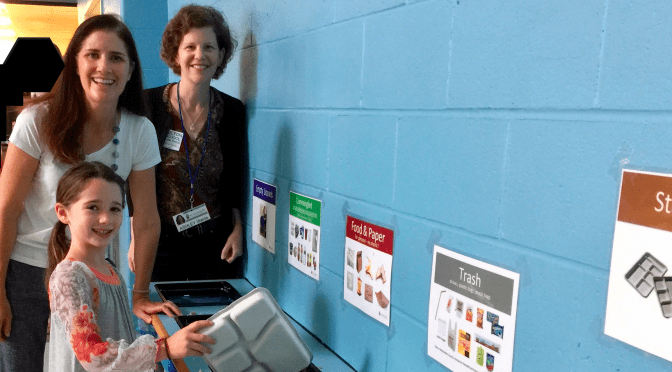
In order for a recycling program to work, one has to address all players in the building. We Future Cycle did presentations to students, custodial staff, and security personal to outline just how we are all affected by garbage and how simple changes of behavior can make a HUGE difference. Putting the new knowledge to action, students started to sort their waste in the different cafeterias and learned that by simply sorting into excess liquid, commingled recycling and food waste for compost, 90% of the waste is captured and sent to reusable streams.

Only 10% of the High School waste was trash. A 90% reduction of lunch waste is huge, looking at the sheer number of players involved. Instead of filling up trash containers, the high school is now filling up commingled recycling containers and food waste bins to be composted. Way to go!

Principal Richardson is exceedingly proud of his student body and is working with his Science Chair to integrate Environmental and Sustainability Education as Curriculum Add On.

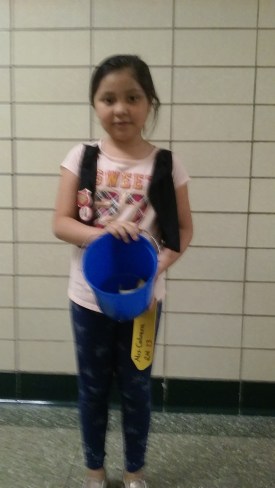 New Rochelle Trinity Elementary School is a shining example on how teaching students young creates life long behavior changes. Two years ago, We Future Cycle introduced the Waste Free Snack program to the school. All students went through class by class presentations about how to reduce packaging waste from snack in the classrooms in addition to making healthier snack choices.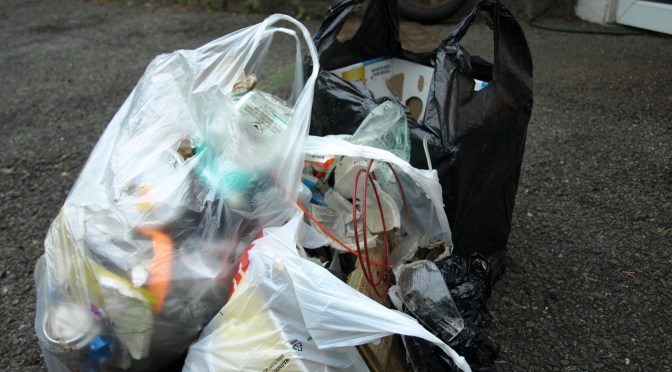


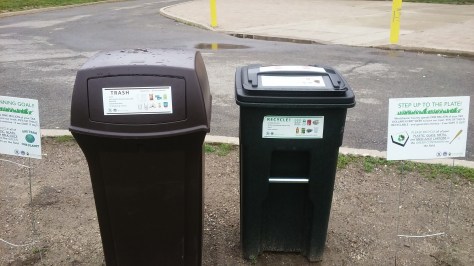 Will newly installed recycling bins with clear signage, next to trash cans, also sporting signage and both are flanked with signage motivate participation?
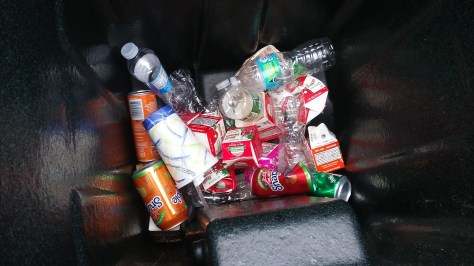 Monitoring the recycling bin showed that students put the appropriate items into the recycling bin, without a single contaminant. Room for improvement is that there were materials in the trashcan that should have gone into recycling.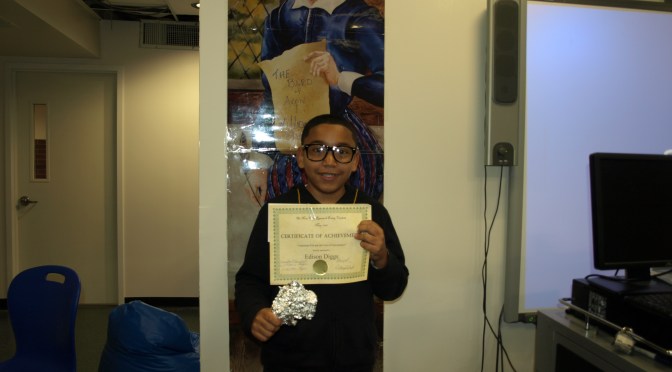
 It pays to play! That is something that proud winner Edison Diggs learned in a very rewarding way. He was the winner of the We Future Cycle sponsored Research Essay Contest with the topic “Aluminum Foil: The cost of convenience”

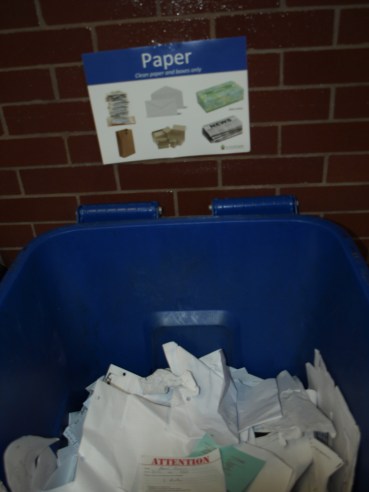 The annual process of locker clean out entailed until today a line of garbage cans in each hallway, and students just taking armful over armful of stuff out of their lockers to dump. A school of 1500 kids would easily generate 7500 lbs of material, all in over 100 plastic bags. A tremendous cost to the school in terms of man power, bags and carting cost.
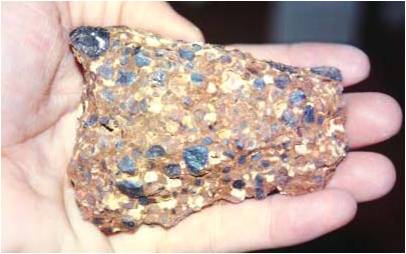 Aluminum does not exist in its free form in nature, instead Alumina silica is found in Bauxite. This ore is mainly found in thin layers in the tropics.

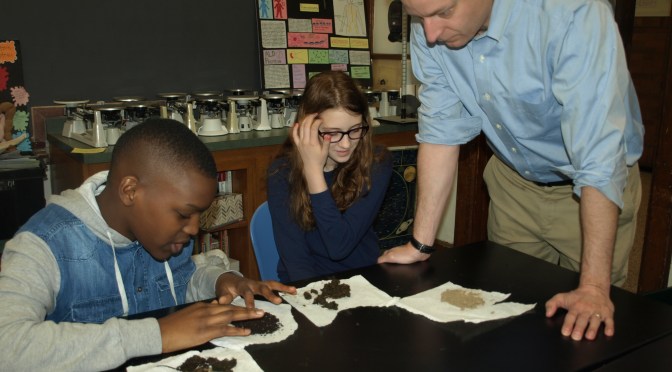
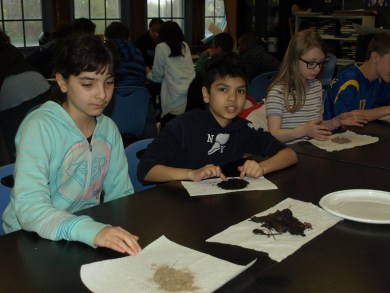
 ealthy soil made from food waste and wood chips/leaves. Nature’s magic
 We Future Cycle