Tag Archives: schoollunchrecycling

White Plains Post Rd Elementary School proudly reduces garbage by 98%

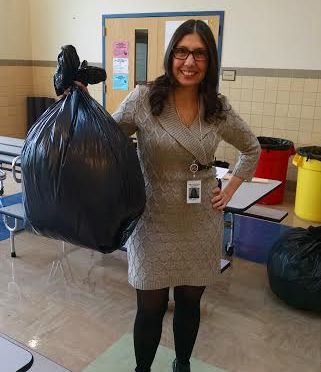
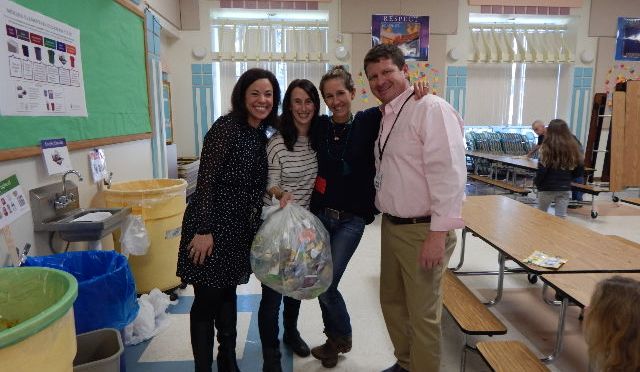
It was a rainy day when We Future Cycle did the “before recycling” waste audit at the White Plains Elementary School. Mountains of trash bags from lunch had been piled up just outside the building to be weighed and counted before being brought to the large container by Custodian Rob  Dell’Orletta. Every single bag, bulging, dripping milk and being wet from the rain was weighed and results were added up. Post Rd Elementary school looked at 27 bags, weighing a total of 277 lbs. It was very messy and unpleasant. Mr Dell’Orletta was not surprised by the numbers, and confirmed that it is the normal amount, plus about another 6 from breakfast, usually, and some from after school.

He smiled at me, with charming disbelief, when I shared with him that after source separation we will look at one bag weighing less then 5 lbs.

Following classroom by classroom presentations to the students, and prior day presentations to all staff and adult players in the building, the big day finally arrived. Gone were the rows of large 55 gallon grey trashcans from the aisle between the table, gone where the bulging black plastic bags, hanging over the handle of the bins, to have quick replacements at hand. Mr Dell’Orletta looked somewhat worriedly when he saw me removing all his prepared replacement bags. We Future Cycle set up two recycling stations against the far side of the lunchroom, removed all large barrels, with its black bags and replaced them with smaller colorful bins, clear bags or no bags, and large signage on what each bin is for. I did not put any replacement bags on handles, explaining that I did not think we will need to empty any of them until the very end of lunch. Another disbelieving, but very hopeful smile from Mr Dell’Orletta.

Lunch time came and went, and as with all first days to teach 650 students to sort, it was a blur.

754bf9b0-bdff-40fc-8c3e-7e04f1af9aafThe results, however, were not blurry at all. Instead of 277 lbs of trash, Post Rd is proudly looking upon 3.5 lbs ! A 98% reduction

All the rest was either excess liquid, recycling, composting or untouched food to be donated to the local soup kitchen.

Ms Ossorio, principal, was giddy with pride and joy, and rightfully so, her students just proved that making a difference is very possible. And Post Rd students did it in a timely fashion too, on the first day! That is truly something to write home about.

 

The Moment That Made These Students Environmental Leaders

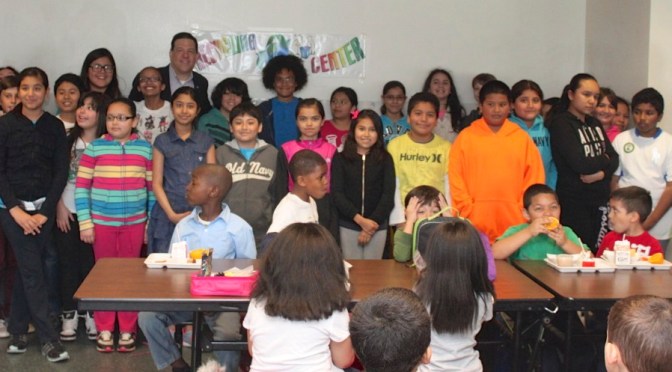
Meet Elizabeth Ortiz, Araceli Oseguera, Evelyn Argueta, Sofia Alvarez, Diego Ayala, Malaysia Dias, Alejandra Garcia and Isabella Ceja. These steadfast Green Team members at Columbus Elementary School have put themselves in charge of making sure the recycling system in the lunchroom is well organized and supervised. Every single day, they come up to help.

Today, We Future Cycle’s Executive Director Anna Giordano took some time to interview these future leaders to find out what their personal moment was, when they realized they just had to get up and do something.

Diego Ayala remembered that when he saw on his way home from school a soda can in the street with a small animal stuck in it, it just made click in his head and heart and he became a leading force in Columbus and his family to make a difference.

Other action stirring moments were the observation of a plastic bag in a tree and a bird having gotten entangled in it. Or a powerful documentary on TV about marine mammals entangled in plastic bags, or a pigeon getting stuck in a carelessly thrown away sauce cup.

Each student recalled this pivotal moment in their lives with great sincerity and it is that sincerity that shows each time they get up to help and go out of their way to make a difference. I am sure we will see many more great things from these exceptional students.

Teaching students to care about the environment

New Rochelle Trinity Elementary School Assistant Principal Inas Morsi Hogans has been for years a stout supporter of the We Future Cycle recycling program and knows that it takes regular refreshers for students to understand why they are sorting their lunch waste in the cafeteria.

Only if our head knows the why, the hands will do the what automatically.

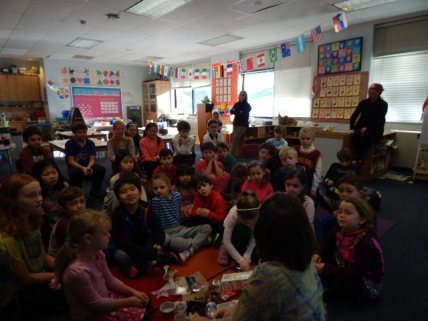
Ms Morsi Hogans invited We Future Cycle to do student presentations in each classroom to refresh the older grades on how the program works, and of course to teach the younger grades. We Future Cycle staff members went from class room to classroom teaching the students that an empty bottle or peanut butter  jar is not trash, but rather material to make something new out of. The students were fascinated to learn where “away” was, when one talks about throwing something away.

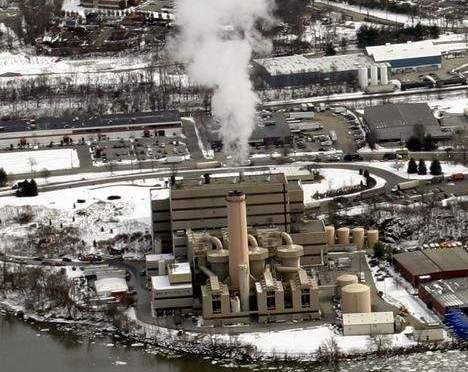
In Westchester, “away” is the incinerator up the Hudson in Peekskill. A large Waste-to-Energy facility that burns Westchester’s 2500 daily tons of garbage into our air.

OLYMPUS DIGITAL CAMERAA regular lunch trash bag is a 55 gal 1mm thick trash bag. A school with 600 students generates between 13 to 20 bags of trash every lunch, each weighing around 12 -15 lbs, which means 333,333 bags of trash are burnt every day. That is an unfathomable number. I cannot even wrap my head around what kind of volume that represents. And that is just Westchester.

OLYMPUS DIGITAL CAMERAAnd New Rochelle Trinity students are drastically reducing their lunch waste by sorting. Out of 266 lbs of waste, only 4.5 lbs were non recyclable.

That is a whopping 98.3% reduction, simply by sorting out all the recycling, composting, excess liquid and the untouched foods. Through education and daily hands on participation, Trinity students care and they are making a huge difference. Can you just imagine if EVERY school did that? We Future Cycle is working towards just that.


We Future Cycle in National Kids Science Magazine

news-f3a8e624689425102e9e5de00789be1aWe Future Cycle is so proud to be featured in the National Kids Science Magazine called DoGoNews. How cool is that!

And we are particularly proud to have heard from a bunch of people that their children chose that article as their current events project.

http://www.dogonews.com/2016/1/15/innovative-ideas-to-curb-food-waste-range-from-sharing-to-dumpster-dining


College Intern Opportunities at We Future Cycle

OLYMPUS DIGITAL CAMERA
Dana surrounded by Kindergarten student helpers, on day 1 already. These kids were pumped up to do the right thing

We Future Cycle was thrilled to have had our first College Intern. Dana Goldstein, a Sophomore from Oberlin called out of the blue beginning of January to ask if she can do an internship with us. She had learned about the We Future Cycle program from the recent media flurry and was fascinated as this program touches exactly on what she is focusing in school.

Human Psychology in connection to environmental sciences, in other words, how to get humans to get off their lazy butts to create change.

Dana jumped right in, with a record breaking month for We Future Cycle rolling out 5 schools, she got to experience the whole spectrum of this program. From seeing the workshops we do with teachers, to monitors and custodial staff, learning how to work with children of different age groups, setting up stations, supervising the sorting, and teaching the students and adults in the room how to source separate, to gently coaxing custodians to keep separated materials indeed separate, which is no small feat, I might add!.

She had a chance to develop and hone presentation skills, try out methods on how to gently guide adults towards changing their ways, and be surrounded by adoring first graders that were hugging her leg and thanking for teaching them how to recycle.

Dana learned that it takes a LOT of perseverance to change large scale systems like schools in order to effect change, but that the journey is worthwhile because of the students. Seeing school garbage being reduced by 98% by teaching the students to sort is instant gratification for any environmental studies major.

” I joined We Future Cycle because the organization has the power to create enduring change in our community. The success in providing green refuse streams to 30% of Westchester’s school children is a testament to the unique change that only a local organization can achieve. By establishing a presence in elementary schools, We Future Cycle instills upon tomorrow’s leaders a cultural norm to practice for the rest of their lives. Connecting with children at a young age allows us to shape the way our future citizens see trash, so instead of seeing “waste,” they see opportunity.

As a sophomore at Oberlin College majoring in environmental studies with a concentration in urban sustainable management, my time at We Future Cycle will provide me with tremendous insight into effective solutions for solid waste management in an urban setting. Additionally, as a social psychology major, I especially appreciate We Future Cycle’s experience successfully motivating students to participate in recycling and other green practices. I hope to gain a greater understanding as to what core social motives our teaching implements act upon in order to further social change. ” Dana Roe Goldstein

We Future Cycle is wishing Dana all the best in her continued studies and we are ready to welcome more College interns into the world of school waste management. Hold on and enjoy the ride!

Rye’s Midland Elementary School Reduces Waste by 97%

Today was a big day at Rye’s Midland Elementary School. With great support and enthusiasm of Principal Jim Boylan, Assistant Principal Joanna Napolitano and the PTO, under the leadership of Cali Gibbs and Emily Keenan, Midland’s students made a huge splash of a difference!

DSCN2127.JPG

The We Future Cycle team went from classroom to classroom to present the program, show the different materials, answer questions, model the process and stir up a big energetic frenzy to save the world. These students were READY to make a difference.

993a8b47-09cd-42e7-ad0f-7319ff71c8e6In the lunchroom the newly installed station was put into action, and despite the most challenging of lunch menu days, which is brunch for lunch with syrup containers, the students pulled off a flawless sorting.
The results speak for themselves. From 161 lbs of total waste:

Liquid = 65 lbs (40.4%)
Cartons = 8 lbs (5%)
Commingled plastics = 13.5 lbs (8.4%)
Compost (food and paper) = 42.5 lbs (26.4%)
Trays = 27.5 lbs (17%)
Trash = 4.5 lbs (2.8%)

Only 2.8% of the entire lunchroom waste was actually trash!

A 97% diversion into recycling and composting streams is really outstanding. Though what is even more astounding is the small amount of food waste. We are seeing usually more like 50-60% food waste in public schools with the NY State Lunch Program, but this school leaves all food choices up the students, there is no “you have to take these items to qualify for a full lunch” which results in MUCH less food waste and we also practically did not have a share basket of unopened food. Truly a wonderful thing!

While we are celebrating this fabulous result, we are also seeing some areas of opportunity when it comes to single serve offerings from food service. Principal Boylan realized that single serve ketchup pouches, syrup containers, hand wipes and others are making it very hard for students to timely sort their lunch waste.  The equation is easy…… “what goes in, must come out.” Mr Boylan will see how he can help his students do an even better job sorting their lunch waste into recycling and composting by managing the incoming flow of packaging and possibly switching to squeeze bottles and other dispensers.

We Future Cycle will continue to support Midland Elementary School for one week and we are sure that the hand off to the local champions as well as the very enthusiastic and supportive PTO will lead to it being embedded into the culture of the school very quickly, becoming the “new normal”.

New Rochelle Barnard Second Grade Student astonishes with wistful knowledge “Garbage goes to the Incinerator”

Sitting on the carpet surrounded by a group of New Rochelle Barnard students and doing a presentation about recycling is one of my favorite activities. I just love helping students make a very important mental transition. When I show students  a bunch of empty packaging material, one will invariably sneer at it and call it trash.

Walking them through the fact that empty packaging is not trash, but rather material for new things is the most rewarding, because children get it so fast. They understand what it means to play with things over and over again, if you just put it in the right bin.

At some point, I ask the students where they think “away” is, when they talk about throwing something away. I usually get a variety of answers ranging from “the garbage truck” all the way to “the dump”.

Today, however, at Barnard Elementary School in New Rochelle, I was blown away as a 2nd grader very casually answered : “Garbage goes to the incinerator”.

And that is exactly right.

Westchester burns 2500 tons of garbage every single day at its Wheelabrator Facility located in Peekskill NY. At a price tag of close to $80 a ton to just drop the stuff onto the tipping floor, Westchester is looking at a whopping $200,000 per day cost just to burn our garbage into our air. (long pause to let this sink in)
DSCN2086

In a school, 95-98 % of the waste can be recycled, if it is just sorted out. The same applies to Westchester’s garbage of 48% organic, 33 % paper and 16% Commingled recycling.

We have fabulous technology like an I-phone, but we cannot sort our garbage so that 95% can get recycled instead of getting burnt into our air?

Well, New Rochelle Barnard Students have just joined the growing group of schools that say “Yes, we can make a difference, a huge difference” And that is exactly what they did.

From 84 lbs of waste, only one single pound was trash, all the rest was sorted in the right bin and fed into compost, recycling or down the drain as liquid waste.

I call that making a huge difference!


WFC Documentary “Columbus Makes a Huge Difference”

This short documentary features the journey of a school from 22 bags weighing 400 lbs , to fully sorting its waste, reducing overall garbage by a whopping 98% while diverting valuable resources into recycling and composting, and sending 55 lbs of untouched food to the soup kitchen, that would have gone into the garbage otherwise.

Oscar-worthy performances by all grades at New Rochelle Columbus Elementary Students.

New Rochelle’s Jefferson Elementary School down to 1.2% Garbage

3 lbs of trash, all the rest goes into compost or recyclingThis is what 254 lbs of lunchroom waste look like, and — believe it or not—- only 3 lbs of it, was actually trash. Everything else is being fed into food waste composting and recycling.  72 lbs went as left over liquid down the drain, and the students sorted 15.5 lbs of untouched food out to donate to the local soup kitchen.

That is a whopping 98.8% reduction.  Seriously …. way to go.

Jefferson Elementary School under the leadership of Kim Nieves and LeAnn Bruno has always been on New Rochelle’s forefront to bring sustainability to their students.

Already in 2011, when the We Future Cycle Recycling program was in its infancy and New Rochelle was still serving its students on Styrofoam trays, Ms Nieves and Ms Bruno knew that making the students partners and teaching them to care and sort is a life long skill.

Fortunately, after a 5 year battle, Styrofoam is permanently off the menu in New Rochelle and We Future Cycle gives full credit for this to Jeff White, Assistant Superintendent of Business. Mr White, being new to the district, saw immediately the incredible social, educational and environmental value that the program offers to the children and understood that serving our young ones on a material that contains Styrene, a chemical that has recently been classified as “reasonably anticipated human carcinogen” was inappropriate, no matter how much less expensive it might be.

Jefferson adjusted its program to follow We Future Cycle’s guidelines, so all New Rochelle schools are set up exactly the same.  We Future Cycle is enjoying working with Jefferson’s enthusiastic recyclers. There is nothing as rewarding as having a kindergarten student hug your leg and say thank you for teaching her to recycle.


New Rochelle Columbus Kindergarten students Hard At Work For the Environment

Every day at lunch, Columbus Elementary school has about 15 enthusiastic students helping at the recycling station. My favorite group are the kindergarteners.

They cannot even look over the rim of the bin, but they are excited recyclers. When they come into the lunchroom, they first run over to me to ask if they can help. Of course they can help, but they are all sent to go and eat first. After a while, they start showing up, first carefully sorting their own tray and then proudly taking their position behind the station.

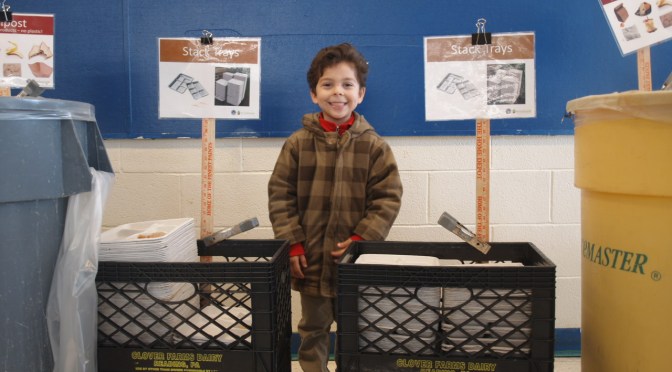
The most critical position is watching over the food waste bin to make sure no plastic or other contaminants end up in it, and the second most important job is the correct stacking of the trays.  Meet  Jose, the Master of the trays.  I just love this little boy!