Tag Archives: schoolcomposting

Untouched Foods: White Plains School District has a great solution

One of the most heart breaking problems we see in the schools is the amount of untouched food that gets discarded. A school with about 600 students will see about 180 lbs of food and paper waste. As WeFutureCycle is teaching students to separate their waste into Recycling, Composting and Trash, these 180 lbs are going into compost, making soil, but it also means that these 180 lbs have been cooked, and served but not eaten. 180lbs!

If moms knew just HOW MUCH of their lovingly prepared cut of fruit or veggies, the sandwich or the pasta they sent to school for their child to enjoy as lunch goes straight into compost.

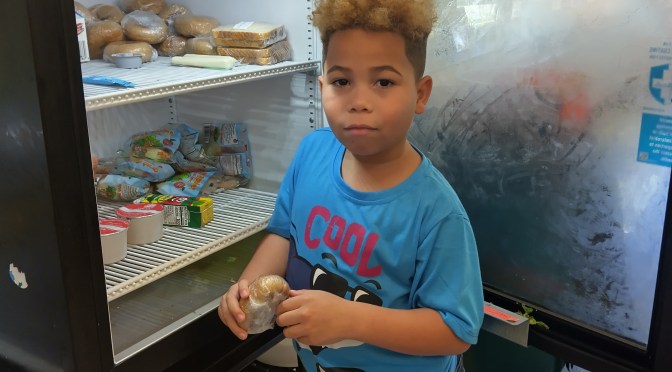
WeFutureCycle is constantly working to recover untouched foods that are coming out of the lunchroom because food is not trash, just because a student did not feel like eaten an item. So, unopened milk or juice cartons, untouched yogurt or applesauce containers, commercially wrapped cheese sticks or baggies with carrots and apples are recovered, and made available for other students as seconds or snack.

George Washington Elementary school in White Plains has invested in a refrigerator and it is a pleasure to watch how students are now aware of the problem and are participating in the “Share Basket”.

This is a wonderful solution to a heartbreaking problem.
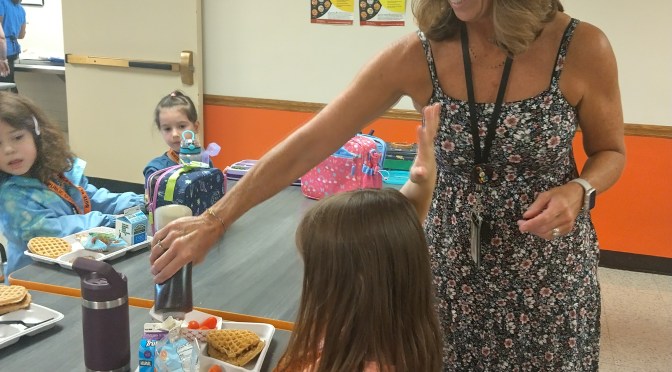
White Plains schools is reducing trash one pouch at a time

WeFutureCycle has been working with the White Plains schools district for many years now and it is such a pleasure to see the positive changes that food service has implemented. All schools have now syrup bottles instead of the dreaded single serve pouches. This comes with the added benefit of practicing table manners for our littlest ones. ” May I have some syrup, please” is now a common phrase which is then accompanied with a life skill lesson to judge how much or little they actually want.

Recently we were also able to introduce salad dressing from bottles rather than pouches.

Reducing trash one pouch at a time, while teaching social and life skill is a win win situation for the environment and the students.

For White Plains students, recycling is so normal that it has a lunchroom signal

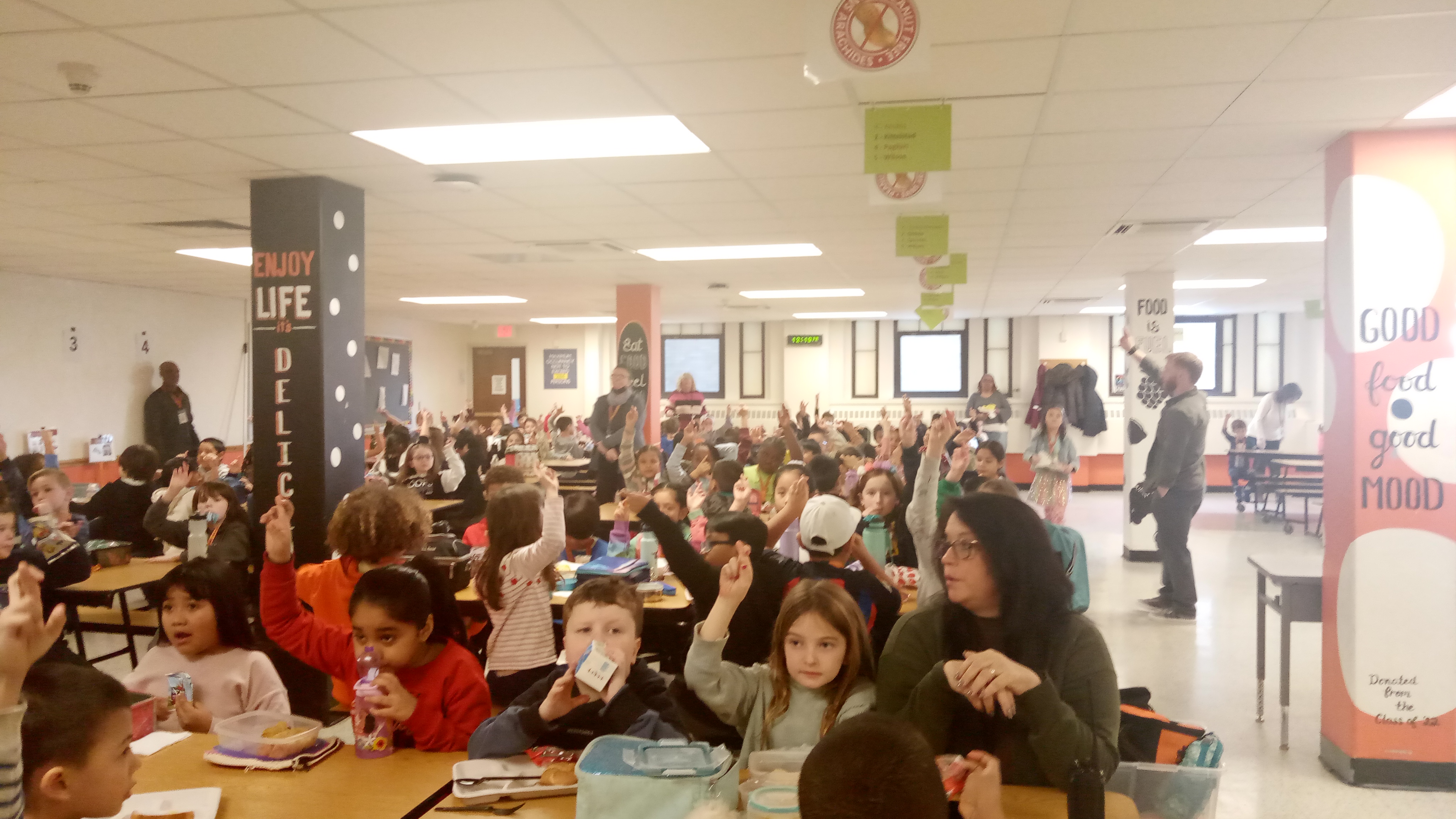
If you have ever been in a school lunchroom, unless you are faint hearted, it is a truly invigorating experience. 150 kids in a room, chatting, walking, playing, eating …. a never ending hum of activity. To control such masses, there are elaborate systems in place. Voice levels are measured and given a number code and students learn very quickly how a level 1 voice is being quiet. Students are asked to raise their hands if they need anything during lunch, and there are large posters with hand signals displayed for the kids to review.

Recycling is so normal for White Plains students that there is a hand signal established for it and it is working well. We Future Cycle is very proud to have been able to create a generation of White Plains students that care.

Going above and beyond…. a personal choice

We Future Cycle just rolled out the comprehensive recycling program at the Mount Vernon Steam Academy, a 9-12 HighSchool with a population of 800 students, all future engineers, doctors and astronauts. As preparation for the student roll out, we presented the advantages to the adults including security, food service and custodial staff.

Because it takes a village to raise a child.

Meet Ivey Reid, the exceptional food service lead for the past 11 years. Ms Reid took to the program like a fish to water and decided on day one that she can go the extra mile in her kitchen in terms of waste diversion. Normally, the kitchen will sort out commingled and compostable materials, but this most fabulous lead also started to sort out clean clear soft plastic that would be recycled as plastic film at grocery stores, the resource needed for Trex decking materials.

And she made it look easy. A clear bag tied to the corner of a shelf, a quick explanation to her entire staff and off they went, and the result is a diversion rate of 97% in the kitchen, including a large bulging bag of clear cling plastic that otherwise would have been trashed and ultimately burnt into the air we breathe. Way to go!

Sorting lunchroom waste from day one again

White Plains School District has been running the WeFutureCycle program for 8 years now, most of the student have never seen anything else but sorting their waste carefully into recycling, composting and trash.

While COVID protocols made it difficult in the past, now all schools are bouncing back with ease. The first day of school is always a blur as teachers get their kids ready for the school day routine but it was a pleasure to see that the recycling portion in the lunchroom was easy to re-establish. WeFutureCyle consultants retrained, and did hands-on support to make sure that students are familiar again with how to sort their waste.

After nearly 1000 students sorted their lunchroom waste, only around 10 lbs of actually non-recyclable trash was generated, everything else was either compostable, recyclable, excess liquid or untouched food that we routed back into the hands of hungry children in the afternoon.

Osborn Elementary in Rye, NY Achieves a 97% Waste Diversion Rate!

IMG_8918
Osborn PTO Co-President Susan Drouin and her son stand proudly by the recycling & composting station!

Today Osborn Elementary School became the 3rd (and final) elementary school in Rye, NY, to implement the We Future Cycle lunchroom recycling and composting program.  Amazingly, each of the 3 Rye elementary schools achieved a 97% waste diversion rate. 
The waste audit revealed the following results. There were 154 lbs total waste (for about 600 students), including:
Liquid: 33lbs (21%)
Commingled (hard plastic, cartons & juice boxes): 29 lbs (19%)
Compost (food & paper): 62 lbs (40%)
Trays (also compostable): 25 lbs (16%)
Trash: 5 lbs (3%)
Only 3% of the lunchroom waste was trash!
Head custodian Tim Connick built 2 recycling stations with countertops; he drilled holes into the countertops, revealing the bins for recycling and waste materials underneath. The counters help keep the system well-organized.  The lunchroom aides were extremely engaged and helped the students adjust to the new system.
As usual, the kids were thrilled with their new lunchtime activity and with creating a healthy environment! Many children ran over to the recycling station with their eyes wide and mouths open in astonishment that launch day was finally here. You would have thought it was Christmas morning and they’d just seen the presents that Santa left under the tree! Their enthusiasm will surely continue as Osborn students are a very thoughtful group. During our classroom presentations to train the K-5 children, they asked “Where does aluminum foil come from?” “How many bags of trash has our school already generated this year?,” “Why don’t we reuse trays?,” and “How do cars get recycled?”  We hope they continue to be inquisitive and apply everything they learn to their lives!
Thank you to the Osborn administration, teachers, aides, PTO and students for giving the We Future Cycle team such a warm welcome and for your commitment to ensuring a healthy environment in the Rye community!


New Rochelle Middle School is Digging Soil To Combat Climate Change

New Rochelle Albert Leonard middle school students are digging soil, in a literal kind of way.

6th graders explored in We Future Cycle classroom sessions the connections between throwing food waste in the garbage and climate change. Learning about methane and leachate got their attention. Just thinking past the garbage can is eye opening for these students.

While New Rochelle’s entire student population is now sorting their lunch waste between Commingled Recycling, Food Waste and Trash, thus reducing trash by a whopping 97%, they have not quite learned what actually happens to the food waste.

In classroom presentations, student were walked through the chemical process of decomposition, they chuckled a bit when asked if the banana looks the same when it comes back out and they quickly got the concept of nutrients, water and energy being the basis for life.

Making connections between how the apple tree takes nutrients out of the ground to grow the apple, which in turn nourishes our body when we eat it, and how the left over  still contains many nutrients that could benefit the soil if put back, but creates havoc if treated as garbage and dumped in a landfill, was a completely new line of thought to all students.

Students had the chance to dig through soil samples, seeing and touching the difference organic matter made in soil samples. They were tasked to make determination in terms of water retention capabilities, nutrient content and how plants might like to grow in that particular soil. Social Studies questions were introduced for students to think about how a the quality of soil might affect the wealth of a country.

What started out with students looking somewhat puzzled at three soil samples on their desk, ended in some fabulous essays about why composting is so important to the survival of our world. Great job Albert Leonard students.


New Rochelle High School: Changing the world…3500 students reduce garbage by 90% through sorting.

New Rochelle High School is the largest HS in Westchester County New York, it is more like a college campus with sprawling hallways and mind-boggling amounts of students spilling out of classrooms when the bell rings. 3 cafeterias are on campus feeding these youngsters and until recently were generating a whopping 100 large bags of garbage e.v.e.r.y…s.i.n.g.l.e…l.u.n.c.h ! Filling up 3 dumpsters to the brim just from lunch, and another two large dumpsters from night clean.

New Rochelle School District has embraced the We Future Cycle Recycling Program and steps were put into place over the summer to include the High School. Principal Richardson admitted that he was beyond skeptical about how this program could possibly work in a huge building like the High School. He however vowed his full support.

In order for a recycling program to work, one has to address all players in the building. We Future Cycle did presentations to students, custodial staff, and security personal to outline just how we are all affected by garbage and how simple changes of behavior can make a HUGE difference. Putting the new knowledge to action, students started to sort their waste in the different cafeterias and learned that by simply sorting into excess liquid, commingled recycling and food waste for compost, 90% of the waste is captured and sent to reusable streams.

OLYMPUS DIGITAL CAMERA
This is the commingled recycling from 2 lunches!

Only 10% of the High School waste was trash. A 90% reduction of lunch waste is huge, looking at the sheer number of players involved. Instead of filling up trash containers, the high school is now filling up commingled recycling containers and food waste bins to be composted. Way to go!

OLYMPUS DIGITAL CAMERA
3 food waste bins per day for composting

Principal Richardson is exceedingly proud of his student body and is working with his Science Chair to integrate Environmental and Sustainability Education as Curriculum Add On.


Who Are The Best Environmental Advocates? Students!

When we launch the We Future Cycle program at schools, we work with administrators, custodians, aides, and food service to get the mechanics of the program implemented and humming.  However, ultimately the goal is to give program ownership to the students.  They are the ones who must learn to separate their lunch leftovers into the appropriate bins, and they are the ones who bring the recycling message home to their families and extended communities.

Fortunately, this is not hard to do!  Students absolutely love sorting their lunch leftovers…it’s fun!  As well, they thoroughly understand that their actions have a direct benefit on the environment, and they know that what they do makes a difference.

This said, even enthusiastic students need to know that their principals, school lunch aides, and parents support the program to foster sustained compliance, and students also need a refresher from time to time about how the lunchroom sorting works.  Fortunately at the BMP Ridge Street School in the Blind Brook District, a 5th grader took it upon himself to spearhead that refresher!

Click here to watch a clip from the student presentation! https://www.dropbox.com/s/h94yg0f3mttkj5j/RSS%20Recycling%20Pres.m4v?dl=0

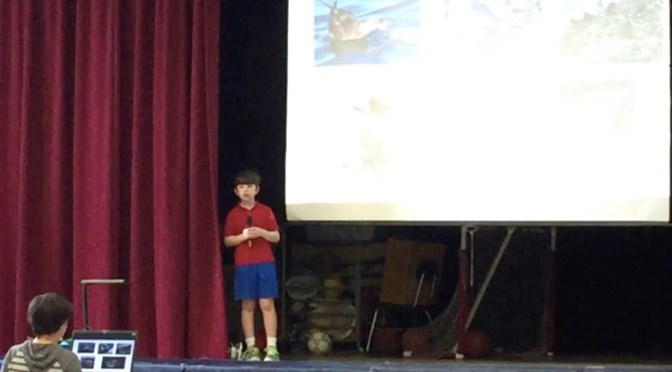
Jackson Welde, 5th grade student, noticed that his peers were becoming a bit sloppy in the lunchroom, so he asked his principal if he could create a presentation to show at the monthly school-wide student assembly.  (Click on the image to view a segment of the presentation.) The principal enthusiastically said “Yes!” and within a couple months, this presentation happened.  The K-5 students were attentive listeners, and they learned compelling facts about plastic and paper waste as well as about the Great Pacific Garbage Patch.  The presentation reminded students that properly sorting their leftovers in the lunchroom has ramifications to the health of their own environment, as well as to the environment around the world.

We Future Cycle encourages students to lead the environmental initiatives in their schools by making presentations such as these, as well as through Green Writing Contests, environmental education, and many other projects.  Giving students ownership of environmental programs promotes the values and responsibility necessary to instill a lifetime of environmental stewardship.

“We had no trash at all today” 250 students have learned about Waste Free Snack

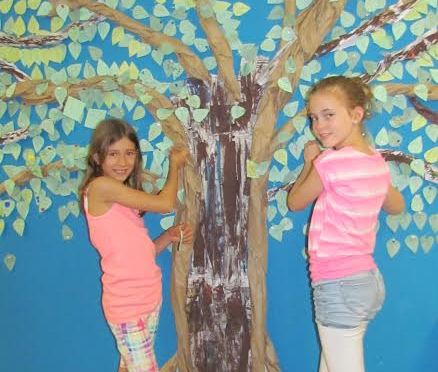
“We had no trash at all today” proudly says Sebastian , a pre K student, and then hugs my leg. And then he gets to paste a Waste Free Leaf on the fabulous tree outside the Principal’s office.

In June I sat surrounded by 3 and 4 year olds. One girl even sitting on my lap. In front of me is a tray with all their waste from snack. Asking little ones like that where the trash goes, they will give you answers like “in the garbage can”, “in the garbage truck”, but when you ask deeper where they thought the garbage truck goes, they all stopped to think. I watched them figure out that -of course- the truck has to go somewhere and then guided them through the process of understanding that Westchester’s trash gets burned into our air.

Together we resolved that it is just as easy to put the sandwich in a washable container than in a single serve plastic baggie. And they got it, amazingly quickly.

Introducing the We Future Cycle Waste Free Snack program that combines education of children and ultimately also their parents with a fun hands-on activity has brought great change to schools. At the German International School White Plains, the entire elementary school is participating. We Future Cycle went to each classroom. We talked about how to package foods in a more responsible way, how to be waste free, how to be healthy to our body and to our Earth and we introduced on-site composting.

To make decomposition touchable for the students, two composters are placed at a convenient spot and each class learned about it. Each time the students are waste free and have only compostable waste, they are rewarded with a leaf to paste on the beautiful Waste-Free-Tree and two students get to feed the composter. It is a very coveted job and as they dump the fresh banana peel in, they get to check out what happened to yesterdays apple core, bringing natures circle of life close to home.

Needless to say, teachers are reporting that a record numbers of apples and bananas are coming in since the beginning of the program.

But what is the most satisfying for me, is that the students are suddenly aware of how their actions make a difference, they are aware that waste is a problem, and they join me celebrating being waste free.