Tag Archives: newrochelleschooldistrict

“The Worms are Back!” New Rochelle Webster 1st Graders Learn About Worms

I can tell you, life is not boring when you mix 6 y old kids with a bin of worms.

We Future Cycle presenters came for the 3rd year in a row to Webster’s first graders to teach them about how every living being on earth has an important job to do. With big eyes students followed explanations that worms have no eyes and ears, and that they eat what ever organics are falling in their path and that their castings are good soil.  Slight shuddering went through the kids at this thought.

Students are learning that worms -as all living beings- also need to eat, breathe, reproduce and die. Audible gasps came as response to the fact that worms have no nose and are breathing through their skin. All students rubbed their skin, clearly not quite processing how that could possibly work. While talking about how they move and how fabulous their muscles are, students got a chance to flex their biceps, as activity about muscle function and they mimicked the stretching and pulling motion of the worm. Can you imagine 23 wiggling children on a carpet?

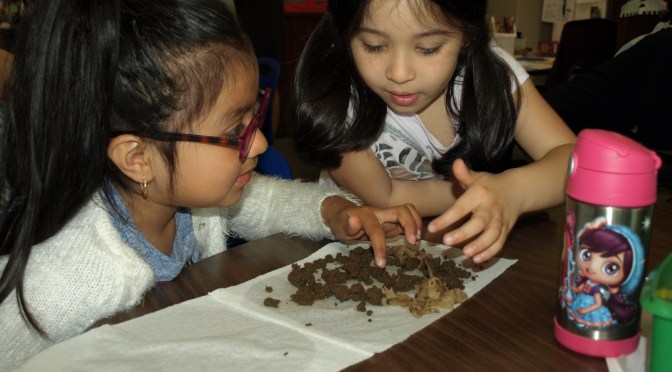
When it came time to get down and dirty, the worms did not disappoint and samples on moist paper towels were oozing with worms of all sizes. Even cocoons were plentiful and easy to spot, to the utter delight of all children.

However, what took the prize and made this class indelible in student and teachers mind was that we got to follow the path of a “casting” from within the worm to outside. Worms are somewhat translucent and one can make out the dark spots in the tail section where the castings (technical term for worm poop) are making their way through the length of the worm. In laymen’s terms….we got to see a worm poop, and that was the highlight of the day, all kids clustered around that one poor shy worm to carefully inspect that freshly produced “casting”.

It was great fun and very heartwarming as students came to hug and thank us for teaching them.
New Rochelle High School Offers Week-Long Environmental Program about Great Pacific Garbage Patch

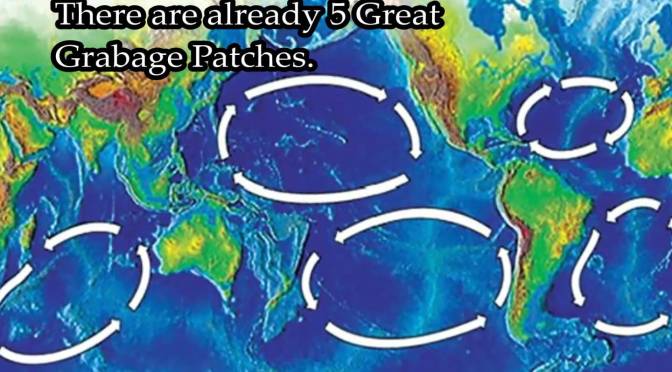
Learning about “The Great Pacific Garbage Patch” was eye opening for many High School students. They sat openly staring at videos of garbage floating down rivers ending in a soup of submerged plastic filmed underwater by a diver. They averted their eyes when confronted with the slow death of a sea bird whose stomach was full of plastic. They cringed seeing pictures of completely garbage covered beaches in the Maldives.

Anna Giordano, Executive Director of We Future Cycle was invited by the New Rochelle High School Principal to do 7 days of environmental presentation, open to all teachers, who could just sign up their class for one of the 56 available slots. And they did. Not just science teachers, but teachers of all genres saw the need for their students to learn about this enormous environmental problem.

Students learned that the source of the garbage in the ocean is coming from city street littering, they learned how rain water sewers at the side of the road are connected to the next water way without any filtering system in place. Any bottle, cigarette butt, chip bag or plastic bag that makes it past the grade at street level is going directly into the next creek, river, lake or ocean.

40423627891_d3261c6d5f_k-1024x683-1024x683
Mr Trash “eating” Baltimore street garbage that made it into the harbor via the rainwater sewers

Students learned about how ordinary people rose up to find a solution to a problem that thousands have looked at and just walked by. The Baltimore Mr Trash, for example. an ingenious device that catches floating debris as it comes from the Joans Falls river before it goes any further into the harbor, and ultimately into the ocean. It shows that one person with the will to find a solution to a problem can make a serious difference and Mr Trash is now a solution that other communities can copy.

Seabin_Project_V5_hybrid_in_action_380x272-295x220Another solution students learned about was the Sea Bin Project.  A floating trash can  that uses a pump to create suction that pulls surface water (and the debris floating on it) into the bin, effectively filtering out debris as small as 2 mm. The inventors of this fabulous device just received a prestigious European Award . 

When asked what these New Rochelle Students can do to be the solution, one student suggested to organize local clean ups and the idea had immediate takers and the teacher enthusiastically took up management of that project.

We Future Cycle is proud to inspire New Rochelle High School students to strife to be the solution.

New Rochelle Trinity 2nd Grader Study Biodegradable and Photodegradable Materials In Our Environment

Celebrating Earthday is no small matter in New Rochelle Trinity Elementary School. Assistant Principal Michael Hildebrand scheduled presenters from We Future Cycle for all Kindergarten through 3rd grades and the school was positively vibrating with good energy.

In class by class presentations, second graders learned concepts of what materials can bio-degrade and what that means in terms of this material entering our environment. They learned about decomposition, seed germination and a touch of the chemical processes behind that.

OLYMPUS DIGITAL CAMERA
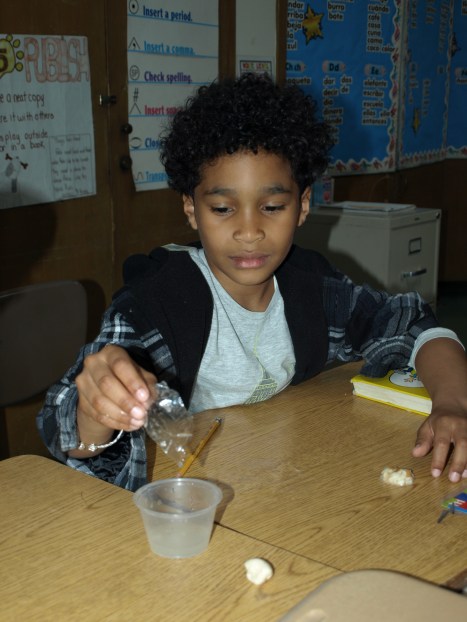
Exploring if water changes the structure of plastic

Students had the opportunity to be hands-on scientists and explored how different materials interacted with water. quite messy in fact, but also eye opening  to learn and  experience that plastics are not changed by water, other than broken into smaller plastic pieces over time, until they are small enough to enter the food chain.

Watching a heart wrenching short movie about how wild life is affected by plastic in our environment started a spirited discussion on what each and every one of them can do to solve this problem.  Students decided to become vocal to educate other about the problem. Check out these fabulous posters as the result. These are mini-environmentalists on their way to become agents of change. Way to go!

20180424_12244720180424_122604

Lunchroom Environmental Scavenger Hunt at New Rochelle Trinity

Being in an elementary level lunchroom is not for the faint hearted. The noise level is deafening. But fearlessly, We Future Cycle set up the Lunchroom Environmental Scavenger Hunt in New Rochelle Trinity’s lunchroom.

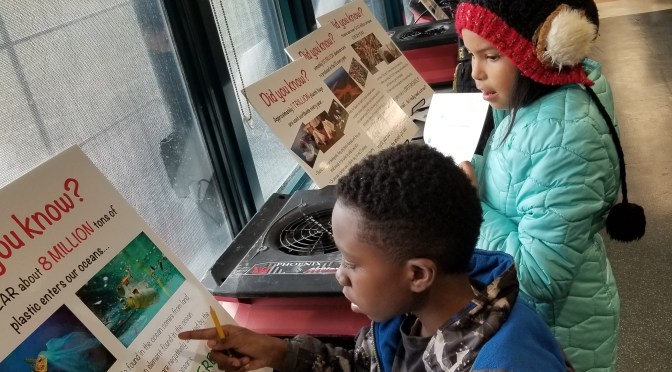
As 3rd graders came in, they bee-lined to the colorful posters, all depicting shocking data about environmental problems surrounding them. They open mouthed stared at pictures of turtles eating a floating plastic bag while trying to figure out what a trillion plastic bags per year in the world actually means. And they are not alone, it is a staggering number that nobody can really wrap their head around. Students that wanted to participate in the game were sent to eat first and then come and get a detective sheet. In order to answer the questions, students had to study the poster boards carefully and they were all game to play.

And as they worked (quietly, there was a marked noise level difference), they learned and shared with their friend the surprise about some of these staggering facts. The US alone uses 500 Million straws every single day!

Rye Town just joined “The Last Straw” Campaign. Everybody can make a difference by ditching straws, replacing single serve plastic bags and being good about recycling all appropriate materials.

They also learned about the dismal recycling rate of single serve plastic bottles. These kids are old hands in recycling and they asked me why not everybody was just recycling…. Good question, indeed.

New Rochelle Trinity Offers School-Wide Earth Day Presentations. K and 1 Love Their New Friends

Under the leadership of Assistant Principal Michael Hildebrand, New Rochelle Trinity students are able to participate in school wide Earth Day activities and are loving it.

A team of We Future Cycle presenters descended upon the school and had great fun introducing kindergarten students and first graders to worms and worm composting.

Students were somewhat hesitant when they saw the worms, some leaned far back into their chairs, some even voiced how nervous they were. But learning about how worms master this world, and how important their jobs are,  won them over and when the time came to get down and dirty with a handful of worms on a wet paper towel, they were all game. Armed with the new minted knowledge of how worms moved, they watched with the magnifying glass (it was not really needed, but they all LOVED having one in their hand) At the end of the lesson, each worm had a name, and all expressed their love, one student asked if she could kiss him…. 🙂

The key to environmental literacy is sustained education around different aspects. Trinity elementary students are old hands at sorting in the lunchroom, being the longest school on board of the We Future Cycle recycling program. Flawlessly they separate commingled from food waste and from remaining trash. And with the never wavering support of the Trinity administrations, students are treated regularly to environmental education and they are loving it!. Today’s classes were suppose to be 45 min, but often, I did not get out of there until 1:15 min because students had so many great questions. This is how future environmental leaders are made.


Earth Day 2018…Who is with me? Transforming a Science Teacher to Become Green.

We Future Cycle is very proud to have inspired Mrs McCue to not only become green but also to share with all of us her story.

“Mrs. McCue, are you going to stop buying bottled water?” asked one of my students gathered around me at the door, waiting for the bell to ring. Forty eyes were on me. We had just heard a We Future Cycle guest speaker teach us about water treatment and the perils of too much plastic in our world. I looked over at my desk and spied one small water bottle I had gotten that day at a school event, and two half-filled water bottles I had brought from home. “Yes – I should, shouldn’t I?”   I thought to myself, “I have no excuse. Our tap water is fine! I have several reusable beverage containers taking up space in my kitchen cabinet. Why don’t I fill those daily, like I bring my lunch to school every day? If I am going to teach these students to be responsible caretakers of the earth, I should begin by modeling responsible earth-friendly behavior!

Of course I should! Aside from hearing this message loud and clear from Anna Giordano, I had been prompted as well by a few recent news stories. The visual of the Great Garbage Patch in the Pacific Ocean haunted me, as did the horrific photo of the sea turtle with a plastic straw being extracted from its nose. The focus on this year’s Earth Day 2018 is: End Plastic Pollution. It’s time for me to practice what I preach.

unnamed (2)

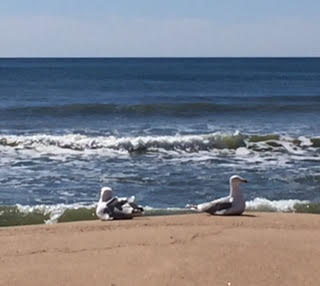
Several days after this “no-more-bottled-water-epiphany”, at the start of spring break, I found myself on a beach out in Long Island. It was a sunny, windy, 45 degree day, so there was not another person on this long stretch of beach. Two seagulls eyed me as I walked by, snapping their photo. I was noticing the beach erosion from several recent nor’easters and began to think about some other results of these storms. An entire tree lay on the sand. “What else may have washed in during these storms?” I thought.  As I walked along, I admired the rocks and shells, my reverie interrupted by an occasional plastic straw. I noticed a pink plastic wrist coil keychain. Then I saw remnants of a purple balloon. It looked like a piece of seaweed – this could easily be mistaken for seaweed by a hungry creature! I thought of the sea turtle as I placed the balloon remnant alongside some seaweed and snapped a photo. “I can’t just leave it there now”, I thought. If I am going to show my class this picture to illustrate the dangers of plastic in a sea creature’s diet, they will certainly ask if I removed that plastic from the beach!  So I grabbed a stick and picked up the purple balloon remnant and carried it off the beach to the nearest trash receptacle. The two gulls watched, fluffing their feathers in the wind. That got me thinking…….

Back at the house, I started to research – what can I do as Earth Day approaches to make a difference in the environment? I found an app on the Ocean Conservancy website called Clean Swell which allows you to keep track of trash collected during a clean-up. This is perfect! After spending a good ten minutes coming up with a group name (McQs for the Deep Blue), I downloaded the app onto my phone and recruited my daughter to return with me to the beach. We retrieved some of the items I had passed by earlier – the pink coil keychain, the deteriorated pocket knife, the orange disposable razor, five straws and ten bottlecaps.  All of these items were collected from a half-mile stretch of seemingly pristine beach in a period of 45 minutes. Imagine the  amount of plastic that might be lurking beneath the sand at a much more traveled beach? Imagine the impact a larger group of volunteers could have?

As Earth Day 2018 approaches, I WILL use less plastic by not purchasing water bottles.  I would also like to organize or join a beach clean-up. This clean-up may be “a drop in the ocean”, but if more of us take this idea and run, it will be a much cleaner ocean when we’re done. (no rhyme intended).  Who’s with me?

We Future Cycle Is Growing, Servicing Soon More Than 40 Schools

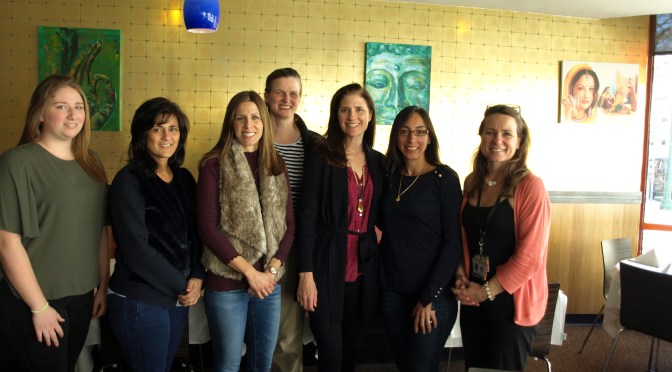
With great pride We Future Cycle is sharing how it is growing. 10 team members are now supporting schools throughout southern Westchester. (3 could unfortunately not join us for this picture)

And what a journey this has been. From the humble beginnings of a single lunchroom to now soon over 40 schools, covering New Rochelle, White Plains, Rye, Blind Brook and soon also Mount Vernon schools. We have also worked in Eastchester, Ossining, Pelham, Tuckahoe and Mamaroneck.

In numbers, that is nearly 33,000 students that are sorting their waste every day. 33,000 students that have learned that there is no away on this earth. 33,000 students who now know about composting and recycling.

It also means that 33,000 Styrofoam trays have been eliminated from the waste stream every single day. Every one of these districts was using foam trays before We Future Cycle advocated for the clean switch to compostable materials. Styrofoam trays contain Styrene, now a classified human carcinogen, are proven to leach chemicals into the food that touches them. We are proud to have been instrumental in eliminating Styrofoam from the menu of 33,000 students.

33,000 students’ food waste is not going any longer to the incinerator to be burnt into our air, instead, it is being composted, creating nutrient rich soil, often sold as potting soil at hardware stores throughout New York State.

And these 33,000 students have families and communities they have changed by bringing the knowledge home and creating change.

We are excited to be saving the world one district at the time and creating a generation of students that care.

Come and join us if you feel strongly about teaching children to become environmentally literate.


We Future Cycle Brings E-Waste Recycling Education to Schools to Improve Dismal 3% Cell Phone Recycling Rate

1 billion cell phones were produced in 2015, with a growth rate of 14% annually. A shocking number especially looking at the dismal recycling rate of 3%.

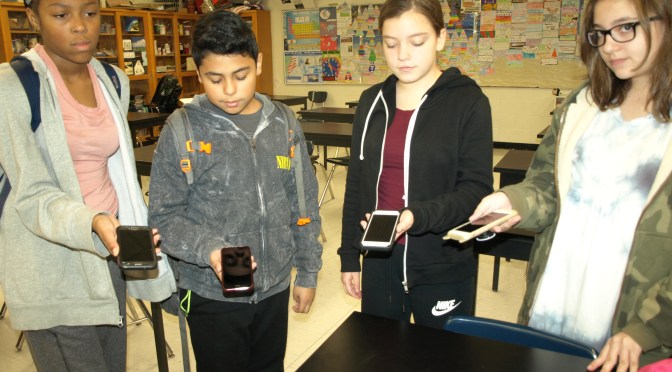
We Future Cycle is bringing E-Waste Recycling Education to Middle Schools in New Rochelle as part of the Science curriculum. Students were asked to raise one hand if they owned a cell phone, and both hands if they had changed their cell phone in the past 18 months. Every single student raised both hands!

Every cell phone contains valuable metals such as copper, tin, silver, gold, cobalt, nickel, aluminum and lithium, not to mention the rare earth minerals like Neodymium, Yttrium, Terbium, Cerium and Europium. Without these metals, there would be no handy device.

Students learned about mining techniques and the unbelievable environmental destruction that goes hand in hand with mining in countries with little or no environmental oversight.

Touching upon child labor in African cobalt mines, learning about mercury contamination in the Amazon while mining for gold and seeing pictures of nickel mines in Mozambique was hard for students. They recoiled in their chairs and some even pushed their ever present phone on their desk to the far corner.

Peru-Gold-Mining-AsnerConnecting students to the origin of the devices they are using is the basis for them to become global citizens and to become engaged in responsible practices.
Students learned about the dismal recycling rate of only 3%, and they all admitted that they have drawers full of antiquated devices not knowing what to do with them.

New York State now requires all consumers to recycle e-waste in a responsible manner. It is against the law to discard a broken computer in the trash. Cell phones however are so small that it is easy to slip into the kitchen trash, but consumers are literally discarding gold!.

According to the EPA : 1 million cell phones contain 75 lbs of gold, 33 lbs of palladium, 35,274 lbs of copper and 772 lbs of silver, just to name a few. 

Recycling metals reduces its environmental foot print by a whopping 90-95%

Recycling cell phones is easy! Just drop them off at any retailer, they are by law required to take them back at no charge. To protect your privacy, take the SIM and other memory chip out and cut it in half.


New Rochelle ALMS Students Learn What Happens When They Flush “gasp”

OLYMPUS DIGITAL CAMERA
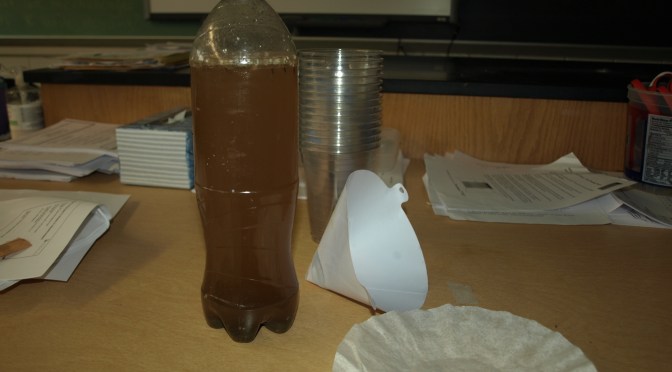
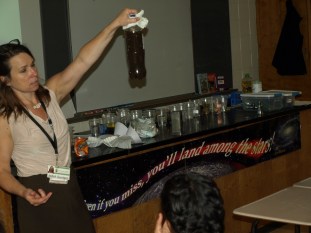
Learning about Waste Water Filtering

Students looked somewhat bored when they heard that they will learn about water and one student piped up smartly :”I know, I know it’s H2O, has a Ph of 7 and can exist in liquid, solid and gaseous state”

With a smile, I asked that student where her water comes from and after a fraction of hesitation came a much more subdued “out of the faucet”…… phrased more like a question than a statement. And she was suddenly wide awake and much more interested.

New Rochelle School District understands that environmental literacy cannot stop at the lunchroom recycling but should be carried throughout the curriculum to have students internalize that their every day actions have a big impact on the environment. Albert Leonard Middle School has invited Anna Giordano into the classroom and students are learning as a curriculum add-on about the environmental foot print of something as mundane as turning on the faucet.

Walking students through where their drinking water comes from, what steps it has to go through before it arrives conveniently at their kitchen faucet was quite eye opening for them.

A collective gasp was heard upon being asked what they think happens when they flush.

Students took a second to process the word “Bio Solids” but quickly chuckled. Seeing pictures of the New Rochelle Waste Water Treatment plant put into prospective the monumental task it is to keep society going.

We covered the steps in the Waste Water Treatment plant and how communities have implemented waste water to drinking water programs. Students shuddered by the thought of former toilet water making its way back into the faucet, but realized at some point that reality requires this and it is ultimately cheaper than ocean water desalination.

And learning about the marketing hoax of bottled water was the true eye-opener for students. Can you imagine 7th graders coming up to express thanks for teaching them about water? Well, it was heartwarming and truly special!


New Rochelle Trinity Students Prove To Be Life Long Learners

20170531_102026 (2)New Rochelle Trinity Elementary School is a shining example on how teaching students young creates life long behavior changes. Two years ago, We Future Cycle introduced the Waste Free Snack program to the school. All students went through class by class presentations about how to reduce packaging waste from snack in the classrooms in addition to making healthier snack choices.

Part of the program is that the healthy snack waste like the banana peel or the apple core will NOT go in the trash, but will be brought by the students down to the lunchroom to be combined with the lunch compost.

On my recent visits to Trinity I was reminded again that learning young is the basis for life long learning.

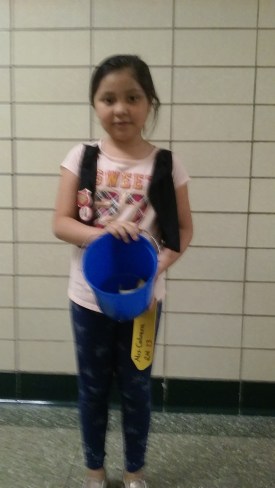
Check out this student very carefully transporting and combining her classrooms healthy snack waste with the compost from the lunchroom.

It gave me goosebumps!