Tag Archives: environmentaleducation

New Rochelle Trinity First Graders Study Worms With Great Enthusiasm

Picture1Walking into a classroom full of excited 6 year olds, toting your worm composting bin is an adventure in itself. The “uuuuh”, “aaahhhha” and “YIKES” were ear splitting, most students also expressed how gross they thought worms were. However, it didn’t take long for them to understand the important role that worms play in our environment.

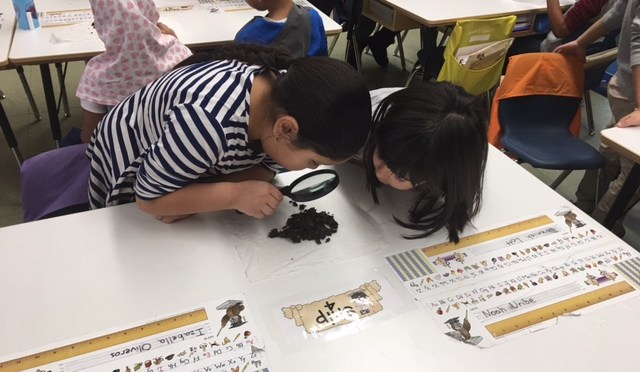
Students learned how worms eat and the explanation of what comes back out was drawing big laughter . They giggled as they tried the new words out. Eisenia Fetida, the latin name of the red wriggle worm, is now a household name among these first graders. Worms and their “castings” were investigate under the magnifying glass and all students touched and smelled the worm castings to make a scientific analysis.

“It feels real smooshy and doesn’t stink at all, just smells like dirt”

“I thought it would be gross to touch it, but it wasn’t, not at all”

“The baby worms were so cute, I wanted to take them home”

We Future Cycle is proud to provide sustainability education to the New Rochelle School District and class by class, students are learning how things work together and how they can make a difference. Fostering understanding for the cycle of life and the importance of all beings in this cycle in young children will change communities.

Vincent’s mom already shared with the teacher how the information came home and how Vincent now considers worms and other critters his friends.

New Rochelle School District has committed funds to Sustainability Education knowing that it is a capital improvement project that will shape and educate the whole child. Truly fantastic.

img_9718

White Plains School District is Solving the Individual Ketchup Pouch Problem

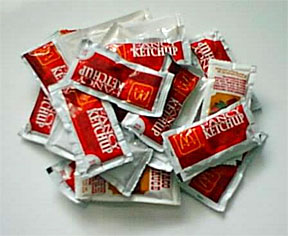
tumblr_kxhn6hra6r1qz8u8ho1_400Individual ketchup pouches are an environmental nightmare in school lunchrooms. The students tend to take them by the fistful, they are fun to step on, and they always end up in the source separated food waste as contaminant. So, why is it so difficult to get rid of them?
Commercial Food service providers list their convenience as the number one reason for usage.

However, convenience for Food Service Providers comes with a high price tag to the schools.

White Plains School District Food Service Director Ed Marra has eliminated individual Ketchup pouches from all schools, replacing them with refillable squeeze bottles, saving money and the environment.

And under the guidance of Laura Mungin, Principal of George Washington Elementary School, the Teaching Assistants are going even further by actually serving the kids as they want, thus making sure nobody is just pumping the pump for the fun of it. A win win situation. Students experience individual care, food is not wasted nor abused as toy, and students are learning proper table behavior.

The advantages are clear.

We Future Cycle is working for years to eliminate single service Ketchup pouches from the menu of the many districts we are working in. May White Plains GW Elementary school be a shining example that there are much better ways than giving in to the convenience of commercial Food Service Providers.

“We had no trash at all today” 250 students have learned about Waste Free Snack

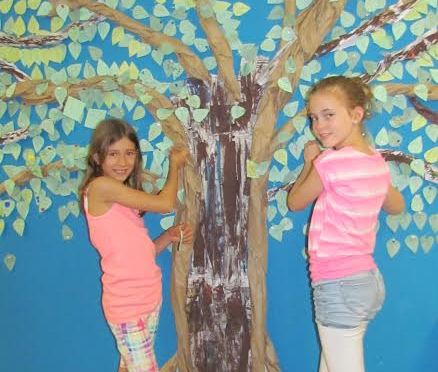
“We had no trash at all today” proudly says Sebastian , a pre K student, and then hugs my leg. And then he gets to paste a Waste Free Leaf on the fabulous tree outside the Principal’s office.

In June I sat surrounded by 3 and 4 year olds. One girl even sitting on my lap. In front of me is a tray with all their waste from snack. Asking little ones like that where the trash goes, they will give you answers like “in the garbage can”, “in the garbage truck”, but when you ask deeper where they thought the garbage truck goes, they all stopped to think. I watched them figure out that -of course- the truck has to go somewhere and then guided them through the process of understanding that Westchester’s trash gets burned into our air.

Together we resolved that it is just as easy to put the sandwich in a washable container than in a single serve plastic baggie. And they got it, amazingly quickly.

Introducing the We Future Cycle Waste Free Snack program that combines education of children and ultimately also their parents with a fun hands-on activity has brought great change to schools. At the German International School White Plains, the entire elementary school is participating. We Future Cycle went to each classroom. We talked about how to package foods in a more responsible way, how to be waste free, how to be healthy to our body and to our Earth and we introduced on-site composting.

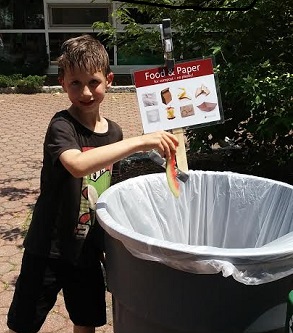
To make decomposition touchable for the students, two composters are placed at a convenient spot and each class learned about it. Each time the students are waste free and have only compostable waste, they are rewarded with a leaf to paste on the beautiful Waste-Free-Tree and two students get to feed the composter. It is a very coveted job and as they dump the fresh banana peel in, they get to check out what happened to yesterdays apple core, bringing natures circle of life close to home.

Needless to say, teachers are reporting that a record numbers of apples and bananas are coming in since the beginning of the program.

But what is the most satisfying for me, is that the students are suddenly aware of how their actions make a difference, they are aware that waste is a problem, and they join me celebrating being waste free.

Waste Free Field Day, A Reality at the German International School White Plains

e53263ec-d918-41bf-88fd-f5c1c2bf5205
Water Bottle Parking

The secret to any event is a very simple equation….what goes in, must come back out.

Under the guidance of Elementary Principal Dr Simone Bruemmer, and Green School coordinator Cynthia Nichols with help from We Future Cycle, 400 students and parents had a wonderful day of fun activities and all without creating ANY TRASH AT ALL.

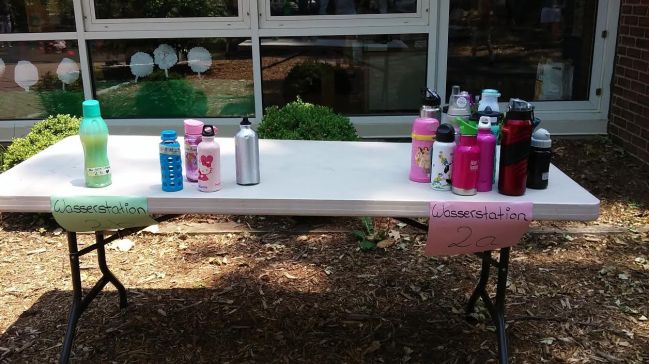
The parents in charge of refreshments brought only finger food foods without any plates, spoons or napkins that needed disposing.  Clothe table linens were used, and instead of disposable single serve water bottles for hydration, the students brought their own reusable bottles and went to the watering station for refills.

6c8ae94c-892e-485f-9986-73cec48a3ed0
Water Bottle Refill Station

All there was to dispose was the melon rind or the fruit kebab stick, both finding their way into the clearly labeled compost bin, to be sent, together with the lunchroom food waste to the commercial composting site.

This school is an inspiration!


White Plains School Milk Cartons Recycled At Material Recovery Facility

DSCN2827On April 23rd, just in time for Earth day, Westchester’s Material Recovery Facility added milk cartons to their list of recyclable materials. They are actually taking not only milk cartons which are called by the industry “gable tops” a paper product container with a PET lining, but also “aseptics” which is a paper container with an aluminum foil and PET liner.

A typical Westchester Elementary school is generating around 500 cartons per day. A mix of cable tops (milk cartons) and aseptics (like juice boxes).

We Future Cycle has been instrumental pushing for Westchester to join the surrounding counties accepting this material. The We Future Cycle recycling program includes sorting the milk cartons from day one. If the material was recycled depended how the school had their waste removal organized.

There are three systems of waste removal within Westchester school districts.

A: The district gets picked up by their municipality for free or for a fee

b: The district pays a commercial carter for waste removal

c: The district has their own employees pick up the waste and feed into their municipal system.

White Plains, New Rochelle and Mamaroneck are feeding into the Westchester MRF and are all We Future Cycle schools. They are excited to be able to finally have the cartons included with commingled.

White Plains has even made adjustments to their pick up schedule to accommodate for the increased recycling amounts as well as the drastically reduced trash.

Before implementing the We Future Cycle recycling program, White Plains DPW picked up trash every day, but now with the drastically reduced waste, and the increased amount of recycling, the schedule was adjusted to twice per week recycling pick up and a reduction down to only 2 or 3 times per week garbage pick up.

Commercial carters do not feed their materials into the Westchester County Material Recovery Facility across from Stew Leonard’s, they use the commercial single stream facilities in the area. The schools using commercial carters have been able to recycle their cartons from day one.


White Plains Church St Elementary School Students Compost Healthy Snack Waste

3ba6684d-abfe-412a-923e-0d5c14d498b8Students from K through 2nd Grade are carefully walking the blue classroom compost pail to the school courtyard that houses a lovely learning garden, a greenhouse with the first projects budding and a nice compost tumbler.

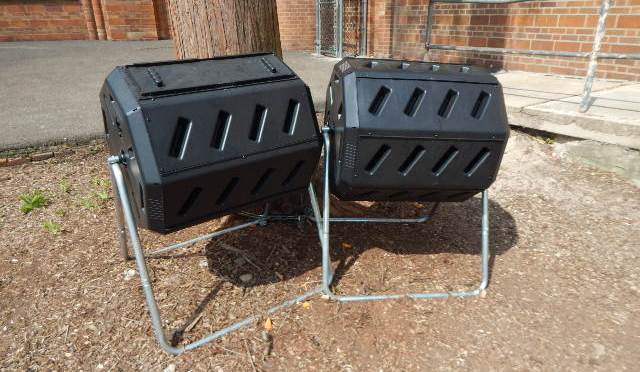
Church St Elementary School adopted the We Future Cycle recycling program in October of 2015 and has decreased its lunchroom waste by a whopping 98%, sorting out all recyclable and compostable materials. In the classrooms the students are diligently sorting out all paper and commingled into the correct bins, leaving very little for the trash can.

Now, under the leadership of Principal Castillo and Assistant Principal Jackson, the school is solving another problem. Mid morning snack!

Students were presented with common snack packaging materials and asked if they thought it was healthy for them. They all knew that chips, cookies, caramelized popcorn and traditionally single served packaged snacks were not healthy for them. One child explained to me: ” Chips are not food, they are just snack”

We Future Cycle presenters went into all kindergarten through 2nd grade classes and helped students make a very important connection. We eat to stay healthy, the foods we eat should be healthy to keep our body healthy, and foods that come directly from the Earth are healthy and naturally without packaging material. Church St students realized that their choice of snack can help their body and their Earth to stay healthy.

Students that bring their snack in reusable containers and are waste free receive a paper leaf, write their name on it, and then paste it to the Waste Free Tree outside the cafeteria. Check out this leaf sprouting tree! DSCN2821

Healthy food waste will make Church St’s garden grow. Two green children from each class are carefully placing all apple cores and banana peels into the composter and over time get to see close up the wonders of decomposition. DSCN2817


New Rochelle Jefferson Elementary Students On-Site Composting To Feed The Garden

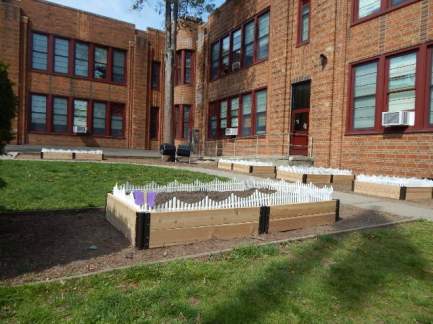
DSCN2386Jefferson Elementary School has partnered with the Manhattanville College to become even greener. Under leadership of Maia Starcevic and Aimee Ferguson, proud recipients of the exclusive Science Wipro Grant, and in cooperation with the Manhattanville College fabulous raised beds were built right at the front playground.

Students and parents were participating and learning about the concept of thematic raised beds and they came out beautiful.

And right next to it, is Jefferson’s new compost tumbler. Because Jefferson’s students are all about feeding the garden. All students are now seasoned waste sorters in the lunchroom and know that most packaging can be recycled, and all food and paper products can be composted.

Bringing Sustainability to the next level, students recently learned in class by class presentations led by We Future Cycle’s experienced trainers about healthy foods and making healthy choices. Fruits and veggies are really the best snack food and students are gobbling them up. Teachers are seeing more and more healthy snacks coming in and also foods  in reusable containers, rather than plastic baggies.  Gone are the chips for snack, and welcome Mr Apple! And it is that apple core, or banana peel that will go into Jefferson’s composter, making the circle of life suddenly touchable for the children.

eefe711b-95b4-4bef-b0c4-4493f7583b44Everyday at snack, the students will put all healthy snack waste into a little blue bucket instead of into the classroom trash bin. That blue bin is then carried into the courtyard and emptied into the composter. Students can see how decomposition takes place over time, and they realize that there is nothing yucky about composting. Each time they bring snack without creating garbage, they are rewarded with a leaf, that will then be proudly pasted to the “Jefferson feeds the Garden” Tree right outside Assistant Principal Ms Bruno’s office.
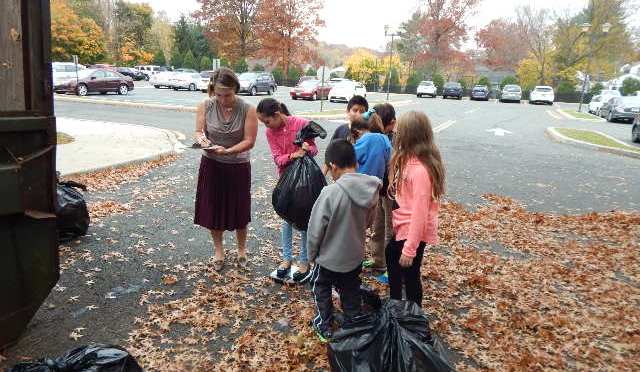
Jefferson students are making a difference, every day, and they are shaping their community by asking mom to give them healthy  snacks without creating any garbage.


School Waste Audits Show Change Is Very Possible

As Sustainability Coordinator and Waste Management Consultant for schools, I am always counting and weighing garbage bags, mostly under the watchful eyes of head custodians that are highly skeptical of being asked to institute a “recycling program”. Sometimes with the help of the students, sometimes without.

The general notion in schools is that when there is a blue bin somewhere, then there is a recycling program. Upon being asked how much commingled they are actually pulling out of the building to be recycled, I am often met with a lengthy explanation on why the material is so contaminated that they have to discard it as trash.

The prevalence is still that ” It is all garbage to me” and ” I don’t have time to recycle”.

That is where We Future Cycle, a non profit organization specialized on large scale sustainability programs comes in.

The mere fact that I come in and count and weigh the garbage puts a value on garbage, which was not there before. Custodial staff usually does not think of the cost associated with garbage, but being told just how much their school generates creates already an awareness.

Schools being supported by We Future Cycle are usually audited before any recycling program component is implemented, and then after each component comes on line, and then periodically to make sure things are still on tracks.

We have seen dramatic reductions from 277 lbs from lunch alone down to 3.5 lbs and 187 lbs from night clean down to 21 lbs.

Showing reduction results from other schools with similar number of students is first met with high degree of skepticism, but once they see me standing on a scale, holding a bulging dripping back of garbage to weigh it, they know, that School Waste Audits show that change is very possible.

Mamaroneck Middle School On WCBS Radio

WCBS Newsradio 880 is one of America’s most listened-to radio stations providing news and information on the AM dial in New York for 45 years.  “Traffic and Weather Together on the 8s” has been a mainstay with New York commuters for decades. With one of the largest, most veteran local news staffs in the country, WCBS provides coverage of breaking news, local news, business, sports and entertainment. WCBS 880 provides a 24 hour news stream via CBS New York.com.

Veteran Reporter Sean Adams came to Hommocks Middle School to interview Dr. Robert Shaps, Superintendent of Schools in Larchmont and Mamaroneck about the newly placed Rocket Composter. We Future Cycle Executive Director Anna Giordano explained that the benefits of the Rocket go beyond the 55% of food waste composted on site, as the program also allowed to sort other recyclable items out of the waste stream, bringing the school to a whopping 86% reduction in waste.

Stories From Main Street: Students Learn Valuable Lessons About Environment In Mamaroneck

mamaroneck rocket


Zero Waste! A Reality at the German International School White Plains

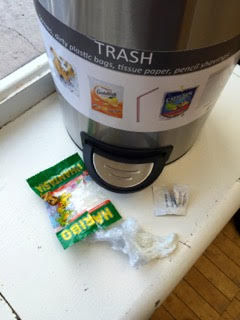
roll out 1We knew from the get go, that the German International School in White Plains would not have much garbage, as it is a cafeteria with all washable plates, but even we were floored when after 450 students plus staff going through the line, we only looked upon 2 (two !) single serve wrappers and a wipe as trash. T H A T   W A S  I T ! 2 Wrappers!
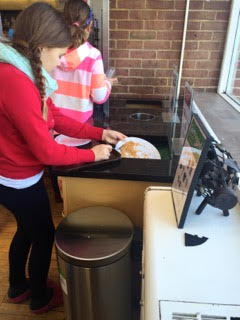
We, at We Future Cycle are used to a 98% reduction of waste through source separation, so something like 400 lbs down to 8 lbs, but that 8 lbs is usually a bulging kitchen size bag full of single serve chip bags, wrappers, juice pouches, snack wrap, plastic baggies and things of the sort.  But 2 wrappers and a wipe were all that stared us in the face after opening the , already miniature sized bathroom type, trash can that was placed in the lunchroom.

roll out 6And talk about the students instantly learning what it means to put their food waste into compost and not -as before- in trash. In classroom and auditorium presentations all grades, from Pre-K through 11 were acquainted with societies biggest problem. Trash!

Making recycling interesting to elementary school students is easy, all you have to do is show them a turtle that is eating a plastic bag and they are fired up to save the world.

Going up the grades and it becomes increasingly difficult to make middle school and high school students excited about recycling, however they all were super interested. Learning about the foot print of Aluminium foil, or that islands 2000 miles away from the closest civilization are clogged up with garbage was an eye opener to these private scholars, that may have not had to make their own beds yet.

The result was immediately visible, total buy in from the entire building population. We Future Cycle is looking forward to doing a building wide audit to see how the building portion of the program works. Judging by the lunchroom, the German International School is very close to making Zero Waste a reality.