Tag Archives: environmentaleducation

We Future Cycle Is Growing, Servicing Soon More Than 40 Schools

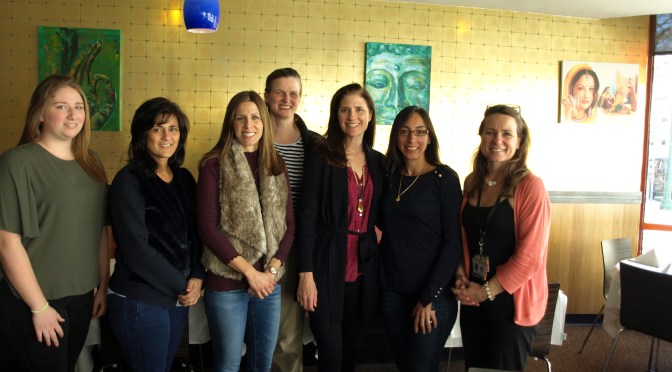
With great pride We Future Cycle is sharing how it is growing. 10 team members are now supporting schools throughout southern Westchester. (3 could unfortunately not join us for this picture)

And what a journey this has been. From the humble beginnings of a single lunchroom to now soon over 40 schools, covering New Rochelle, White Plains, Rye, Blind Brook and soon also Mount Vernon schools. We have also worked in Eastchester, Ossining, Pelham, Tuckahoe and Mamaroneck.

In numbers, that is nearly 33,000 students that are sorting their waste every day. 33,000 students that have learned that there is no away on this earth. 33,000 students who now know about composting and recycling.

It also means that 33,000 Styrofoam trays have been eliminated from the waste stream every single day. Every one of these districts was using foam trays before We Future Cycle advocated for the clean switch to compostable materials. Styrofoam trays contain Styrene, now a classified human carcinogen, are proven to leach chemicals into the food that touches them. We are proud to have been instrumental in eliminating Styrofoam from the menu of 33,000 students.

33,000 students’ food waste is not going any longer to the incinerator to be burnt into our air, instead, it is being composted, creating nutrient rich soil, often sold as potting soil at hardware stores throughout New York State.

And these 33,000 students have families and communities they have changed by bringing the knowledge home and creating change.

We are excited to be saving the world one district at the time and creating a generation of students that care.

Come and join us if you feel strongly about teaching children to become environmentally literate.

 

White Plains Ridgeway Students Are Learning to Look Deeper For The Environment

OLYMPUS DIGITAL CAMERA
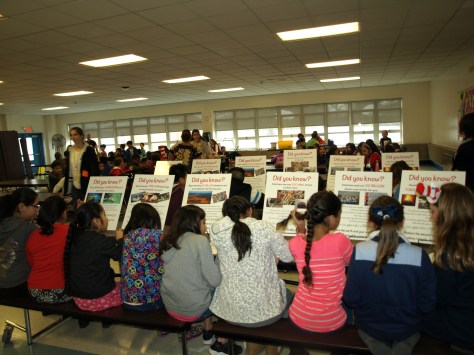
Students answering scavenger hunt questions at Ridgeway Elemantary School

It is unusually quiet in White Plains Ridgeway Elementary School in-door recess because rows of students are sitting in front of large posters trying to figure out the clues.

The “Did you know” lunchroom scavenger hunt program, by We Future Cycle, is challenging students to look beyond recycling. Students learn shocking statistics about the every day things they use. They learn that the US alone uses 500 million straws per day, for an average use time of less than 60 seconds. And they learn that it is easy to make a difference. Just ask yourself ” Do I really need that straw”.

Filling out blanks, unscrambling the clues brought students to ponder facts like that the world uses AND DISCARDS over a trillion plastic bags a year. Each of these plastic bags still being in existence, most ending up floating in our water ways now.

Students learned about the staggering mountains of single use plastic bottles in the US and the depressing recycling rate of only 23%.

We Future Cycle’s goal is to nurture the other two Rs , REDUCE and  REUSE in participating schools. Society cannot recycle itself to zero waste and only through education we can change our throw-away society.

Because there is no away in the world


Teaching Students Young To Care. Family Services of Westchester introduces WeFutureCycle Recycling Program into Pre-k programs

One of the added benefits of teaching young children about recycling is, that they LOVE the hands-on sorting portion. And at least one of the cute youngsters will want to sit on my lap during the presentation. It is just delicious having bright eyed 3 year olds in front (and on top) of you and asking them to identify a material and then place it in the correct recycling bin.

Family Services of Westchester is serving White Plains youngest students in their seven head start centers throughout White Plains. As the We Future Cycle recycling program is now running in all White Plains public schools, reducing garbage by a whopping 97% through diversion into recycling, excess liquid and composting streams, it made sense to incorporate the little ones already. Get ’em young and they will learn for life.

With wonderful support by each center director and the program director, even 3 year olds will learn that their actions matter and make a difference.


White Plains Post Rd Kindergarten Students Eagerly Helping With Recycling

Goosebump alert! I had the pleasure to visit the White Plains Post Rd Elementary School today during K and 1 lunch and it gave me such goosebumps to see loads of K students eager to be part of the solution. Each of these (tiny) troopers ate quickly and then asked to help at the recycling station.

White Plains City School District has implemented the We Future Cycle Recycling Program now in all of their elementary and middle schools, reducing garbage by 97 % in each building through source separation and diversion into recycling and composting streams.

These K students entered school in September and learned how to sort their breakfast and lunch waste in record time. And…. it is something so satisfying to watch a 6 year old casually walking up to the station and carefully sorting his/her materials in the right bin. As I was watching, students even took the time to explain the system to me and then immediately asked if they could help.

Shoulder to shoulder these troopers made sure that all their classmates were doing it right. Seriously ….way to go


Osborn Elementary in Rye, NY Achieves a 97% Waste Diversion Rate!

IMG_8918
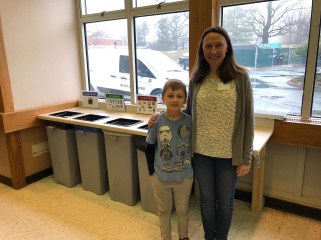
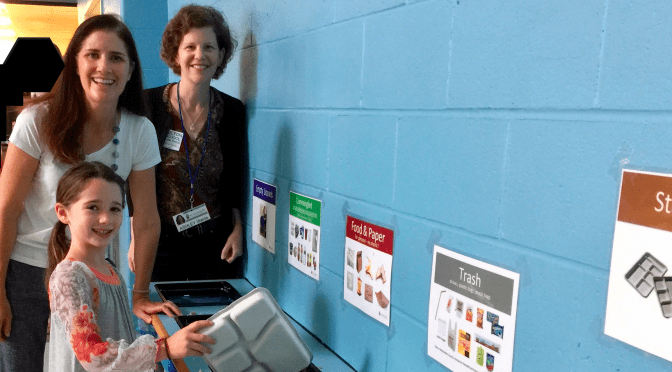
Osborn PTO Co-President Susan Drouin and her son stand proudly by the recycling & composting station!
Today Osborn Elementary School became the 3rd (and final) elementary school in Rye, NY, to implement the We Future Cycle lunchroom recycling and composting program.  Amazingly, each of the 3 Rye elementary schools achieved a 97% waste diversion rate. 
The waste audit revealed the following results. There were 154 lbs total waste (for about 600 students), including:
Liquid: 33lbs (21%)
Commingled (hard plastic, cartons & juice boxes): 29 lbs (19%)
Compost (food & paper): 62 lbs (40%)
Trays (also compostable): 25 lbs (16%)
Trash: 5 lbs (3%)
Only 3% of the lunchroom waste was trash!
Head custodian Tim Connick built 2 recycling stations with countertops; he drilled holes into the countertops, revealing the bins for recycling and waste materials underneath. The counters help keep the system well-organized.  The lunchroom aides were extremely engaged and helped the students adjust to the new system.
As usual, the kids were thrilled with their new lunchtime activity and with creating a healthy environment! Many children ran over to the recycling station with their eyes wide and mouths open in astonishment that launch day was finally here. You would have thought it was Christmas morning and they’d just seen the presents that Santa left under the tree! Their enthusiasm will surely continue as Osborn students are a very thoughtful group. During our classroom presentations to train the K-5 children, they asked “Where does aluminum foil come from?” “How many bags of trash has our school already generated this year?,” “Why don’t we reuse trays?,” and “How do cars get recycled?”  We hope they continue to be inquisitive and apply everything they learn to their lives!
Thank you to the Osborn administration, teachers, aides, PTO and students for giving the We Future Cycle team such a warm welcome and for your commitment to ensuring a healthy environment in the Rye community!


New Rochelle Middle School is Digging Soil To Combat Climate Change

New Rochelle Albert Leonard middle school students are digging soil, in a literal kind of way.

6th graders explored in We Future Cycle classroom sessions the connections between throwing food waste in the garbage and climate change. Learning about methane and leachate got their attention. Just thinking past the garbage can is eye opening for these students.

While New Rochelle’s entire student population is now sorting their lunch waste between Commingled Recycling, Food Waste and Trash, thus reducing trash by a whopping 97%, they have not quite learned what actually happens to the food waste.

In classroom presentations, student were walked through the chemical process of decomposition, they chuckled a bit when asked if the banana looks the same when it comes back out and they quickly got the concept of nutrients, water and energy being the basis for life.

Making connections between how the apple tree takes nutrients out of the ground to grow the apple, which in turn nourishes our body when we eat it, and how the left over  still contains many nutrients that could benefit the soil if put back, but creates havoc if treated as garbage and dumped in a landfill, was a completely new line of thought to all students.

Students had the chance to dig through soil samples, seeing and touching the difference organic matter made in soil samples. They were tasked to make determination in terms of water retention capabilities, nutrient content and how plants might like to grow in that particular soil. Social Studies questions were introduced for students to think about how a the quality of soil might affect the wealth of a country.

What started out with students looking somewhat puzzled at three soil samples on their desk, ended in some fabulous essays about why composting is so important to the survival of our world. Great job Albert Leonard students.


New Rochelle ALMS Students Learn What Happens When They Flush “gasp”

OLYMPUS DIGITAL CAMERA
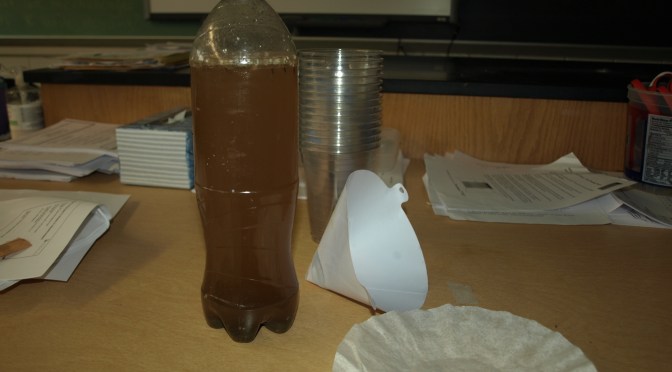
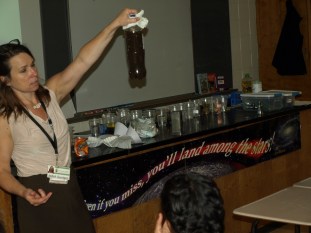
Learning about Waste Water Filtering

Students looked somewhat bored when they heard that they will learn about water and one student piped up smartly :”I know, I know it’s H2O, has a Ph of 7 and can exist in liquid, solid and gaseous state”

With a smile, I asked that student where her water comes from and after a fraction of hesitation came a much more subdued “out of the faucet”…… phrased more like a question than a statement. And she was suddenly wide awake and much more interested.

New Rochelle School District understands that environmental literacy cannot stop at the lunchroom recycling but should be carried throughout the curriculum to have students internalize that their every day actions have a big impact on the environment. Albert Leonard Middle School has invited Anna Giordano into the classroom and students are learning as a curriculum add-on about the environmental foot print of something as mundane as turning on the faucet.

Walking students through where their drinking water comes from, what steps it has to go through before it arrives conveniently at their kitchen faucet was quite eye opening for them.

A collective gasp was heard upon being asked what they think happens when they flush.

Students took a second to process the word “Bio Solids” but quickly chuckled. Seeing pictures of the New Rochelle Waste Water Treatment plant put into prospective the monumental task it is to keep society going.

We covered the steps in the Waste Water Treatment plant and how communities have implemented waste water to drinking water programs. Students shuddered by the thought of former toilet water making its way back into the faucet, but realized at some point that reality requires this and it is ultimately cheaper than ocean water desalination.

And learning about the marketing hoax of bottled water was the true eye-opener for students. Can you imagine 7th graders coming up to express thanks for teaching them about water? Well, it was heartwarming and truly special!


New Rochelle 6th Grader is Taking Action For The Environment

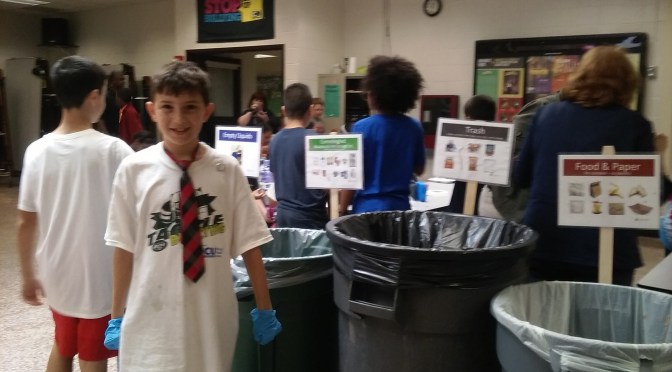
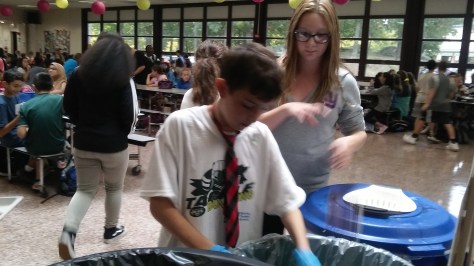
Meet Jonah, a 6th grader at the Albert Leonard Middle School. He is a fire cracker for the environment and makes it his business that the We Future Cycle recycling system is working properly. He explains that climate change is real and if we are not starting to act upon it, we will be in trouble. And Jonah acts on it! Single handed he recruits classmates to help him build a cleaner school world. He made up flyers and posted them around the school and when he gets to the lunchroom, he eats quickly and then dons on gloves to supervise a recycling station.

This kind of above and beyond attitude did not go unnoticed by the school administration and Jonah received the “Upstander of the Week” award by Principal Barnes and Assistant Principal Goldberg. He also received a T-Shirt to go with that award. Big applause, this is what it takes to make a difference.

Thank you Jonah for your personal commitment and your drive to make this a better world.

20170919_123731

Open House in White Plains Elementary School Proves that Students Change Communities

Last night, We Future Cycle hosted an informational table at the White Plains Mamaroneck Avenue School at the Back -To- School Open House. Talking to parents showed that even the K students with only about 10 days of lunchroom sorting under their (tiny) belts brought the information about recycling home and some even effected change already. It was heart warming to hear parents say how excited their kids were about being part to save the world. One mother shared with me that her son told her on day two that she needed to get another bin to sort out recyclables (which she did)

One father shared with me that the favorite word of his brand new kindergarten student is commingled and he sits at dinner and identifies the different materials he sees.

To give some background, White Plains School district hired We Future Cycle in 2015 to implement the recycling program in its elementary schools, moving into the middle schools by 2016 and now starting the HS school. Administration at MAS has been outstanding supporters of this program and this percolates through the building. Students are lining up to help at the recycling stations, students are signing up to help sweep and wipe tables, every single classroom has a recycling stations and while walking the building it was heartwarming to see that every single bin was perfectly sorted.

This proves that environmental education in schools can change communities. It teaches responsibility and personal commitment. All life long lessons. Hats off to MAS students for being the change we want to see in this world.

This slideshow requires JavaScript.

Milton Elementary in Rye Reduces Lunch Waste by 97%!

Milton Elementary launched the We Future Cycle lunchroom recycling and composting program, joining Midland Elementary as the 2nd elementary school in Rye, N.Y. to reduce its lunch waste by 97%!

Milton parent Lesley Reidy and 2nd grade teacher Dayna Reist led the charge to bring the program to the school.  Head custodian Billy Salisbury was the behind-the-scenes hero.  At the end of the last school year, he began to separate the liquids from the waste stream and also had students stack their trays instead of dumping them in the trash with the rest of their leftovers; this change alone reduced the trash from 10-12 bags to 2 bags every day!  His work demonstrated that even small changes make a huge difference in school lunch waste.

Then, Billy and Rye’s Facilities Director, Sam Carder, built a counter to give the recycling station a permanent home. While this is not a “must-have” when launching the program, it’s a nice touch to keep all the bins organized in the proper place every day.  And, it looks great!

After two days of training students in their classrooms, we were ready to launch, eagerly anticipating the results. Our waste audit showed that Milton’s 413 students generate about 95 lbs per waste every day.  Once separated into recycling and composting streams, the waste broke down like this:

Liquid: 22 lbs (23% of total by weight)
Commingled (plastic, cartons and foil): 14 lbs (15%)
Compost (food and paper): 40 lbs (42%)
Trays (also for compost): 16 lbs (17%)
Trash: 3 lbs (3%)

This result is tremendous! A special thank you to the Milton PTO for sponsoring the program and to Principal Dr. Nardone for her support as well. We are thrilled to have Milton on board, and we look forward to bringing additional environmental education to the school in the future.