Tag Archives: environment

Only so little left! Celebrating a 98% diversion into recycling

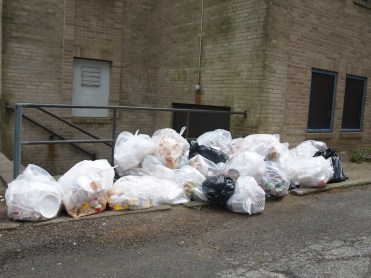
OLYMPUS DIGITAL CAMERADiverting 98% of school lunchroom waste into recycling is now normal at the Westchester Schools that are running the We Future Cycle recycling program. This is what came out of a school with over 1000 students every day. 32 bags of loosely filled, dripping with left over milk.

However once the students learn about the impact sorting can make, this school is down 98% of it original amount. Only that small black bag, weighing 4 lbs is what is actually trash.

The three bags of milk cartons are now going hand in hand with the plastics to the Westchester Material Recovery facility for recycling, and the green large toter contains all the food waste and all the trays to be composted.

Ca

New Rochelle Barnard Students Fundraising To Cut Down On Trash

DSCN2383Under the leadership of Deatra Bailey, 2nd grade teacher at Barnard, students are combining lessons of economics with being environmental. To raise money for reusable sandwich pouches as part of the ongoing effort to cut down on single serve packaging that ends up in the trash, Students are selling healthy snacks taking turns to be the cashier or accountant of the operation.

Barnard Elementary school has students from Pre-K to 2nd grade, but even the kindergarten students are now old hands at sorting their waste.

Barnard joined the We Future Cycle program in January and has been exemplary in continuously teaching environmental awareness. Recently the students learned how to become waste free at snack time. Each time they bring in a completely waste free snack, they are rewarded with a leaf, this leaf, complete with name goes onto a tree in the lobby of the school, to be admired by everyone.

DSCN2381Barnard is now sporting a veritable forest of trees.


White Plains Ridgeway’s 2nd graders welcome their “new friends”

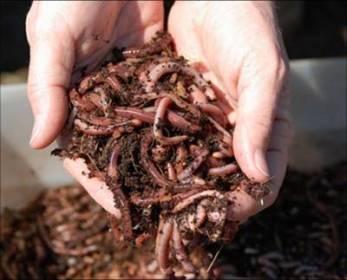
Picture1Meet the new “friends” of Ridgeway’s Ms. Vendola’s second grade. Eager students learned all about the wonders of worm composting, or technically called Vermiculture.

We Future Cycle Executive Director Anna Giordano brought her composting friends to share with the students. Primed and prepared by Ms. Vendola, Students learned in a presentation about how worms eat, breathe, live and of course….poop. The worm casting is what makes vermiculture so desirable, talking about fertilizer on steroids!

This slideshow requires JavaScript.

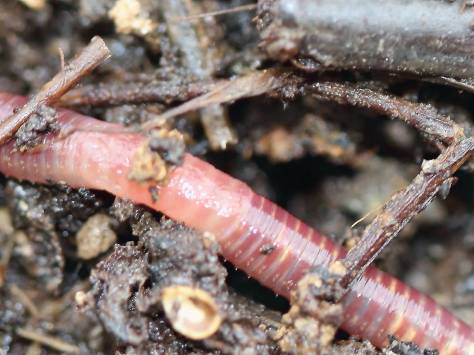
After learning about it, students got to check things out for themselves. On wet paper towels, in a darkened room, each student, armed and dangerous with a magnifying glass looked for baby worms and cocoons. They learned how worms can move and checked out the bristles on the underside (yes, worms have an underside) of the worm that helps them to move.  Picture3

And then we built their very own worm bin and some of Anna Giordano’s “friends” have a new home now at White Plains Ridgeway Elementary School. Students will do scientific observations as to what foods are preferred by the worms, how long it takes for an apple core to be consumed and how fast the worms multiply in a friendly environment. A fascinating, hands-on experience for the students.


White Plains School Milk Cartons Recycled At Material Recovery Facility

DSCN2827On April 23rd, just in time for Earth day, Westchester’s Material Recovery Facility added milk cartons to their list of recyclable materials. They are actually taking not only milk cartons which are called by the industry “gable tops” a paper product container with a PET lining, but also “aseptics” which is a paper container with an aluminum foil and PET liner.

A typical Westchester Elementary school is generating around 500 cartons per day. A mix of cable tops (milk cartons) and aseptics (like juice boxes).

We Future Cycle has been instrumental pushing for Westchester to join the surrounding counties accepting this material. The We Future Cycle recycling program includes sorting the milk cartons from day one. If the material was recycled depended how the school had their waste removal organized.

There are three systems of waste removal within Westchester school districts.

A: The district gets picked up by their municipality for free or for a fee

b: The district pays a commercial carter for waste removal

c: The district has their own employees pick up the waste and feed into their municipal system.

White Plains, New Rochelle and Mamaroneck are feeding into the Westchester MRF and are all We Future Cycle schools. They are excited to be able to finally have the cartons included with commingled.

White Plains has even made adjustments to their pick up schedule to accommodate for the increased recycling amounts as well as the drastically reduced trash.

Before implementing the We Future Cycle recycling program, White Plains DPW picked up trash every day, but now with the drastically reduced waste, and the increased amount of recycling, the schedule was adjusted to twice per week recycling pick up and a reduction down to only 2 or 3 times per week garbage pick up.

Commercial carters do not feed their materials into the Westchester County Material Recovery Facility across from Stew Leonard’s, they use the commercial single stream facilities in the area. The schools using commercial carters have been able to recycle their cartons from day one.


White Plains Church St Elementary School Students Compost Healthy Snack Waste

3ba6684d-abfe-412a-923e-0d5c14d498b8Students from K through 2nd Grade are carefully walking the blue classroom compost pail to the school courtyard that houses a lovely learning garden, a greenhouse with the first projects budding and a nice compost tumbler.

Church St Elementary School adopted the We Future Cycle recycling program in October of 2015 and has decreased its lunchroom waste by a whopping 98%, sorting out all recyclable and compostable materials. In the classrooms the students are diligently sorting out all paper and commingled into the correct bins, leaving very little for the trash can.

Now, under the leadership of Principal Castillo and Assistant Principal Jackson, the school is solving another problem. Mid morning snack!

Students were presented with common snack packaging materials and asked if they thought it was healthy for them. They all knew that chips, cookies, caramelized popcorn and traditionally single served packaged snacks were not healthy for them. One child explained to me: ” Chips are not food, they are just snack”

We Future Cycle presenters went into all kindergarten through 2nd grade classes and helped students make a very important connection. We eat to stay healthy, the foods we eat should be healthy to keep our body healthy, and foods that come directly from the Earth are healthy and naturally without packaging material. Church St students realized that their choice of snack can help their body and their Earth to stay healthy.

Students that bring their snack in reusable containers and are waste free receive a paper leaf, write their name on it, and then paste it to the Waste Free Tree outside the cafeteria. Check out this leaf sprouting tree! DSCN2821

Healthy food waste will make Church St’s garden grow. Two green children from each class are carefully placing all apple cores and banana peels into the composter and over time get to see close up the wonders of decomposition. DSCN2817


Mamaroneck Middle School On WCBS Radio

WCBS Newsradio 880 is one of America’s most listened-to radio stations providing news and information on the AM dial in New York for 45 years.  “Traffic and Weather Together on the 8s” has been a mainstay with New York commuters for decades. With one of the largest, most veteran local news staffs in the country, WCBS provides coverage of breaking news, local news, business, sports and entertainment. WCBS 880 provides a 24 hour news stream via CBS New York.com.

Veteran Reporter Sean Adams came to Hommocks Middle School to interview Dr. Robert Shaps, Superintendent of Schools in Larchmont and Mamaroneck about the newly placed Rocket Composter. We Future Cycle Executive Director Anna Giordano explained that the benefits of the Rocket go beyond the 55% of food waste composted on site, as the program also allowed to sort other recyclable items out of the waste stream, bringing the school to a whopping 86% reduction in waste.

Stories From Main Street: Students Learn Valuable Lessons About Environment In Mamaroneck

mamaroneck rocket


857 plastic bags per minute used in Westchester alone

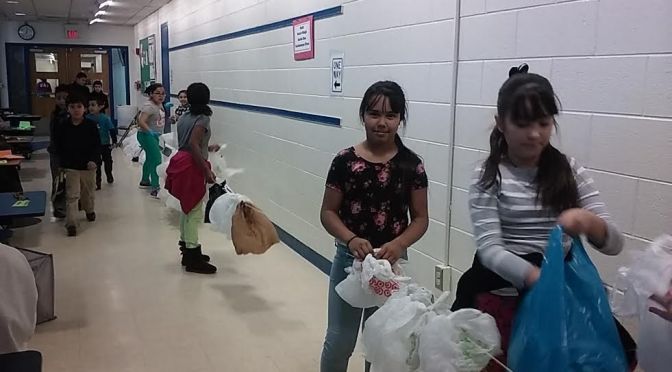
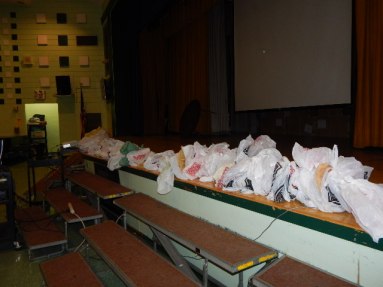
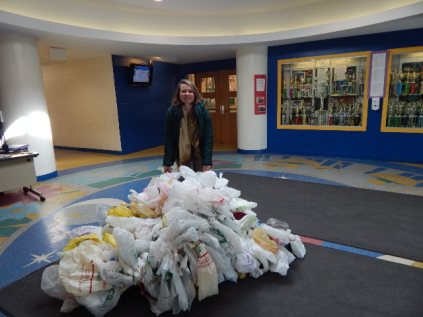
DSCN2265This it what 857 plastic bags look like, strung up on a clothes line, and spread out to make a powerful statement. It is truly a mind boggling amount. It took 7 children two lunch periods to string them all up.

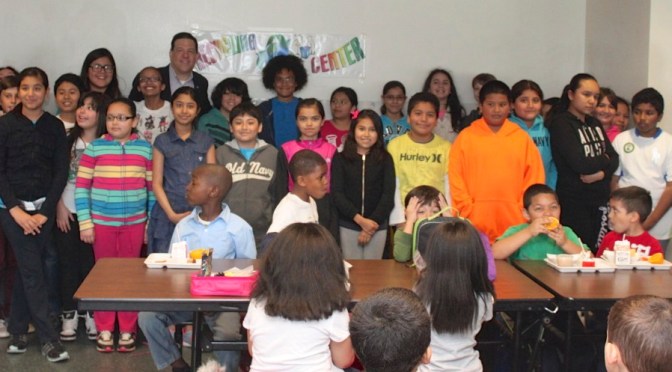
DSCN2284New Rochelle Columbus students are learning just HOW bad plastic bags are for our environment and how the small effort of bringing your own bag to the grocery store can make a huge difference.

In powerful essays, these students laid out just how easy it is to solve this problem, just bring your own bags.


Teaching students to care about the environment

New Rochelle Trinity Elementary School Assistant Principal Inas Morsi Hogans has been for years a stout supporter of the We Future Cycle recycling program and knows that it takes regular refreshers for students to understand why they are sorting their lunch waste in the cafeteria.

Only if our head knows the why, the hands will do the what automatically.

Ms Morsi Hogans invited We Future Cycle to do student presentations in each classroom to refresh the older grades on how the program works, and of course to teach the younger grades. We Future Cycle staff members went from class room to classroom teaching the students that an empty bottle or peanut butter  jar is not trash, but rather material to make something new out of. The students were fascinated to learn where “away” was, when one talks about throwing something away.

In Westchester, “away” is the incinerator up the Hudson in Peekskill. A large Waste-to-Energy facility that burns Westchester’s 2500 daily tons of garbage into our air.

OLYMPUS DIGITAL CAMERAA regular lunch trash bag is a 55 gal 1mm thick trash bag. A school with 600 students generates between 13 to 20 bags of trash every lunch, each weighing around 12 -15 lbs, which means 333,333 bags of trash are burnt every day. That is an unfathomable number. I cannot even wrap my head around what kind of volume that represents. And that is just Westchester.

OLYMPUS DIGITAL CAMERAAnd New Rochelle Trinity students are drastically reducing their lunch waste by sorting. Out of 266 lbs of waste, only 4.5 lbs were non recyclable.

That is a whopping 98.3% reduction, simply by sorting out all the recycling, composting, excess liquid and the untouched foods. Through education and daily hands on participation, Trinity students care and they are making a huge difference. Can you just imagine if EVERY school did that? We Future Cycle is working towards just that.


Rye’s Midland Elementary School Reduces Waste by 97%

Today was a big day at Rye’s Midland Elementary School. With great support and enthusiasm of Principal Jim Boylan, Assistant Principal Joanna Napolitano and the PTO, under the leadership of Cali Gibbs and Emily Keenan, Midland’s students made a huge splash of a difference!
DSCN2127.JPG

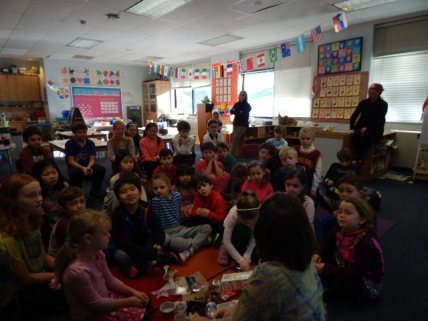
The We Future Cycle team went from classroom to classroom to present the program, show the different materials, answer questions, model the process and stir up a big energetic frenzy to save the world. These students were READY to make a difference.

993a8b47-09cd-42e7-ad0f-7319ff71c8e6In the lunchroom the newly installed station was put into action, and despite the most challenging of lunch menu days, which is brunch for lunch with syrup containers, the students pulled off a flawless sorting.

The results speak for themselves. From 161 lbs of total waste:

Liquid = 65 lbs (40.4%)
Cartons = 8 lbs (5%)
Commingled plastics = 13.5 lbs (8.4%)
Compost (food and paper) = 42.5 lbs (26.4%)
Trays = 27.5 lbs (17%)
Trash = 4.5 lbs (2.8%)

Only 2.8% of the entire lunchroom waste was actually trash!

A 97% diversion into recycling and composting streams is really outstanding. Though what is even more astounding is the small amount of food waste. We are seeing usually more like 50-60% food waste in public schools with the NY State Lunch Program, but this school leaves all food choices up the students, there is no “you have to take these items to qualify for a full lunch” which results in MUCH less food waste and we also practically did not have a share basket of unopened food. Truly a wonderful thing!

While we are celebrating this fabulous result, we are also seeing some areas of opportunity when it comes to single serve offerings from food service. Principal Boylan realized that single serve ketchup pouches, syrup containers, hand wipes and others are making it very hard for students to timely sort their lunch waste.  The equation is easy…… “what goes in, must come out.” Mr Boylan will see how he can help his students do an even better job sorting their lunch waste into recycling and composting by managing the incoming flow of packaging and possibly switching to squeeze bottles and other dispensers.

We Future Cycle will continue to support Midland Elementary School for one week and we are sure that the hand off to the local champions as well as the very enthusiastic and supportive PTO will lead to it being embedded into the culture of the school very quickly, becoming the “new normal”.

The Cost Of School Lunch Packaging to Society

We all know a regular hectic morning, between getting ourselves ready for work, getting sluggish children out of bed, showering them is optional, a cursory brush of the hair, feeding them, throwing together their lunch and snack with a quick grab into the pantry to put pre-packaged convenience food into their lunchbox, and ,still out of breath, we run them to the bus stop. Phew.

We don’t have time to think what price tag might be attached to that pre-packaged food at the other end. We are just happy to have made it again, another day of hectic working parents.

We -at We Future Cycle- working in the classrooms and in the lunchroom teaching the children about the waste and where “away” is, see it every day. We see the plastic baggies, the pre packaged meat, cracker and sauce packages, the juice boxes, the juice pouches, the single serve apple sauce pouches. We see the huge amounts of packaging materials that come in, all in the name of convenience.

As most of us don’t think past the curb where we bring our garbage can twice per week, there is no understanding what happens to the stuff once it leaves our house. It just conveniently “goes away”. Students in schools that are running the We Future Cycle Recycling program are learning that there is no “away”. Older students also learn about the cost of “away”.

Schools are spending a large portion of their budget on waste management. Every dollar spent on Waste Management is a dollar NOT spent in the classroom.

Parental convenience comes with a price tag to society.

There is a much better way, that will save money on both ends and only requires a little bit of planning. Packaging a lunch from fresh ingredients in a reusable box, and sending watered down juice in a reusable bottle will solve two big problems in schools. It will reduce the waste management costs and it will feed the children healthier to allow for better learning. I am sure you will agree with me……our children are worth the little effort.