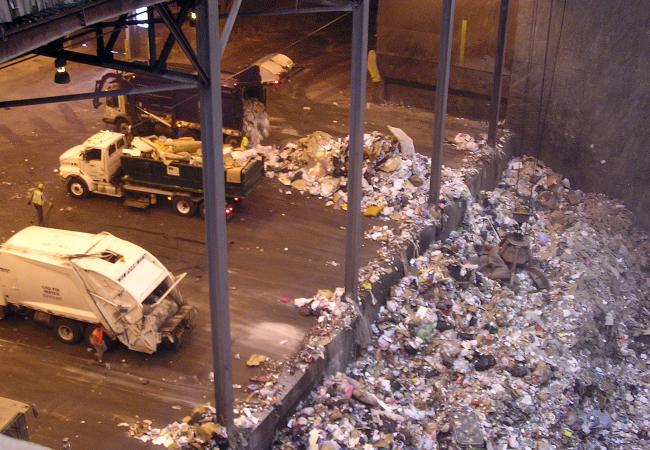
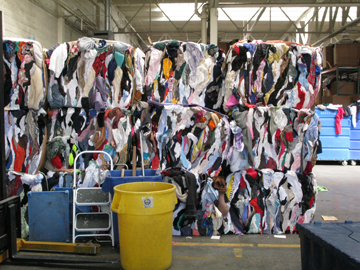
Tackling Food Waste In School District Lunchrooms To Make A Difference

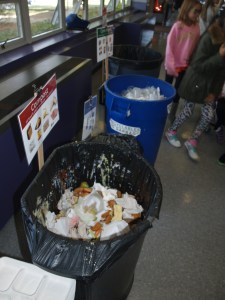
IMG_0284This is completely untouched food from just one lunch period in one school.

Before schools implemented the We Future Cycle Recycling program, this untouched food went unnoticed right into the garbage can.

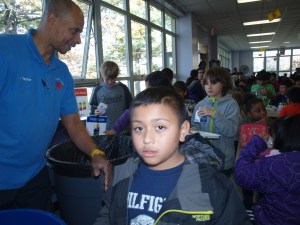
unnamed (2)However, now as additional benefit to source separating in the lunchroom this food is sorted into a share basket, ready to be  consumed by either other children within the school during lunch, afterschool program or while being at the nurses office, or donating it to a local soup kitchen. Both is legal, safe and infinitely preferred over just trashing it.

We Future Cycle is often met with resistance when suggesting to donate the sorted out food. Standard practice in the school cafeterias is that if the milk runs out of date over the weekend, instead of donating it on Friday, it is being tossed on Monday, packaging at all.

Arguments given are that food service does not want to be liable should someone get sick when consuming donated food, or that it is illegal to donate tax payer sponsored food, or that it is too much work to organize the logistics around food donation.

As a matter of fact, it is not only legal, but also encouraged to donate the food. The Good Samaritan Act  holds any donor harmless and We Future Cycle will pair the school up with the closest local, health department vetted soup kitchen, that will come and pick up right after lunch. A complete Win Win situation for all parties.

Click to download and read the following:

And think about the social lesson to the children if they are involved in the process.

However, the best way to avoid untouched food waste is to teach the children (and their parents) about choices and how to refuse when they do not intend to consume a food item.

In the lunchrooms we see so many children dumping the lovingly made sandwich from mom right into compost, without ever taking a bite out of it. And off they go to stand in line at the snack desk to buy chips and ice cream.

I am sure there is a better way. Let’s tackle it to make a difference.


White Plains School District Food Service, an Active Participant to Reduce Waste

OLYMPUS DIGITAL CAMERA
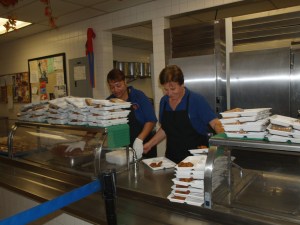
Church St Food Service workers preparing trays to keep  packaging at minimum

The success of source separating lunchrooms and teaching students about sustainable practices depends immensely on partnership with food service. The equation is easy, what goes in, must come back out. If food service sends many single serve packaging into the lunchroom, it makes sorting very difficult, potentially contaminating the food waste with plastic and ending up in the trash (or on the floor).

Have you ever tried peeling a sticky opened ketchup pouch off a tray? Not a pretty picture.

Ed Marra, Director of Food Service for the White Plains City School District, is a fabulous team player who took the We Future Cycle recycling program as chance to educate all his staff in sustainable practices. While only two of White Plains schools are piloting the program right now,  Mr Marra knew that all school employees can benefit from this kind of education.

He invited Anna Giordano to the Superintendents Training Day at White Plains High School to educate the staff not only about how the program works and what the children are learning, but going the extra mile to outline the environmental and social foot print each material has.

OLYMPUS DIGITAL CAMERA
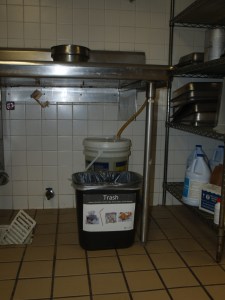
only 1/4 bin of trash per day

Cafeteria Manager Sadie Tatum shared that she had no idea that Aluminum foil comes from strip mining the rain forest and she has immediately stopped using aluminum foil in her cafeteria and her home.  Ms Tatum and her team excitedly set up their kitchen to follow the same sorting guidelines and all are stunned to see that at the end of a day, they had less then a quarter office size bin as trash. All food, packaging and soft plastic was sorted out to be composted and recycled, and the only trash was gloves and dirty soft plastics.

OLYMPUS DIGITAL CAMERA

“It is not hard, no big deal at all to sort”, Ms Tatum said when asked on how the system affected her normal day.

Mr. Marra actively supports the program by eliminating most single serve packaging, replacing them with squeeze bottles and dispensers. He also affected the change that bagel condiments were made “by choice” items and not just placed on the tray of the children, whether they wanted the creme cheese or not.

These kinds of  adjustments are often met with resistance. Arguments against replacing single serve ketchup pouches are that it is too much work to refill the squeeze bottles, or the students would take too much. However in White Plains, thanks to Mr Marra’s decisive leadership and the training,  the transition was flawless and it allowed Church St Elementary School to become a new Zero Waste Facility with less then 1.7% of trash, or only 3 lbs (!!!) of trash coming out of a lunchroom with 800 students.


White Plains Church St Elementary School Nearly At Zero Waste

White Plains Church St Elementary School under the leadership of Principal Myra Castillo and Assistant Principal Merle Jackson have reached nearly Zero Waste  with only 3 lbs of trash from nearly 700 students in the lunchroom.  Outstanding!

Ms Castillo knew that this program can only work if all departments work together for a common goal. She allowed time for food service, facilities, teachers and teachers aids to be trained on why the We Future Cycle recycling program is so valuable for the social development of the students.

And both Ms Castillo and Ms Jackson are putting their money where their mouth is and are actively participating in teaching the students on how to sort.

OLYMPUS DIGITAL CAMERA
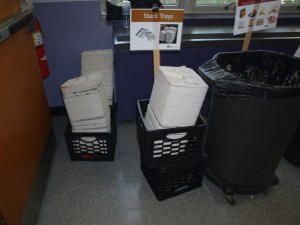
33 lbs of compostable trays sorted out

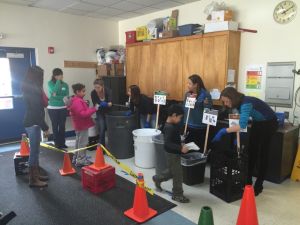
The system is easy. First the students empty their left over liquids into the bucket, sorting the container into either milk cartons or commingled, then all remaining plastic is sorted into commingled, all food waste and paper products are dumped into compost and the tray is stacked neatly. Done.

OLYMPUS DIGITAL CAMERA
42.5 lbs of compostable food waste

Church St had a whopping 76 lbs of excess liquid, a large bag of commingled, 2 large bags of milk cartons, 75.5 lbs of compostable material and only 3 lbs of trash, that is 1.7%. Nearly Zero Waste!

6 students helped with the weighing and counting. Thank you

Only the students that bring lunch from home in disposable packaging are contributing to trash. Non recyclable are chip bags, drink pouches, soft plastic wrappers, sandwich baggies, go go squeeze packaging and things along those lines. Next steps will be to actively involve parents to be part of the zero waste solution.

OLYMPUS DIGITAL CAMERA
Smiling head custodian Jody Raynor helping students sort

A huge shout out to Head Custodian Jody Raynor, whose support in this program is invaluable. He is being called  ” Mr Smiles” by the students.  Trust me, I am not making this up.  He does smile all the time, while helping the students to sort. Truly WAY TO GO!

Church St Elementary School is a prime example on how support by all departments can lead to something as fabulous as nearly zero waste.


Joining We Future Cycle To Make A Difference

Enid Blount Press joined WeFutureCycle to help be part of the solution of recycling and composting in the schools in 2015.

Enid is a mom and a professional musician.

On the day her 2nd Grade daughter came home, distraught that the school had brought back Styrofoam trays in the lunchroom, she decided to call the school system and ask what their plan was for bringing back compostable trays.  Their response was that the cardboard trays would be back 5 months later, in the fall.   Joining Anna Giordano, who was behind getting the Styrofoam out of the schools, was her next step.

Enid now helps in the New Rochelle school system as well as other schools with the composting and recycling in the lunchrooms.  Enid is “thrilled to help tackle the waste” and provide a better environmental education for our community along with her colleagues.

We Future Cycle is extremely proud to have Enid. She immediately jumped into action by joining the implementation at the White Plains Church St Elementary School.

White Plains Ridgeway Elementary School reduces garbage by 95%

White Plains Ridgeway Elementary school was chosen as one of the pilots to implement the We Future Cycle School lunch recycling program.

With enthusiastic support from Assistant Principal James Graziano  Ridgeway students learned  in assemblies that packaging is not trash but material for new things, they learned where the garbage goes when it is not sorted or recyclable, and they all agreed that they did not want to live next to a dump nor an incinerator. For good measures, they also agreed that animals probably won’t like living next to one either.

The custodial staff, under leadership of Pedro Molina, was super supportive, helping to set up the recycling station, going way out of their way to make the school a success. On Halloween a full bodied Batman was helping students at the recycling station. How fabulous is that!

Ridgeway had 124 lbs of waste of which only 6 lbs were actual trash, all other was either liquid, food waste, milk cartons or commingled recycling. A whopping 95% reduction. Now, that is truly something to write home about.

Ridgunnamed (5)eway’s parents came to “do lunch” with their children, helping to train the students in the new sorting system.  It takes active supervision and guidance to teach 700 students to sort and these parents were up to the task, fully supporting the efforts of the school to create a generation of kids that care.
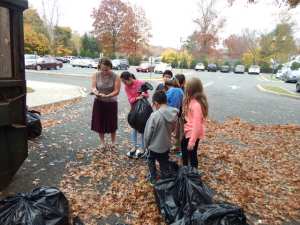
White Plains Church St Students are learning about “away”

When you say ” I am throwing something away” , where is “away”?

That is a question  students at Church St Elementary school learned the answer to. And they didn’t like it, not one bit.

Looking at pictures of land fills and incinerators brought even the littlest students to a open mouthed gasp.  November 6th 2015 was launch date of the We Future Cycle Recycling program at Church St and it started with assemblies to all students in the auditorium. In a lively presentation, students learned to look differently at packaging material. What they first considered trash, they saw later as raw material for new things, the premise of recycling.  What they first saw as a yummy snack, they later saw as food that created trash because of its unrecyclable packaging.  They also learned just how much garbage is generated at a school, something they had never thought of before. And they learned, that most of what they generate can be recycled if it was just sorted out. Now they are chomping at the bit to start sorting.

DSCN19056 Safety Squat students were chosen to assist with the “before recycling” waste audit. They stood open mouthed in front of the 15 bags of bulging trash. They weighed each bag, we calculated totals, looked at median bag weights, offered suggestions why some bags were much heavier then others, while not being necessarily more bulky.  Suggestions included that the bags may have come from younger students as there was more heavy food and more left over liquid in these bags.

Church St generated that day 15 bags of trash, weighing a total of 204 lbs. Anna Giordano, from We Future Cycle, asked the students to imagine what a ton of garbage looked like. Step by step, the students worked to identify that 200  of their own lunchroom bags would equal 2000 lbs. Upon learning that Westchester Ct generates more then 2300 tons of garbage per day, one boy sadly commented “and that is just Westchester”. A very mature deduction from a 5th grader.

From Monday Nov 9th, Church St students will be separating their lunchroom waste into waste liquid, milk cartons, commingled and food waste and the students are looking forward to diverting an estimated 90% away from trash and into recycling.

Church St is all geared up to make a difference. Way to go!


Hastings: Astonishing First Year Results from We Future Cycle Program

IMG_0258Can you imagine 110 times the amount of garbage as in this picture? Well, this is what Hastings-on-Hudson school district has not generated in the past year thanks the robust We Future Cycle recycling program it adopted last year. About 22 tons.

Thanks to the endless energy and support of Maureen Carabello, Treasurer, as well as the two head custodians in the elementary school and the middle/high school Hastings can look proudly upon major accomplishments.

Both buildings reduced their garbage so significantly that they reduced the number of dumpster by 50% and were able to renegotiate a $2000.00 reduction in their pick up cost.

Custodial staff was also able to reduce their plastic bag usage and purchases by 50% which is an expense often overlooked.

Truly an astonishing first year results. Hats off to Hastings-on-Hudson.

We Future Cycle and Eco Pel join forces to bring Textile Recycling to Pelham Town Clean up

P1000843On October 24th at 10 am 60 Pelham residents arrived, ready to tackle the problem of litter. EcoPel, the organizer, joined forces with We Future Cycle to include in this 4th year clean up, also textile recycling.

As grassroots, non-partisan organization in Pelham NY concerned with environmental issues, it is important to get the message out, and this year EcoPel is concentrating on schools and textiles.   There is a ground swell of concerned citizens and EcoPel was pleased to have this fantastic turn out.

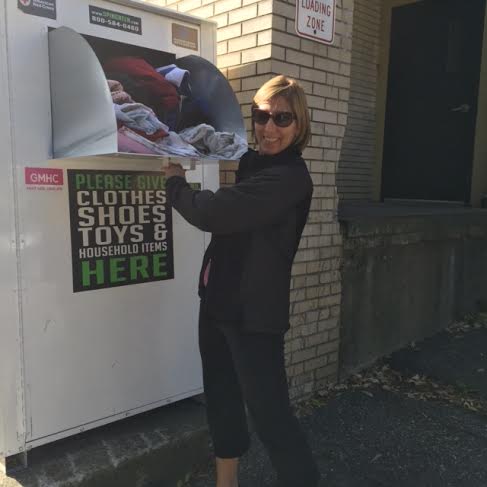
unnamed (3)A make shift donation area supervised by students was set up and loads of textiles were brought to be recycled, rather then being disposed of in the trash. These textiles went into a Spin Green Textile recycling bin at the Columbus Elementary School in New Rochelle. A win win situation. Pelham was able to divert textile from the waste, educated their citizens and Columbus is able to receive the revenue from the bin for their students.

EcoPel successfully integrated the use social media to spread the word to the adults in the Pelham community as well as the local papers.  This year EcoPel also integrated the local church into their campaign, as the event was featured on the weekly church bulletin.

All of Pelhams High School and Middle Scholl students are required to complete community service hours to graduate.   EcoPel contacted many teachers and guidance counselors at the schools to get the word out to the students.  At the events the names of the participating students were collected so appropriate credit can be given.

unnamed (1)A success event, due to diligent work of the EcoPel members getting the word out, and now the knowledge that textiles are recyclable is starting to grow roots.  Way to go!

Research: Longer Lunch Periods Mean Healthier Eating and Less Waste

According to a new study published in the Journal of the Academy of Nutrition and Dietetics, students with 20 minutes or fewer to eat at lunchtime rarely finish their meal and make unhealthier food choices.

While most elementary school children have about 30 minute lunch periods in the U.S., some spend much of their lunch period standing in line waiting to get their lunch.  We often see students come to the source separation station to recycle and compost leftovers with only a few bites of their lunch consumed.  When we ask why they didn’t eat more sometimes they say they didn’t like the food; however just as frequently they will say “I didn’t have time to eat everything.”

[Read the full article here]

This response confuses school administrators, as it would seem that 30 minutes is sufficient for a child to each lunch.  However, we have observed that students spend a lot of their lunch period talking, as it is often the first opportunity during the school day that they can relax and talk with their friends.  Socializing often takes priority to eating!

The research – and We Future Cycle – offer recommendations about how to reduce lunchroom waste and to encourage healthier eating.  Designing lunchrooms and lunch schedules to reduce wait times on lunch lines, and to offer as extensive lunch periods as possible, are constructive ideas.  While recycling and composting is great, the best way to reduce waste is to not create it!

New Rochelle’s Elementary Schools Recycle 2,000 lbs of Textiles In 3 Months.

New Rochelle’s Webster and Columbus Elementary Schools are extending their sustainability efforts beyond their successful lunchrooms. We Future Cycle introduced Textile Recycling through Spin Green as a fabulous fundraiser and both school principals eagerly embraced the initiative.

20090716_wastetoenergy_plant_33

According to the EPA, Americans discard 13.1 million tons of textiles per year and there is only a 15% recycling rate. Many people give nice things as hand-me-downs away, but what to do with the stained T-shirt, the holed toddler jeans or –gasp– the underwear with the rip……?  Easy…recycle them in our Spin Green Textile Recycling Bin.

unnamed (7)We parents know how fast children grow and what clothes look like after a few months on an active child, but instead of discarding them into the trash, consider supporting the schools by donating them into their recycling bins. Any dirty sock, ripped sheet, old stuffed animal can go, anything that is clothy. Even shoes, sleeping bags, old blankets.

Once donated the textiles go one of these routes.

  1. The re-use avenue where usable clothes are sorted out and sold through second hand clothing stores or thrift shops.
  2.  The recycle avenue where the clothes are sorted according to material and then shredded down for its fiber to be used as rags or as stuffing for car seats and other applications.

goodwill_12smDiscarded textiles come with a huge price tag to society. They account for 4.9% of the municipal waste.

For Westchester, with its 2,000 tons/day garbage about 100 tons are discarded textiles EVERY DAY. At around $80 per ton tipping fee (which is just the cost to dump the load onto the incinerator floor, no transportation or labor cost are included yet, and of course no secondary cost such as road repair or environmental consideration), tax payers are footing an $8000.00 bill every day to make a resource -literally- disappear into thin air.

To learn more about the footprint of textiles here is a very interesting article.

The textile industry, according to the U.S. Energy Information Administration, is the 5th largest contributor to CO2 emissions in the United States, after primary metals, nonmetallic mineral products, petroleum and chemicals.

The textile industry is huge, and it is a huge producer of greenhouse gasses.  Today’s textile industry is one of the largest sources of greenhouse gasses (GHG’s) on Earth, due to its huge size. In 2008,  annual global textile production was estimated at  60 billion kilograms (KG) of fabric.  The estimated energy and water needed to produce that amount of fabric boggles the mind:

  • 1,074 billion kWh of electricity  or 132 million metric tons of coal and
  • between 6 – 9 trillion liters of water

Thanks to Melissa Passarelli and Sonia Nunez, students of Columbus and Webster are learning about the importance of recycling textiles.