Mamaroneck’s Hommocks Middle School is the first public school in Westchester County to proudly operate a Rocket composter. Seventy-seven pounds of food waste are gobbled up daily and through the We Future Cycle sorting program, and Hommocks is now diverting 86% of its waste into composting or recycling streams.
This is what 254 lbs of lunchroom waste look like, and — believe it or not—- only 3 lbs of it, was actually trash. Everything else is being fed into food waste composting and recycling. 72 lbs went as left over liquid down the drain, and the students sorted 15.5 lbs of untouched food out to donate to the local soup kitchen.
That is a whopping 98.8% reduction. Seriously …. way to go.
Jefferson Elementary School under the leadership of Kim Nieves and LeAnn Bruno has always been on New Rochelle’s forefront to bring sustainability to their students.
Already in 2011, when the We Future Cycle Recycling program was in its infancy and New Rochelle was still serving its students on Styrofoam trays, Ms Nieves and Ms Bruno knew that making the students partners and teaching them to care and sort is a life long skill.
Fortunately, after a 5 year battle, Styrofoam is permanently off the menu in New Rochelle and We Future Cycle gives full credit for this to Jeff White, Assistant Superintendent of Business. Mr White, being new to the district, saw immediately the incredible social, educational and environmental value that the program offers to the children and understood that serving our young ones on a material that contains Styrene, a chemical that has recently been classified as “reasonably anticipated human carcinogen” was inappropriate, no matter how much less expensive it might be.
Jefferson adjusted its program to follow We Future Cycle’s guidelines, so all New Rochelle schools are set up exactly the same. We Future Cycle is enjoying working with Jefferson’s enthusiastic recyclers. There is nothing as rewarding as having a kindergarten student hug your leg and say thank you for teaching her to recycle.
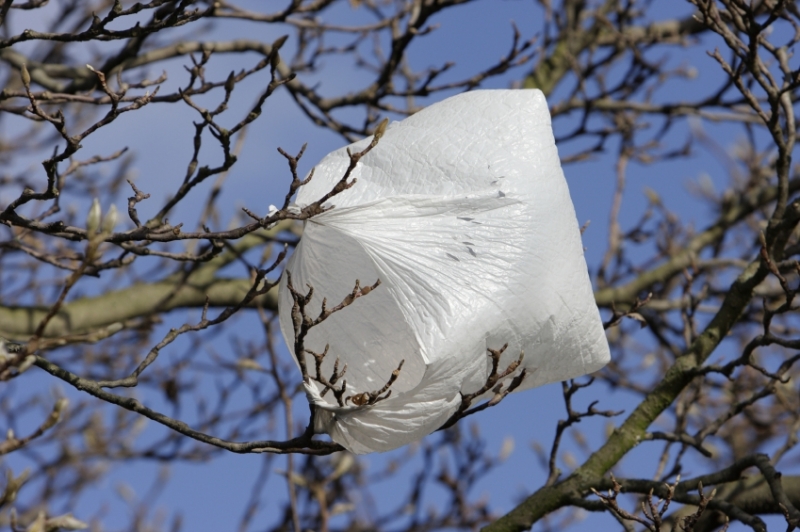
7 year old JaneMarie, a second grader in Blind Brook NY just found some plastic flying around her front yard. Running outside in her slippers, catching the plastic, she saw yet another plastic bag hanging in the tree, way outside her reach. It made her very sad. She had learned in her school, that adopted the We Future Cycle recycling program about how important it is to keep our environment clean and she is ready to do her part.
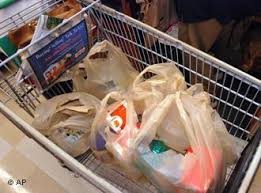
Americans are using over 100 billion single use plastic bags per year and someone calculated that once down to 857 per minute in Westchester County. A tremendous number with a very sad number of a less then 1% recycled.
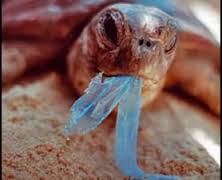
The environmental foot print of plastic bags is enormous. They clog up rivers and sewers, they photo degrade into smaller plastic pieces and are mistaken for food by animals. A great variety of animals, land and especially marine, can choke to death on bags, experiencing much pain and distress. If swallowed whole, animals may not be able to digest real food and die a slow death from starvation or infection.
The amount of floating plastics in the world’s oceans is increasing dramatically. The Pacific Trash Vortex is a ‘gyre’ or vortex of marine litter in the North Pacific Ocean. The vortex is characterised by exceptionally high concentrations of suspended plastics, such as plastic bags, bottles, containers and other debris, that have been trapped by currents. It is now estimated to be twice the size of Texas. Its impact on marine ecosystems is catastrophic due to its toxic nature and threat to marine life.
The convenience of people to use single use plastic bags puts a staggering economic burden on society.
Communities spent millions on litter mitigation and flood mitigation, the environmental foot print is huge from the manufacturing to the disposal, all because of short term convenience.
Westchester County is working on legislation to deal with this problem. Some communities have taken the solution already into their hands. Hastings, Mamaroneck, Rye are leaders that education and legislative support can teach community that convenience may not always be for the greater good.
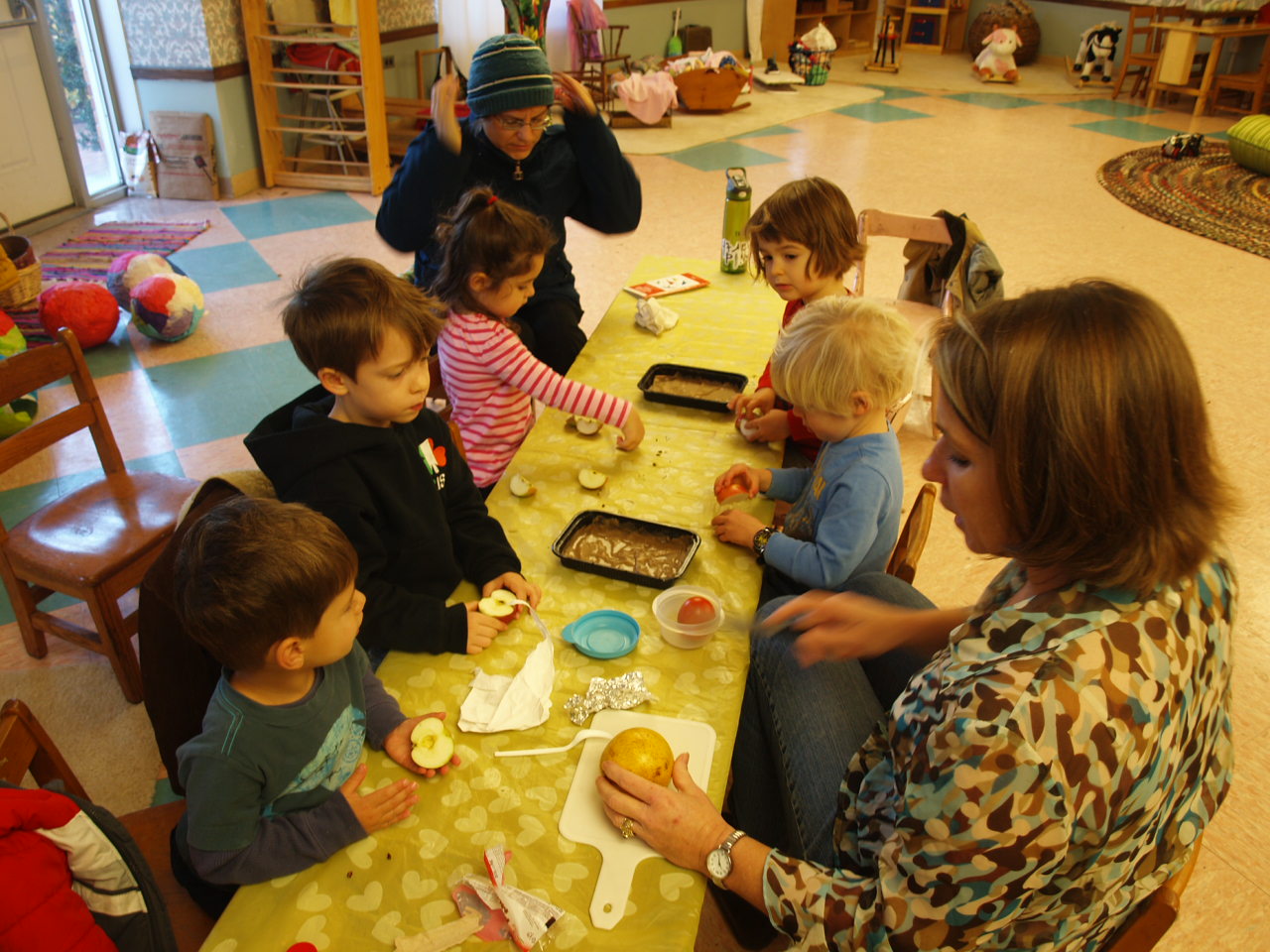
Cutting up fruits and vegetables, hunting for seeds
Even a 3 year old knows that a wrapper flying through the air on the street is not suppose to be there. When asked if that wrapper ever goes away, the little boy stopped to think a bit and then came a timid “no” , with a question mark at the end. Talking about “away” is a common topic at the Little Leaf Nursery School in Hastings these days and the students are learning.
Just recently We Future Cycle introduced recycling and composting and the students are now seasoned recyclers, knowing where materials go and where the food waste goes. They all reported that they feed the tumbler and they help tumbling.
Learning about seeds, what can grow and decomposition while making a trash garden
To bring decomposition even closer, we created a trash garden with the students today. We cut up some fruits and vegetables, looked at the seeds and planted them together with strips of aluminum foil, corners of paper, a hard plastic bottle cap, some soft plastic wrappers and some cut up fruit and veggie peel.
The students learned about prediction and we tried to predict what would grow from the things we just planted. We will now keep our “trash garden” nicely watered and observe the changes.
Every day at lunch, Columbus Elementary school has about 15 enthusiastic students helping at the recycling station. My favorite group are the kindergarteners.
They cannot even look over the rim of the bin, but they are excited recyclers. When they come into the lunchroom, they first run over to me to ask if they can help. Of course they can help, but they are all sent to go and eat first. After a while, they start showing up, first carefully sorting their own tray and then proudly taking their position behind the station.
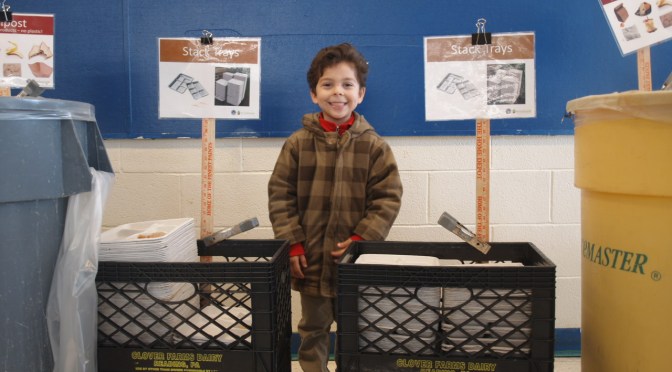
The most critical position is watching over the food waste bin to make sure no plastic or other contaminants end up in it, and the second most important job is the correct stacking of the trays. Meet Jose, the Master of the trays. I just love this little boy!
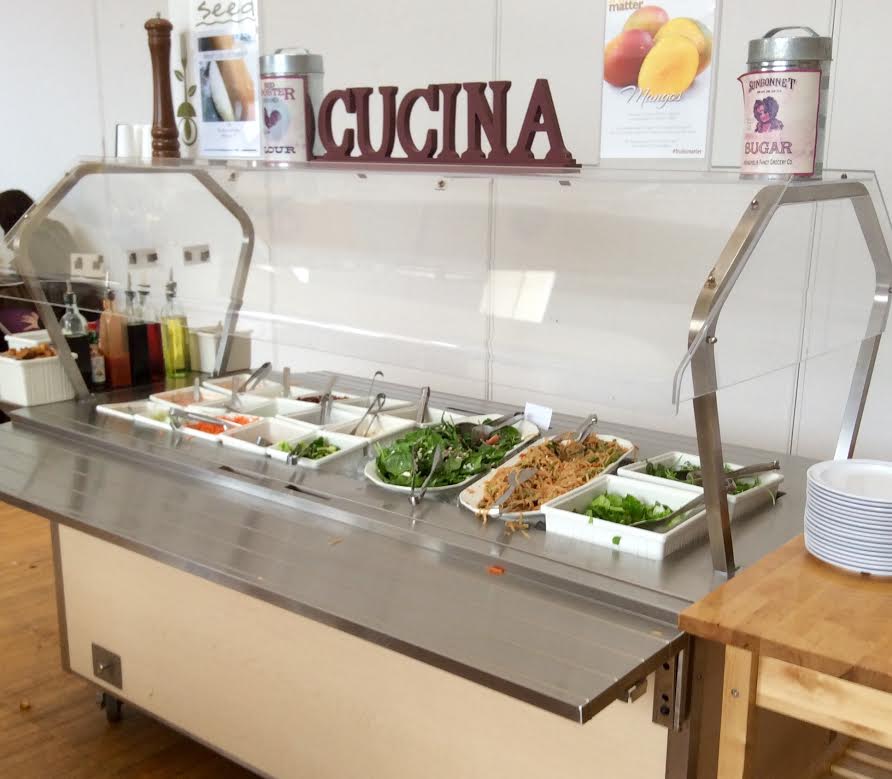
The lunchroom in the German School in White Plains resembles more an upscale restaurant then a school lunchroom. You will find a decorative salad bar, a drink dispenser, a milk dispenser with your choice of 1% milk or 1% chocolate milk, a juice and sparkling water dispenser, the dessert counter with the fresh fruit of the day in a sun light filled high ceiling room, with light wood round tables. The food is all prepared on site, with the daily soup, vegetarian choices and meat dish.
Chef Paul Boos, Food Service Director with Compass USA, personally serves the students and the school is proudly looking upon a 100% participation rate among students.
The school uses only reusable dish and flatware and students are returning their trays to a counter that leads to the dishroom.
Now, GISNY, under the leadership of Edward Schlieben, administrator and a very active Green Team is launching into food composting on site. The handsome garden is visible right from the lunchroom and it is the logical next step in their journey to zero waste.
Come January 2016, students will be scraping their food waste into the compost bucket instead of garbage and the student green team will manage the compost bins. We Future Cycle is proud to be helping the GISNY on their path to truly zero waste.
Anybody for some Christmas Tree ornaments made out of Nestle Nespresso cups?
How how about a gorgeous piggy bank?
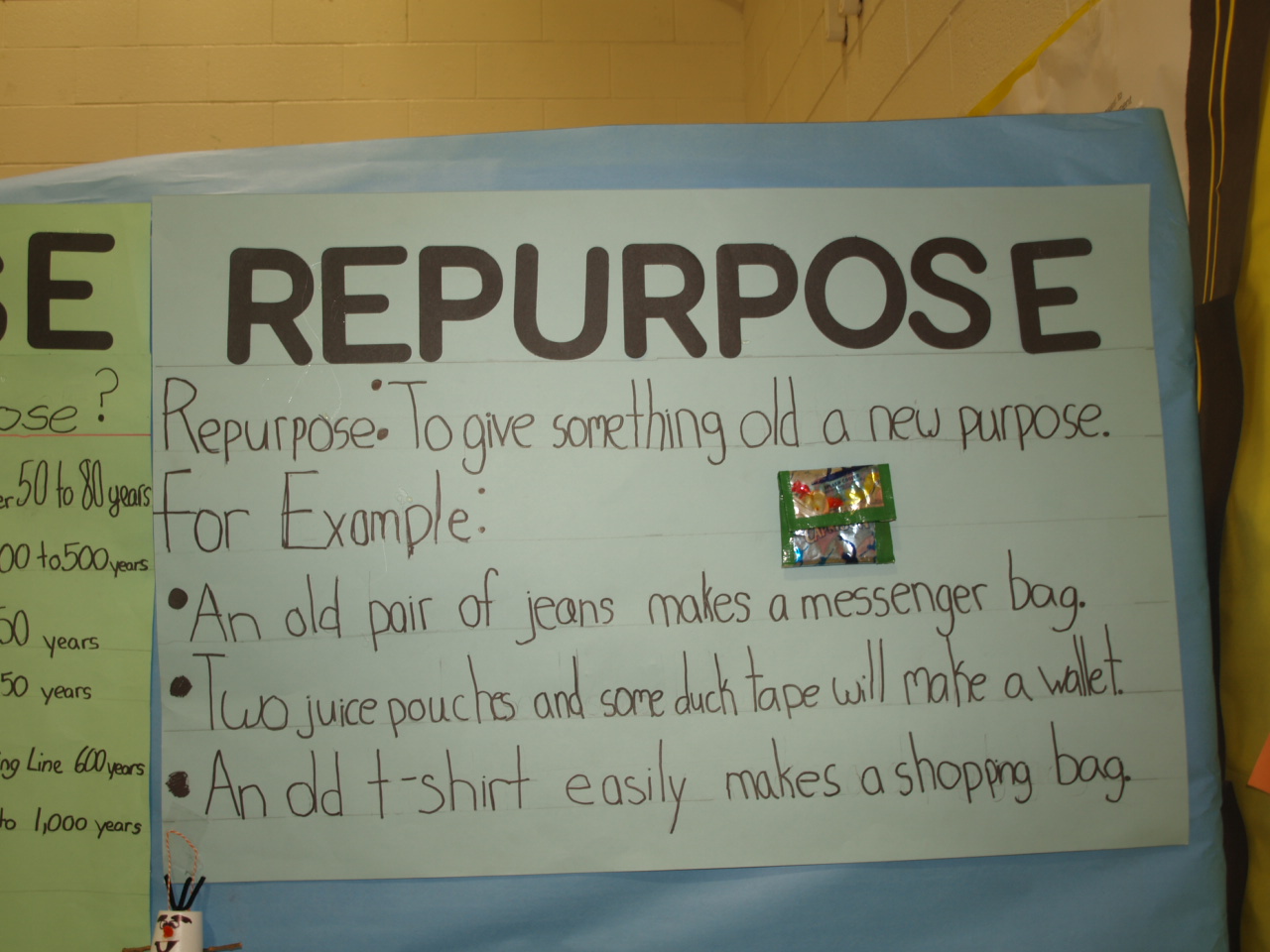
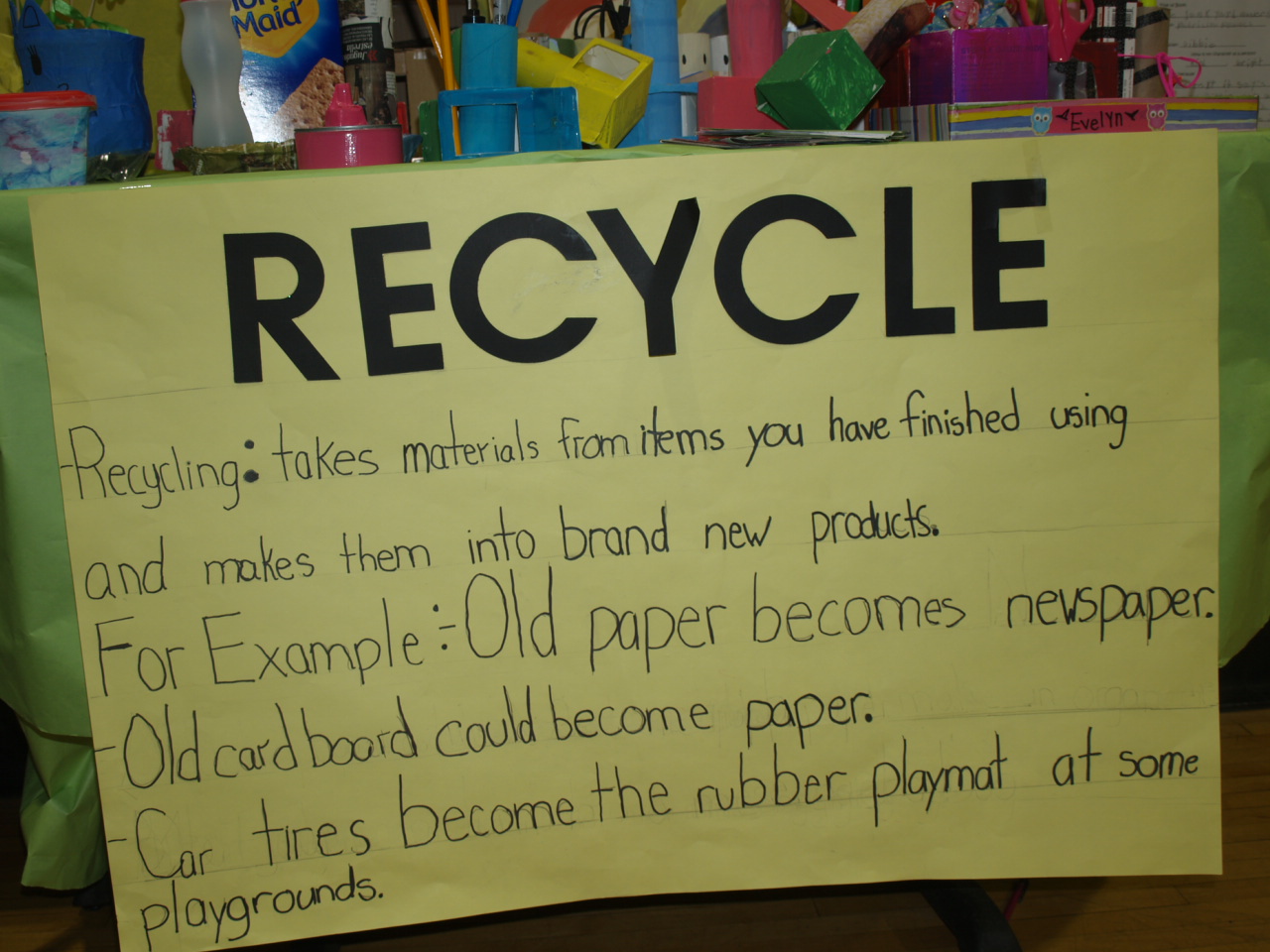
New Rochelle Columbus Elementary School students have truly internalized the Recycling Initiative. Ms Nunez 5th graders did a most fabulous booth covering the 3 Rs in such a wonderful comprehensive way.
On page 3A of the Sunday Dec 6th edition of the Journal News is a lovely article about the White Plains Ridgeway Elementary school’s recycling program.
Akiko Matsuda, the reporter that covers environmental issues for the Journal News in Westchester County contacted We Future Cycle in August to find out more about the program. We had long conversations covering the beginnings, the challenges and the successes. Akiko was hooked and ready to see the program in action.
Schools don’t easily admit reporters but Ridgeway Elementary School is so proud of its lunchroom that they were happy to share the good news. Assistant Principal James Graziano is an enthusiastic supporter of the program and together with his fabulous head custodian Pedro Molino showed off his kids with a proud smile.
We Future Cycle is excited that this news coverage has raised awareness in the community that other school districts contacted us to find out more about the program. Thank you Akiko and thank you Ridgeway students for showing off that you can make a difference.
Nine adorable 3 year olds were sitting wide eyed on the carpet while helping Anna Giordano from We Future Cycle empty two reusable bags of all sorts of packaging materials onto the carpet.
Carefully checking material to pictures on label, good job!
They picked up empty soda cans, empty peanut butter jars, empty glass bottles, crumpled aluminum foil, empty can food cans. They checked if one can rip a pizza box, and they crinkled the soft plastic wrapper of cookies.
When asked what all this stuff was, they answered according to what they had in their hand. “A bottle”, “Paper”, “box”.
When you ask elementary school children the same question, the answer will invariably be “trash”.
By elementary school age, children have learned already what trash is, and they have already been impregnated by the thought that all things they are done with is trash. They heard so many times already “just throw it away” that they have a clear understanding that “away” is a very convenient spot for unwanted things.
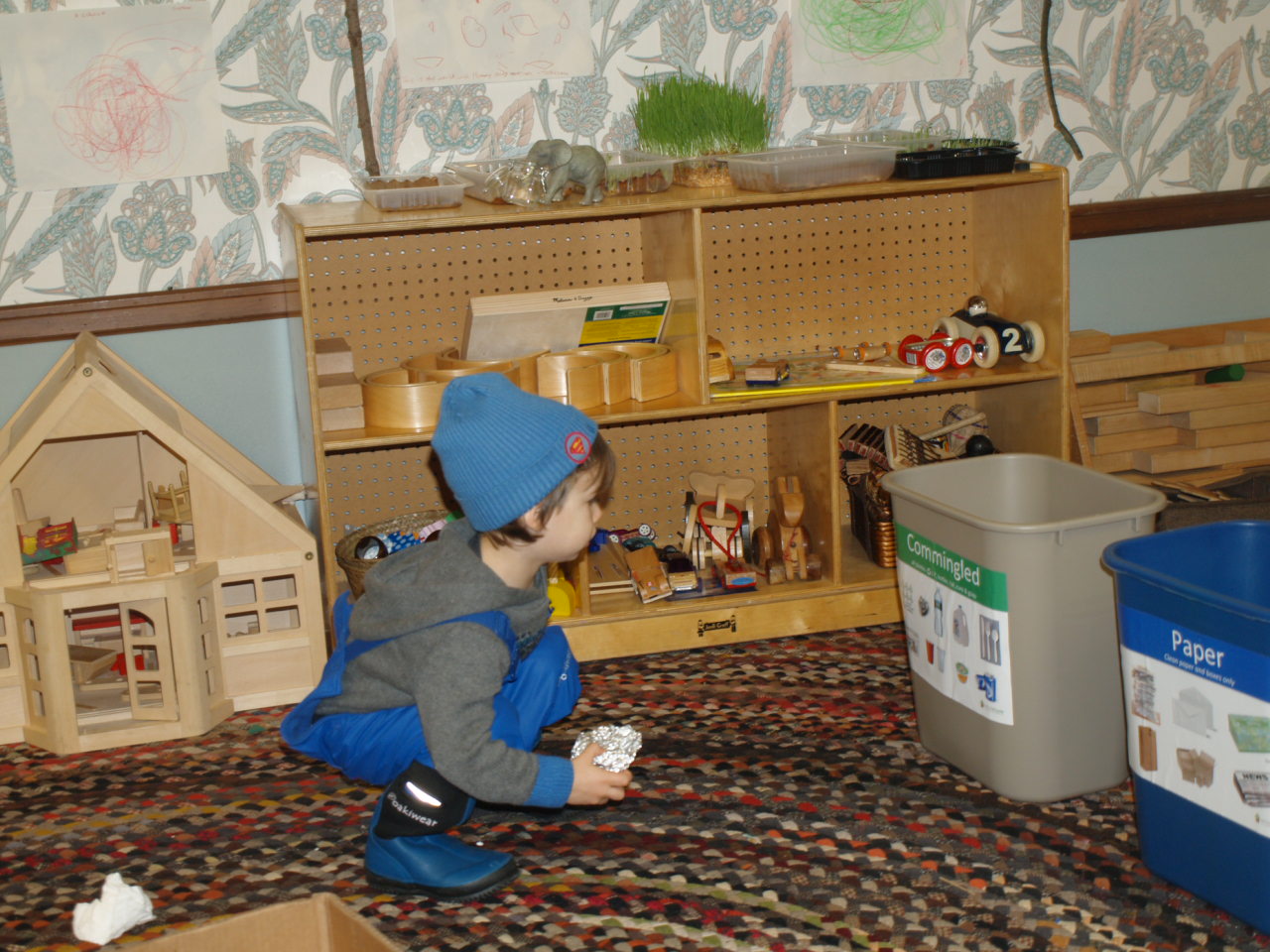
sorting aluminum foil with commingled
These nursery school children were so excited about that a bottle can, just like Lego, be a building block for something else again. They immediately grasped the concept that if you sort things in the right bin, you can use it again. With gusto they helped to sort items into the commingled or the paper recycling bin, and they asked to do it again. They learned to identify between hard and soft plastic and they learned that aluminum foil is metal. They can pick out paper and cardboard, and they learned with sadness that little plastic baggies are not recyclable again, but really trash.
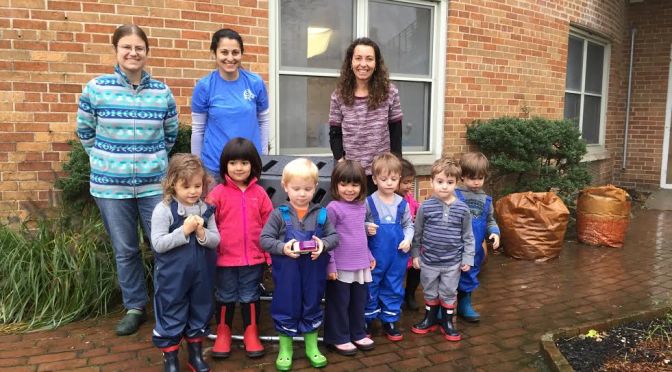
Theresa McCaffrey, owner of Little Leaf Nursery school is very focused on teaching her students about nature. The multi-age nursery school is located within Andrus-on-Hudson, a senior residential community, and it’s 25 acres are the children’s living classroom. Little Leaf at Andrus On Hudson is in Hastings 185 Old Broadway, Hastings-On-Hudson, NY 10706. Gorgeous. There is a garden, a mud kitchen for the kids, and all kinds of outdoor activities. Daily routine is a nature walk, come rain or shine and these kids are suited up in rain gear and are running around with huge smiles on their tiny faces. They do activities with self collected acorns, they have communal snack on washable plates and bowls, all organic, non processed foods, heavy on fresh fruits and vegetables. You will find no sugary juice boxes or processed lunchables here. A fabulous place!
Food waste goes into the new froggie binfilling leaves into the tumbler
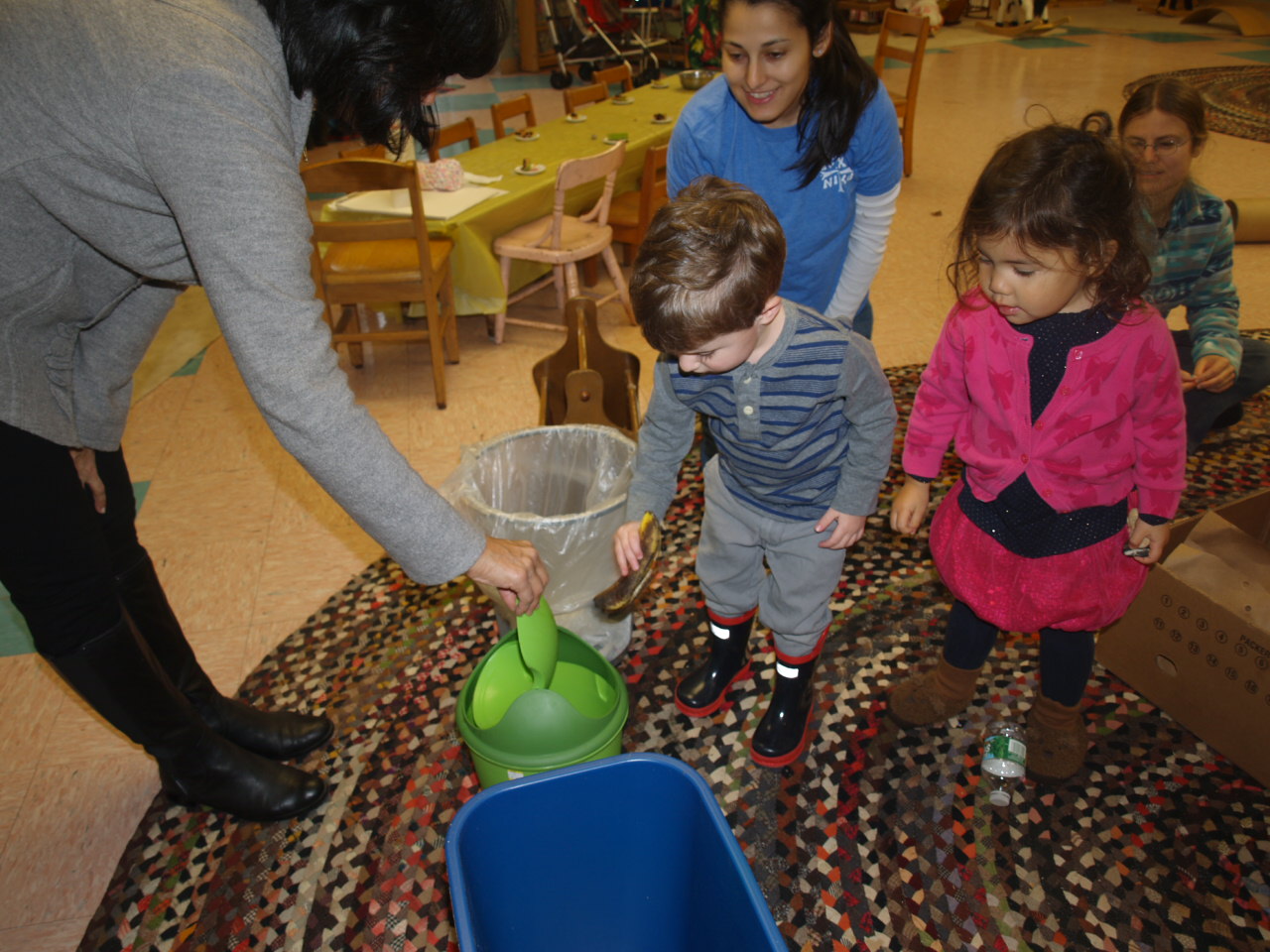
And now, the students are also learning about the cycle of food waste into compost. We Future Cycle set up a compost tumbler and the students are now sorting their clementine peel into a cute froggie shaped bin and are proudly taking turns to bring the bin to the composter, mixing in the browns with the greens, and then tumble.
Under the guidance of Ms Caffrey and her two amazing assistants, Little Leaf students are already making a difference in this world. Way to go!
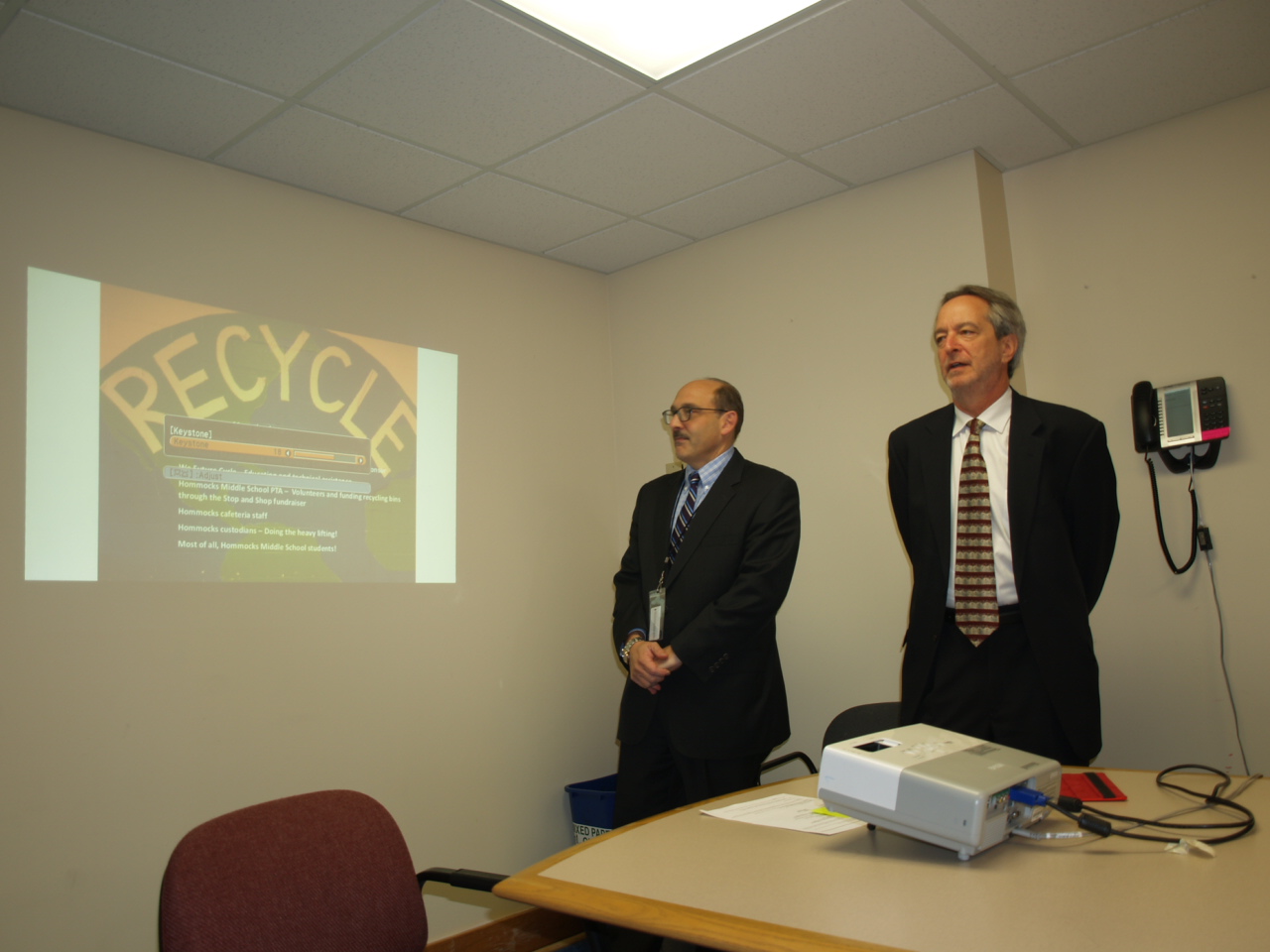
Dr Shaps and Dr Weitzman presenting the We Future Cycle Recycling Program
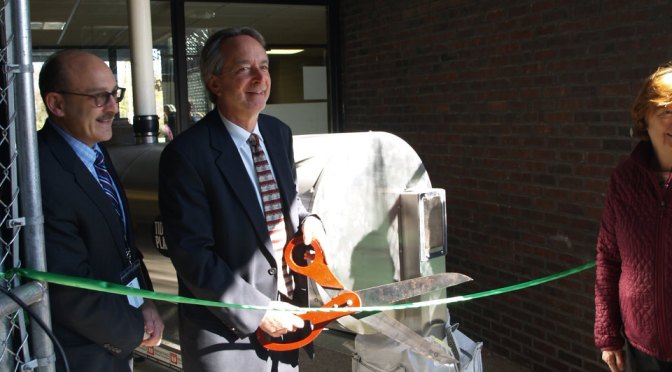
Larchmont and Mamaroneck’s Superintendent Dr. Shaps and Hommocks Principal Dr. Seth Weitzman proudly cut the ribbon to the first Rocket Composter at a Westchester public school.
Thanks to a generous grant of the Education Foundation, the purchase of this stainless steel machine that takes food waste and wood chips and 2 weeks later, compost comes out the other end, was made possible. After an additional 4 weeks of maturation, the compost will have finished its nitrification process and the compost can be used in the garden.
We Future Cycle was hired to do the program implementation as well as teaching students how to sort properly. The rocket is a picky eater, it only likes food.
The additional benefit of the We Future Cycle program is that apart from the food waste, also excess liquids, paper and commingled recycling are sorted out and sent into recycling streams rather then up the Hudson to be burnt as trash. A win win situation for all parties.
As a matter of fact, Hommocks is able to divert a whopping 86% of its waste into recycling or composting streams.
Mamaroneck’s Mayor Mr Rosenblum shared with a smile that his DPW guys already reported to him how much of a difference that makes.
Dr Shaps is very proud of Hommocks success and is looking forward to be implementing the recycling program in the other schools too.
We Future Cycle is proud to be helping with that as well.















 We Future Cycle