Tag Archives: taxes

Sorting into compost and recycling….the norm for these kids

Watching 5 and 6 year olds casually walking up to the recycling station and sorting their materials correctly into recycling, composting or trash is just so heart warming.

And how quick and normal these movements are now. While chatting with their friends, they empty their left over milk into the bucket to then place the carton into recycling. A quick glance onto their tray and they pick up their plastic cup to also put it into recycling. The snack bag goes into trash, they expertly empty their food scraps into compost and stack their trays.

This behavior is normal to White Plains students, and it diverts 95% of the lunchroom waste into reusable resources. Solving a problem by 95% by teaching a few changes in behavior. That is what it means to create a generation of kids that care.

Nobody is too little to help create change

Check out these involved K-students. Their job is to make sure that the trays at the recycling station are stacked properly, and ….-boy-….. do they take their job seriously. One is never too small to help create change.

In White Plains schools it is now normal behavior to clean up after lunch by carefully sorting your waste into recycling, non recycling and composting, thus diverting 95% away from garbage. Even the littlest ones know that and do it with care and consideration.

Supporting this behavior by elevating it into a “job”, thus creating a sense of responsibility and reiterating that we are all in the same boat is behind teaching even the littlest ones that their help matters.

Teaching kids to love our oceans is creating a generation of kids that care

It is well known that humans protect what they love. Bringing sustainability to a classroom means showing students, as young as Kindergarten that something as vast and big as the ocean needs protecting for all those wonderful creatures that call it home.

Cuddly ocean animals like dolphins are easy to love, but the real fun (and learning) starts with the crazy creatures like anglerfish, corals or jellyfish. Once students realize that life all around them has value and some truly fantastic features, they will begin to see themselves in that system. I just love the groans from them when they learn that starfish eat by inserting their stomach lining into the pried open shell to digest it externally and slurp it up.

When students learn to love the ocean with its creatures, it is easy to teach them not to litter because that stuff would end up in the ocean and hurt those very same animals

For White Plains students, recycling is so normal that it has a lunchroom signal

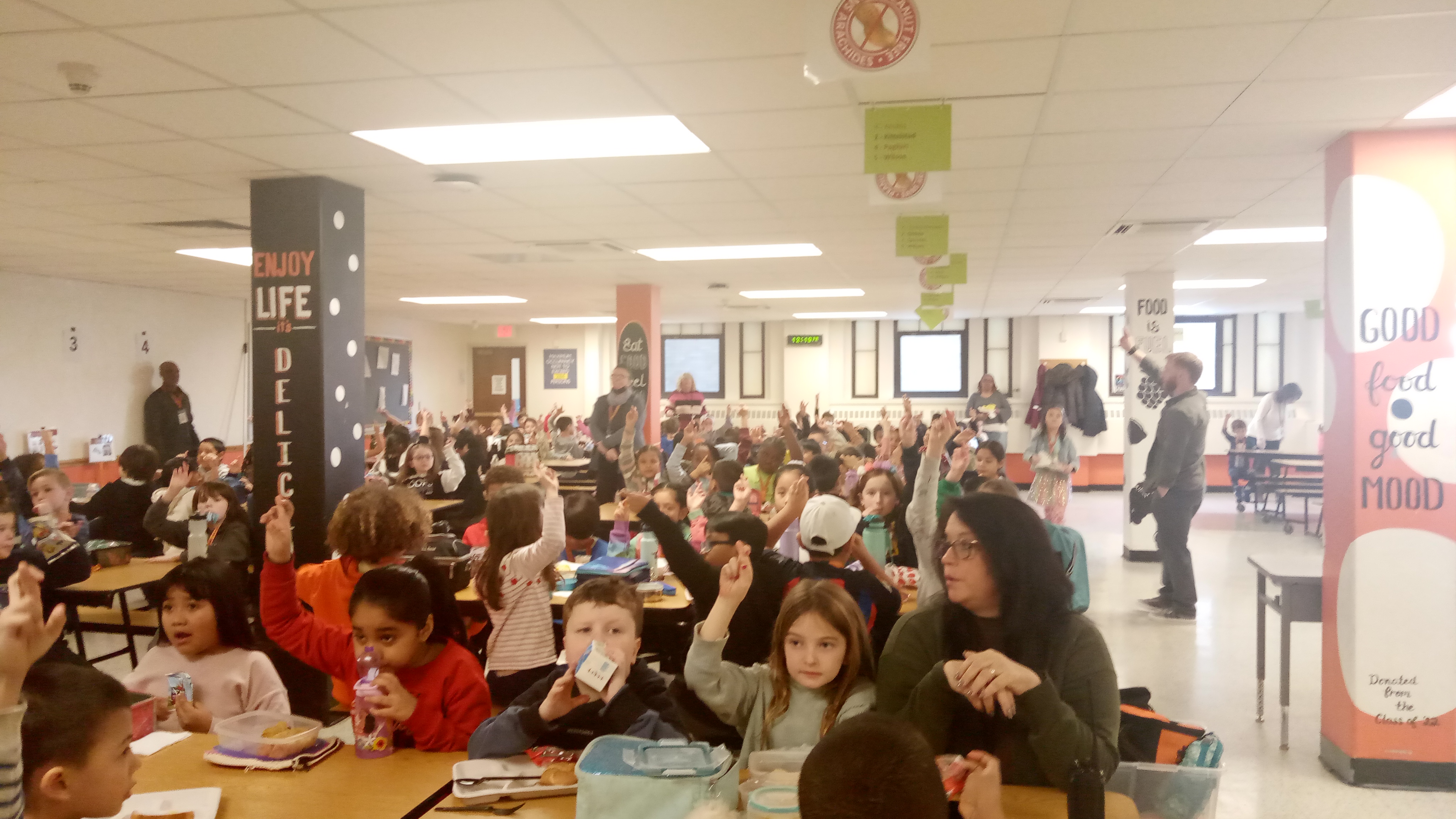
If you have ever been in a school lunchroom, unless you are faint hearted, it is a truly invigorating experience. 150 kids in a room, chatting, walking, playing, eating …. a never ending hum of activity. To control such masses, there are elaborate systems in place. Voice levels are measured and given a number code and students learn very quickly how a level 1 voice is being quiet. Students are asked to raise their hands if they need anything during lunch, and there are large posters with hand signals displayed for the kids to review.

Recycling is so normal for White Plains students that there is a hand signal established for it and it is working well. We Future Cycle is very proud to have been able to create a generation of White Plains students that care.

Hugs to save the world

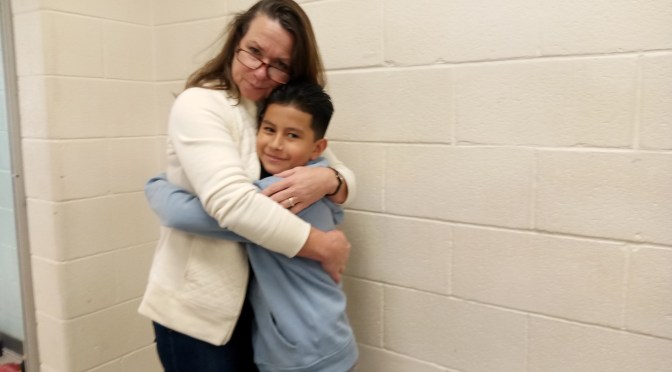
” Thank you for teaching us about saving the world”.

This heartwarming sentence, accompanied by a hug came from a 5th grade boy in the Ben Turner Elementary school in Mount Vernon.

This week we rolled out the WeFutureCycle recycling program at this school and taught the students in grade by grade presentation about where the garbage goes and how simple, small changes can make such a difference. Students learned about how garbage from the street makes it into the ocean. An audible collective groan went through students seeing how plastics enter the food chain and ultimately kill animals.

Teaching students that their actions can make a difference, little tiny changes of daily routines add up for positive change. It was heart warming to be hugged by these youngsters for teaching them that they have the power to make change.

It gave me goose bumps

Transfering behavior to different places

The Steam Academy in Mount Vernon recently started the WeFutureCycle recycling program in the lunchroom, teaching students that just by sorting their waste into recycling, compost and trash can reduce garbage by 90+%.

In the lunchroom, the students are somewhat supervised and thus behavior can be modified, guided and enforced. After just one week, most students sort in the lunchroom easily and automatically.

The trick is to see if this behavior translate to other places in their lives without being supervised or encourage and I was very happy to see the hallway recycling stations in that building this morning.

Saving the world, one school at a time

How does one change the world? Easy, by changing the minds of people. And how does one change the mind of someone? By showing them that small personal actions can have a huge positive ripple effect through the community.

WeFutureCycle’s mission statement is “Creating a generation of kids who care” and we believe that if we teach students in schools that their small actions matter, we can change the world, one school at a time.

Every day participating students are sorting their waste carefully into recycling, compost and trash, thus diverting 90+% out of the garbage stream.

Think about that….90+% of a problem solved by a quick hand movement.

And the ripple effect through the community is that these kids bring these behavioral changes home and are starting to change the world, one household at a time.

Mount Vernon Holmes Students go up close and personal with worms

I can tell you, life is not boring when you mix 6 y old kids with a bin of worms.

We Future Cycle presenters came to Mount Vernon Holmes Elementary School and while the older grades took their state tests, the younger grades had a chance to learn about worms. With big eyes, first and second graders learned how every living being on earth has an important job to do. Giggling, the students followed explanations that worms have no eyes and ears, and that they eat what ever organics are falling in their path and that their castings are good soil.  Slight shuddering went through the kids at this thought.

Students are learning that worms -as all living beings- also need to eat, breathe, reproduce and die. Audible gasps came as response to the fact that worms have no nose and are breathing through their skin. All students rubbed their skin, clearly not quite processing how that could possibly work. While talking about how they move and how fabulous their muscles are, students got a chance to flex their biceps, as activity about muscle function and they mimicked the stretching and pulling motion of the worm. Can you imagine 23 wiggling children on a carpet?

When it came time to get down and dirty, the worms did not disappoint and samples on moist paper towels were oozing with worms of all sizes. Even cocoons were plentiful and easy to spot, to the utter delight of all children.

However, what took the prize and made this class indelible in student and teachers mind was that we got to follow the path of a “casting” from within the worm to outside. Worms are somewhat translucent and one can make out the dark spots in the tail section where the castings (technical term for worm poop) are making their way through the length of the worm. In laymen’s terms….we got to see a worm poop, and that was the highlight of the day, all kids clustered around that one poor shy worm to carefully inspect that freshly produced “casting”.

It was great fun and very heartwarming as students came to hug and thank us for teaching them.

Waste Free….. starts with me!

WeFutureCycle’s mission is to create a generation of kids that care.

Our program teaches students to think past the garbage pail. They learn that their small actions of sorting their waste makes a huge difference and every single day, participating schools maintain a diversion rate of 95%.

Students are now sorting more or less on auto-pilot and are transferring that behavior across other aspects of their lives. We see more reusable water bottles, more reusable containers and more and more even reusable spoons and straws.

Students have learned that making garbage is actually a decision and they are now choosing to NOT make garbage.

Where do Westchester’s recyclables actually go?

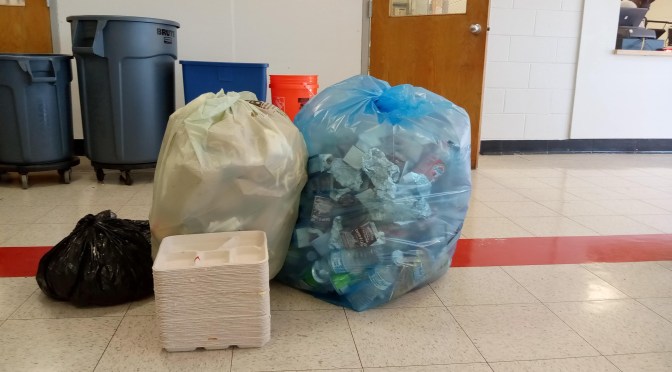
That was the subject of a recent series of presentation to Elmsford HS students. AHHS has implemented the WeFutureCycle recycling program in the fall and is maintaining a 94% diversion rate through recycling and composting. Students are now pretty much on auto pilot when they come up to the recycling station to quickly sort their left over into recycling, composting or trash. Every day, Elmsford HS produces one bulging bag of recyclables from the lunchroom and another one from the kitchen that go to the Westchester Material Recovery Facility in Yonkers .

Learning about the amount of trees felled every day for our daily paper, paper towels or milk cartons literally made them groan. Realizing where aluminum comes from they casually use to wrap their sandwich shocked them, and understanding that plastic in the environment can be a death sentence to all kinds of animals brought some of them actually to tears.

Civilization with its packaging takes a great toll on this planet. Elmsford students are learning every day that being the solution is as easy as changing a few hand movements and becoming conscious about oneself in the greater scheme of things.