 On April 23rd, just in time for Earth day, Westchester’s Material Recovery Facility added milk cartons to their list of recyclable materials. They are actually taking not only milk cartons which are called by the industry “gable tops” a paper product container with a PET lining, but also “aseptics” which is a paper container with an aluminum foil and PET liner.
A typical Westchester Elementary school is generating around 500 cartons per day. A mix of cable tops (milk cartons) and aseptics (like juice boxes).
We Future Cycle has been instrumental pushing for Westchester to join the surrounding counties accepting this material. The We Future Cycle recycling program includes sorting the milk cartons from day one. If the material was recycled depended how the school had their waste removal organized.
There are three systems of waste removal within Westchester school districts.
A: The district gets picked up by their municipality for free or for a fee
b: The district pays a commercial carter for waste removal
c: The district has their own employees pick up the waste and feed into their municipal system.
White Plains, New Rochelle and Mamaroneck are feeding into the Westchester MRF and are all We Future Cycle schools. They are excited to be able to finally have the cartons included with commingled.
White Plains has even made adjustments to their pick up schedule to accommodate for the increased recycling amounts as well as the drastically reduced trash.
Before implementing the We Future Cycle recycling program, White Plains DPW picked up trash every day, but now with the drastically reduced waste, and the increased amount of recycling, the schedule was adjusted to twice per week recycling pick up and a reduction down to only 2 or 3 times per week garbage pick up.
Commercial carters do not feed their materials into the Westchester County Material Recovery Facility across from Stew Leonard’s, they use the commercial single stream facilities in the area. The schools using commercial carters have been able to recycle their cartons from day one.


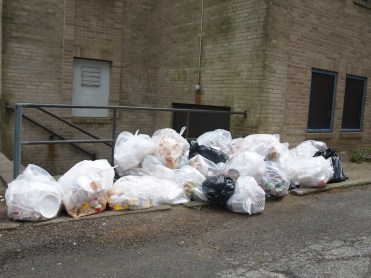 Diverting 98% of school lunchroom waste into recycling is now normal at the Westchester Schools that are running the We Future Cycle recycling program. This is what came out of a school with over 1000 students every day. 32 bags of loosely filled, dripping with left over milk.
 Under the leadership of Deatra Bailey, 2nd grade teacher at Barnard, students are combining lessons of economics with being environmental. To raise money for reusable sandwich pouches as part of the ongoing effort to cut down on single serve packaging that ends up in the trash, Students are selling healthy snacks taking turns to be the cashier or accountant of the operation.
 Barnard is now sporting a veritable forest of trees.
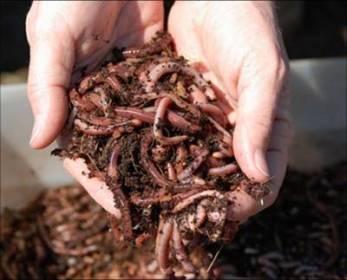 Meet the new “friends” of Ridgeway’s Ms. Vendola’s second grade. Eager students learned all about the wonders of worm composting, or technically called Vermiculture.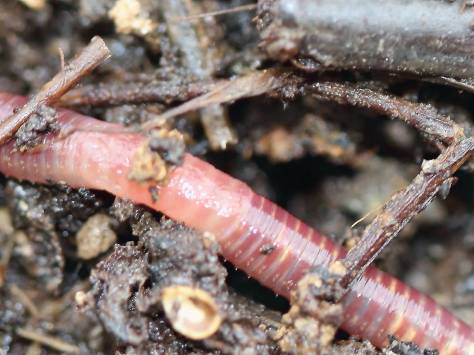


 Students from K through 2nd Grade are carefully walking the blue classroom compost pail to the school courtyard that houses a lovely learning garden, a greenhouse with the first projects budding and a nice compost tumbler.

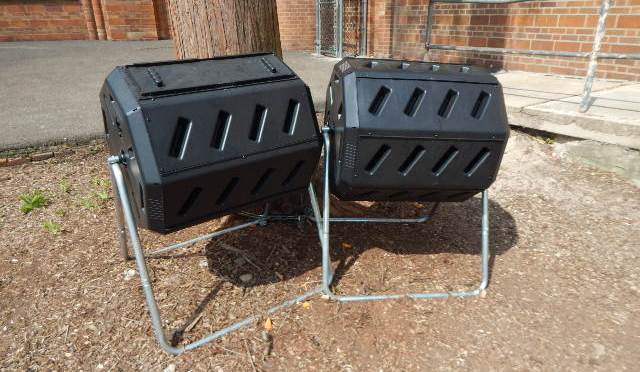
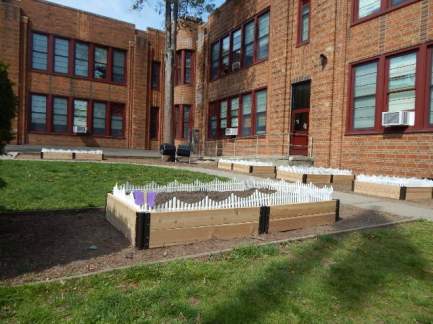 Jefferson Elementary School has partnered with the Manhattanville College to become even greener. Under leadership of Maia Starcevic and Aimee Ferguson, proud recipients of the exclusive Science Wipro Grant, and in cooperation with the Manhattanville College fabulous raised beds were built right at the front playground.
 Everyday at snack, the students will put all healthy snack waste into a little blue bucket instead of into the classroom trash bin. That blue bin is then carried into the courtyard and emptied into the composter. Students can see how decomposition takes place over time, and they realize that there is nothing yucky about composting. Each time they bring snack without creating garbage, they are rewarded with a leaf, that will then be proudly pasted to the “Jefferson feeds the Garden” Tree right outside Assistant Principal Ms Bruno’s office.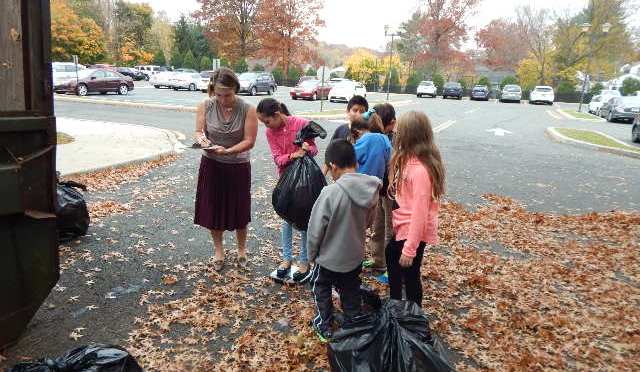
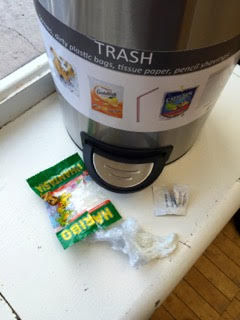
 We knew from the get go, that the German International School in White Plains would not have much garbage, as it is a cafeteria with all washable plates, but even we were floored when after 450 students plus staff going through the line, we only looked upon 2 (two !) single serve wrappers and a wipe as trash. T H A T W A S I T ! 2 Wrappers!
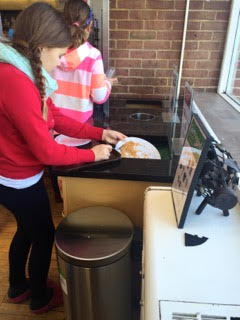 And talk about the students instantly learning what it means to put their food waste into compost and not -as before- in trash. In classroom and auditorium presentations all grades, from Pre-K through 11 were acquainted with societies biggest problem. Trash!
 We Future Cycle