Tag Archives: lunchroomcomposting

We Future Cycle engages kids (and their grown ups) with environmental facts

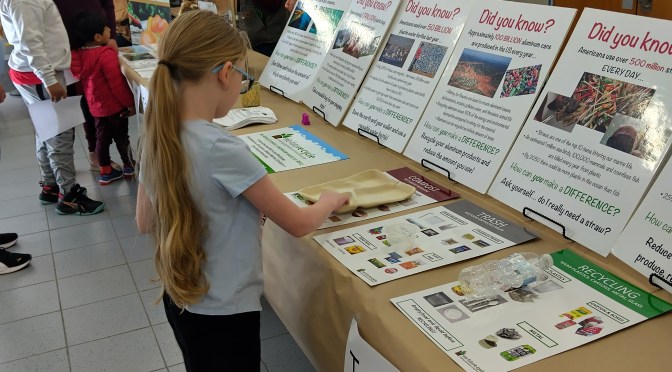
When we participate at a climate or community fair, we have a bunch of posters with environmental facts to engage the kids with. These are posters that illustrate shocking things under the headline “Did you know…” . Students as young as first grade will receive a detective sheet to collect clues and with the help of their grown ups are learning things like that the US is using over 500 million straws per day, or that the only place we can mine for the ore that gives us Aluminum is the rainforest. Each poster offers one or two quick things to change which will make a huge difference.

Engaging parents through their kids is the way to really change the communities for the better. We see this change in the lunchrooms we work in. More and more reusable water bottles, fewer unrecyclable juice pouches, more lunchboxes with less single serve packaged foods.

Creating a generation of kids that care also comes with the grown-ups attached to those kids to start to care.

Being Green is in the little details

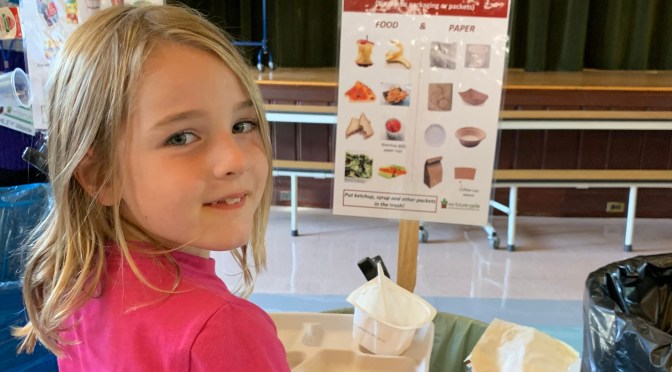
We Future Cycle has brought recycling stations to many many schools. The basic idea is that most of the materials that the kids touch during lunch are not trash if they were just put into the correct bin.

Sorting their lunch waste into Compost, Recycling and Trash reduces garbage by a whopping 95% simply through diversion of the materials into reusable streams.

60% of the lunchroom waste is compostable, a combination of compostable trays and food scraps. 25% is excess liquid, 10% is recycling with materials generating revenue for Westchester County and only 5% is non-compostable, non recyclable materials that are then treated as trash and incinerated into our air.

Teaching students to sort is not that difficult, the key is consistency and adult support and buy-in. And the true sign of success is when you see students carefully sort their materials and then carefully set their trays in a neat pile.

That is LIVING the details to be green. Way to go!

Teaching kids to love our oceans is creating a generation of kids that care

It is well known that humans protect what they love. Bringing sustainability to a classroom means showing students, as young as Kindergarten that something as vast and big as the ocean needs protecting for all those wonderful creatures that call it home.

Cuddly ocean animals like dolphins are easy to love, but the real fun (and learning) starts with the crazy creatures like anglerfish, corals or jellyfish. Once students realize that life all around them has value and some truly fantastic features, they will begin to see themselves in that system. I just love the groans from them when they learn that starfish eat by inserting their stomach lining into the pried open shell to digest it externally and slurp it up.

When students learn to love the ocean with its creatures, it is easy to teach them not to litter because that stuff would end up in the ocean and hurt those very same animals

Hugs to save the world

” Thank you for teaching us about saving the world”.

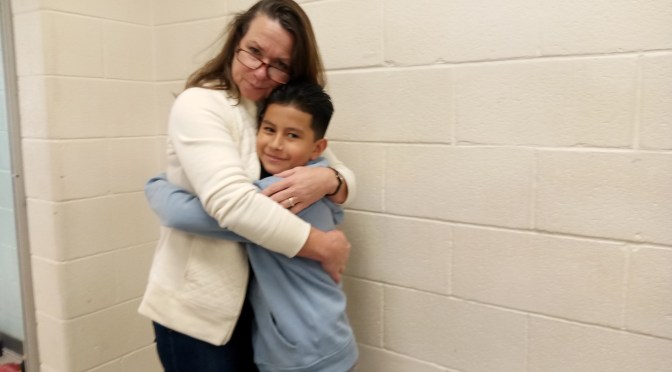
This heartwarming sentence, accompanied by a hug came from a 5th grade boy in the Ben Turner Elementary school in Mount Vernon.

This week we rolled out the WeFutureCycle recycling program at this school and taught the students in grade by grade presentation about where the garbage goes and how simple, small changes can make such a difference. Students learned about how garbage from the street makes it into the ocean. An audible collective groan went through students seeing how plastics enter the food chain and ultimately kill animals.

Teaching students that their actions can make a difference, little tiny changes of daily routines add up for positive change. It was heart warming to be hugged by these youngsters for teaching them that they have the power to make change.

It gave me goose bumps

Rye Neck’s Daniel Warren Elementary Students Prove Kindergarteners Can Compost!

One of the questions we frequently get asked is “How will Kindergarteners be able to compost in the lunchroom? Will they really be able to sort their lunch leftovers?”

Our resounding answer is alway “YES!,” and Daniel Warren Elementary School students proved that during their launch of the We Future Cycle program in October 2019.

Following the launch at F.E. Bellows in Rye Neck, which is a grade 3-5 school, We Future Cycle took on teaching the K-2 students at Daniel Warren about composting. Principal Tara Goldberg was very engaged in the launch. She is present during the entire 1 hr lunch period (1/2 hour for grade 2, 1/2hr for Kindergarten, and 1st grade is split up between the 2 lunch periods), which enabled her to optimize the flow of students as they came up to the 2 recycling & composting stations to sort their leftovers. We tried 3 set-ups before we arrived at a system which got the students through the lines most quickly! That is the right way to implement any innovative program like composting; launch with the best plan you have, but be flexible and optimize as time goes on.

The custodial team, led by Tom Tempesta, was enthusiastic about giving input to make the process seamless for them. The aides all jumped in to help; they immediately saw the benefit of recycling and composting and were eager to help the students sort their leftovers properly. Teachers take turns helping kids in the lunchroom – a practice which was common decades ago but is now uncommon in Westchester schools – which is a great way for educators to observe their students in a social environment and also help extend environmental education into their classrooms.

And, the parents, wow! We had parent volunteers from the start, and their dedication was impressive. We Future Cycle monitors the lunchroom stations for 2 weeks during the launch period, but then we leave the program in the hands of a champion at the school. The parents created their own monitoring schedule so they could continue to support the program when We Future Cycle moves on to launch other schools. And while we rely on administrators, aides, and custodians to keep the program operating on a daily basis, We Future Cycle checks in at each school twice per month to make sure everything is humming along smoothly.

The results at Daniel Warren were almost identical to the results at F.E. Bellow. 92% of the lunchroom waste was diverted into composting and recycling:

Liquid: 6lbs (10% of total weight)
Commingled (hard plastics and aluminum for recycling): 10lbs (16%)
Compost (food and paper): 34lbs (56%)
Trays (also will be composted): 6lbs (10%)
Trash: 5lbs (8%)
Total weight: 61lbs

Our only challenge is the many non-recyclable and ever-changing food service items. The Daniel Warren lunchroom has a cooler of water (which is preferable to single-use water bottles), but at one point there were 3 different cups next to the water cooler – one was a plastic recyclable cup, one was a paper compostable cup, and a third was a paper/plastic blend cup which would go in the trash! It is unnecessarily complicated when lunchrooms have an excessive number of single use items that must be sorted at the composting and recycling station, and we try to work with food service to make the packaging more simple.

Thank you to the Rye Neck PTSA for bringing this program to the Rye Neck elementary schools and for their financial and volunteer commitment to this initiative. We look forward to bringing the program to the MS/HS in the near future!