
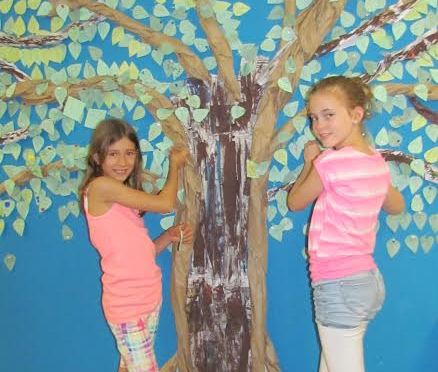
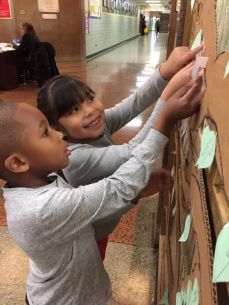
“We had no trash at all today” proudly says Sebastian , a pre K student, and then hugs my leg. And then he gets to paste a Waste Free Leaf on the fabulous tree outside the Principal’s office.
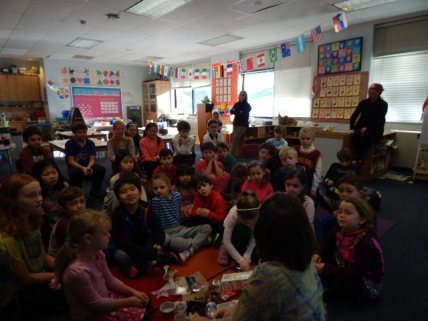
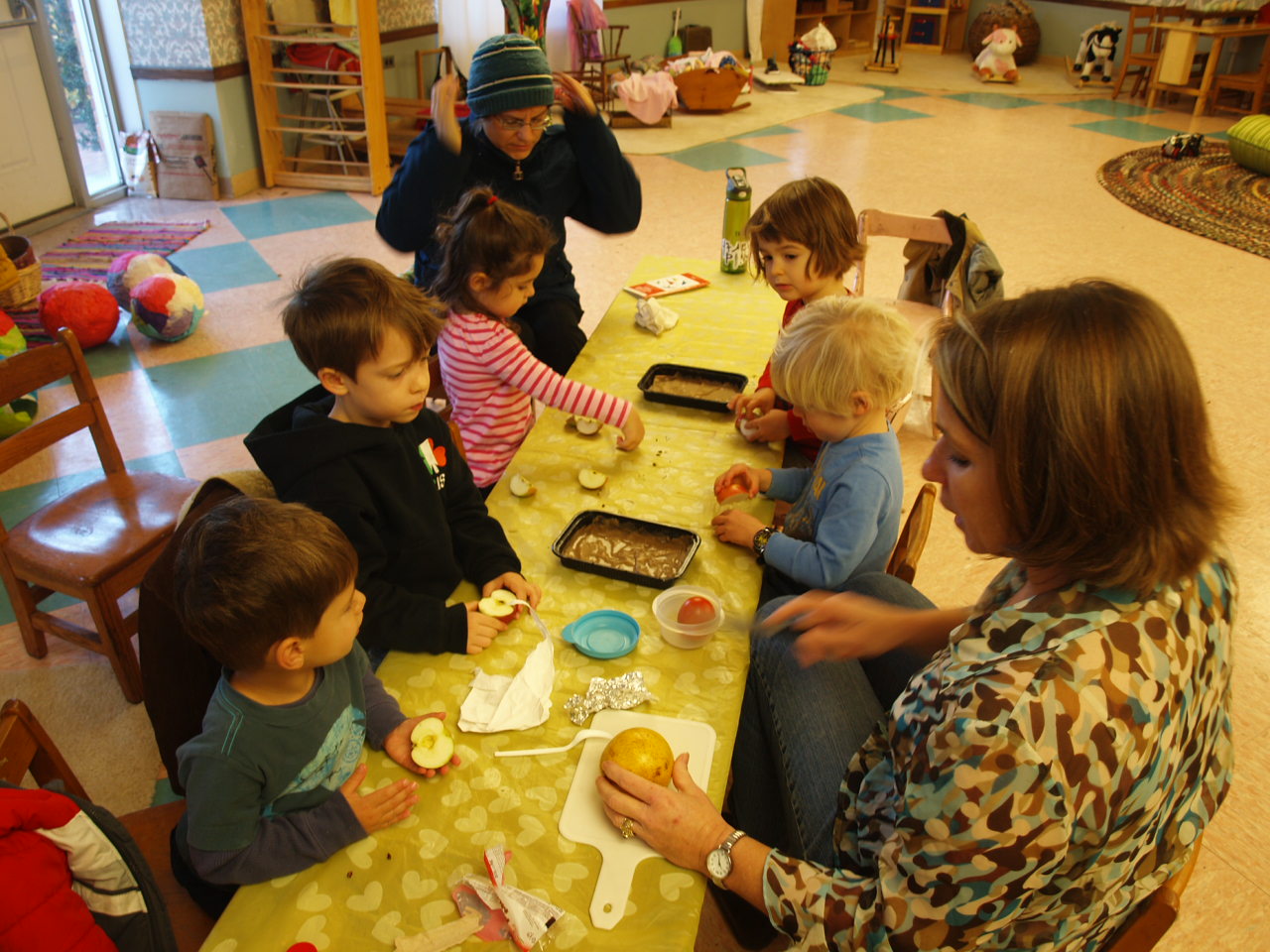
In June I sat surrounded by 3 and 4 year olds. One girl even sitting on my lap. In front of me is a tray with all their waste from snack. Asking little ones like that where the trash goes, they will give you answers like “in the garbage can”, “in the garbage truck”, but when you ask deeper where they thought the garbage truck goes, they all stopped to think. I watched them figure out that -of course- the truck has to go somewhere and then guided them through the process of understanding that Westchester’s trash gets burned into our air.
Together we resolved that it is just as easy to put the sandwich in a washable container than in a single serve plastic baggie. And they got it, amazingly quickly.
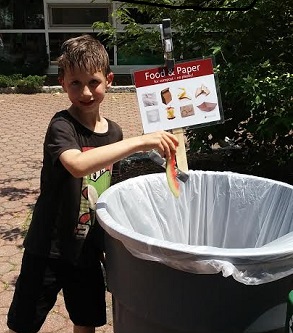
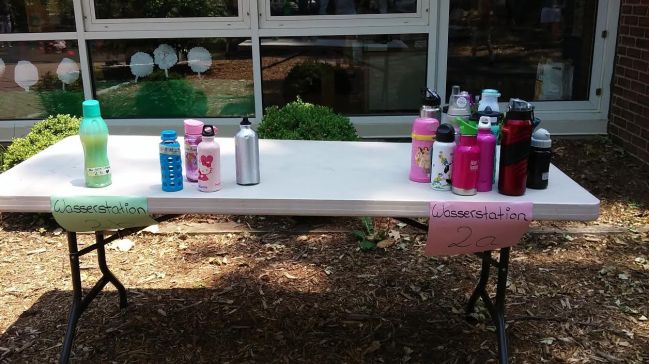
Introducing the We Future Cycle Waste Free Snack program that combines education of children and ultimately also their parents with a fun hands-on activity has brought great change to schools. At the German International School White Plains, the entire elementary school is participating. We Future Cycle went to each classroom. We talked about how to package foods in a more responsible way, how to be waste free, how to be healthy to our body and to our Earth and we introduced on-site composting.
To make decomposition touchable for the students, two composters are placed at a convenient spot and each class learned about it. Each time the students are waste free and have only compostable waste, they are rewarded with a leaf to paste on the beautiful Waste-Free-Tree and two students get to feed the composter. It is a very coveted job and as they dump the fresh banana peel in, they get to check out what happened to yesterdays apple core, bringing natures circle of life close to home.
Needless to say, teachers are reporting that a record numbers of apples and bananas are coming in since the beginning of the program.
But what is the most satisfying for me, is that the students are suddenly aware of how their actions make a difference, they are aware that waste is a problem, and they join me celebrating being waste free.


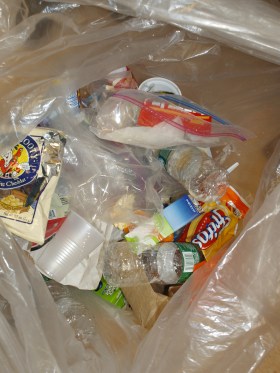 Even kindergarten students, when presented with a picture of the packaging waste of classroom snack knew immediately that most of that food belonged into the category of junk food. When asked if that food was healthy for their body, they all enthusiastically replied “no”. They listed the commonly known reasons on why not to eat junk food, even the littlest ones knew the connection to obesity, diabetes and dental decay, amazing.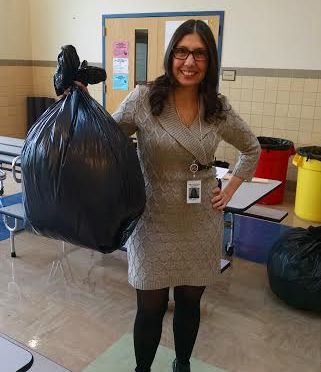
 The results, however, were not blurry at all. Instead of 277 lbs of trash, Post Rd is proudly looking upon 3.5 lbs ! A 98% reduction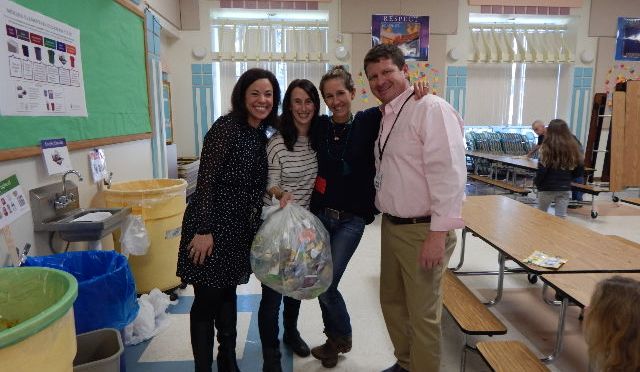
 In the lunchroom the newly installed station was put into action, and despite the most challenging of lunch menu days, which is brunch for lunch with syrup containers, the students pulled off a flawless sorting.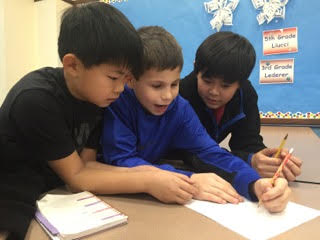
 New Rochelle ‘s Daniel Webster Elementary School under the leadership of Melissa Passarelli and Greg Middleton has just moved back into their building.
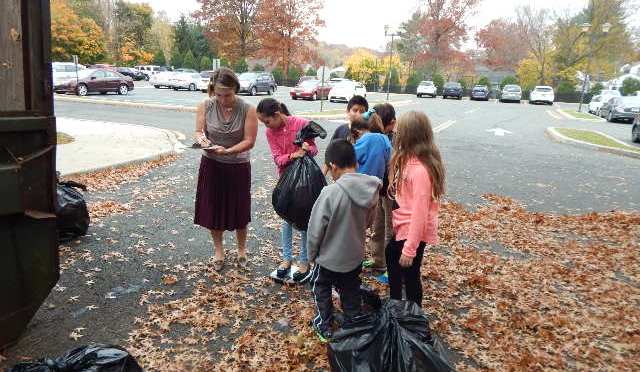
 Learning to identify materials and realizing that one just needs to put them in the right bin for them to be recycled was easily understood. Webster students all pledged to make a difference and they put that pledge to the test at the newly rolled out lunchroom recycling station. Three 5th grade students helped us to do a waste audit afterwards, and we had a wonderful helper at the station teaching her fellow students, especially the little ones. Thank you, Webster Students.
 New Rochelle Columbus Elementary School celebrated its Red Carpet Affair on Thursday evening. Students walked on a red carpet, donned in their finest to the auditorium to see themselves on the big screen.

 Just like at the Oscar’s the “actors” were interviewed to share their thoughts. Proud students were either the interviewer or the interviewee, asking questions about what the students have learned from the on-going recycling program in their lunchroom, how their parents made differences in their households, now that the students learned about recycling. The answers were heartfelt and sincere. Clearly, Columbus students know that their actions count and each and every one can make a difference.



 We Future Cycle