Tag Archives: compost

We Future Cycle in National Kids Science Magazine

news-f3a8e624689425102e9e5de00789be1aWe Future Cycle is so proud to be featured in the National Kids Science Magazine called DoGoNews. How cool is that!

And we are particularly proud to have heard from a bunch of people that their children chose that article as their current events project.

http://www.dogonews.com/2016/1/15/innovative-ideas-to-curb-food-waste-range-from-sharing-to-dumpster-dining


College Intern Opportunities at We Future Cycle

OLYMPUS DIGITAL CAMERA
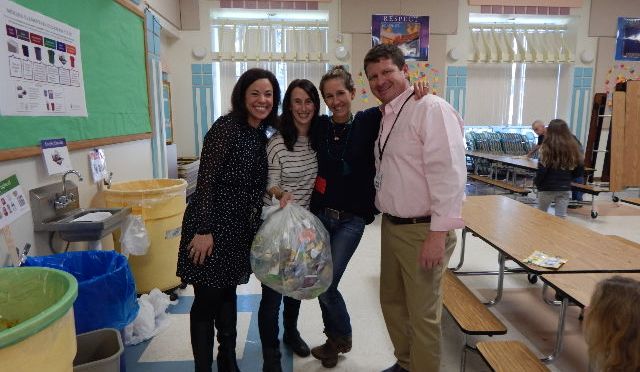
Dana surrounded by Kindergarten student helpers, on day 1 already. These kids were pumped up to do the right thing

We Future Cycle was thrilled to have had our first College Intern. Dana Goldstein, a Sophomore from Oberlin called out of the blue beginning of January to ask if she can do an internship with us. She had learned about the We Future Cycle program from the recent media flurry and was fascinated as this program touches exactly on what she is focusing in school.

Human Psychology in connection to environmental sciences, in other words, how to get humans to get off their lazy butts to create change.

Dana jumped right in, with a record breaking month for We Future Cycle rolling out 5 schools, she got to experience the whole spectrum of this program. From seeing the workshops we do with teachers, to monitors and custodial staff, learning how to work with children of different age groups, setting up stations, supervising the sorting, and teaching the students and adults in the room how to source separate, to gently coaxing custodians to keep separated materials indeed separate, which is no small feat, I might add!.

She had a chance to develop and hone presentation skills, try out methods on how to gently guide adults towards changing their ways, and be surrounded by adoring first graders that were hugging her leg and thanking for teaching them how to recycle.

Dana learned that it takes a LOT of perseverance to change large scale systems like schools in order to effect change, but that the journey is worthwhile because of the students. Seeing school garbage being reduced by 98% by teaching the students to sort is instant gratification for any environmental studies major.

” I joined We Future Cycle because the organization has the power to create enduring change in our community. The success in providing green refuse streams to 30% of Westchester’s school children is a testament to the unique change that only a local organization can achieve. By establishing a presence in elementary schools, We Future Cycle instills upon tomorrow’s leaders a cultural norm to practice for the rest of their lives. Connecting with children at a young age allows us to shape the way our future citizens see trash, so instead of seeing “waste,” they see opportunity.

As a sophomore at Oberlin College majoring in environmental studies with a concentration in urban sustainable management, my time at We Future Cycle will provide me with tremendous insight into effective solutions for solid waste management in an urban setting. Additionally, as a social psychology major, I especially appreciate We Future Cycle’s experience successfully motivating students to participate in recycling and other green practices. I hope to gain a greater understanding as to what core social motives our teaching implements act upon in order to further social change. ” Dana Roe Goldstein

We Future Cycle is wishing Dana all the best in her continued studies and we are ready to welcome more College interns into the world of school waste management. Hold on and enjoy the ride!

Rye’s Midland Elementary School Reduces Waste by 97%

Today was a big day at Rye’s Midland Elementary School. With great support and enthusiasm of Principal Jim Boylan, Assistant Principal Joanna Napolitano and the PTO, under the leadership of Cali Gibbs and Emily Keenan, Midland’s students made a huge splash of a difference!

DSCN2127.JPG

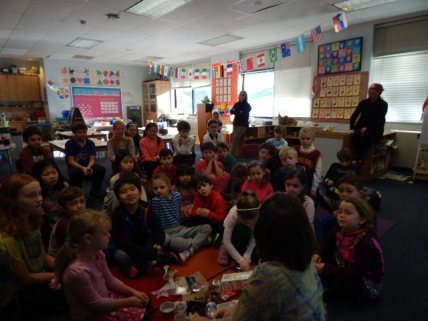
The We Future Cycle team went from classroom to classroom to present the program, show the different materials, answer questions, model the process and stir up a big energetic frenzy to save the world. These students were READY to make a difference.

993a8b47-09cd-42e7-ad0f-7319ff71c8e6In the lunchroom the newly installed station was put into action, and despite the most challenging of lunch menu days, which is brunch for lunch with syrup containers, the students pulled off a flawless sorting.

The results speak for themselves. From 161 lbs of total waste:

Liquid = 65 lbs (40.4%)
Cartons = 8 lbs (5%)
Commingled plastics = 13.5 lbs (8.4%)
Compost (food and paper) = 42.5 lbs (26.4%)
Trays = 27.5 lbs (17%)
Trash = 4.5 lbs (2.8%)

Only 2.8% of the entire lunchroom waste was actually trash!

A 97% diversion into recycling and composting streams is really outstanding. Though what is even more astounding is the small amount of food waste. We are seeing usually more like 50-60% food waste in public schools with the NY State Lunch Program, but this school leaves all food choices up the students, there is no “you have to take these items to qualify for a full lunch” which results in MUCH less food waste and we also practically did not have a share basket of unopened food. Truly a wonderful thing!

While we are celebrating this fabulous result, we are also seeing some areas of opportunity when it comes to single serve offerings from food service. Principal Boylan realized that single serve ketchup pouches, syrup containers, hand wipes and others are making it very hard for students to timely sort their lunch waste.  The equation is easy…… “what goes in, must come out.” Mr Boylan will see how he can help his students do an even better job sorting their lunch waste into recycling and composting by managing the incoming flow of packaging and possibly switching to squeeze bottles and other dispensers.

We Future Cycle will continue to support Midland Elementary School for one week and we are sure that the hand off to the local champions as well as the very enthusiastic and supportive PTO will lead to it being embedded into the culture of the school very quickly, becoming the “new normal”.

The Cost Of School Lunch Packaging to Society

We all know a regular hectic morning, between getting ourselves ready for work, getting sluggish children out of bed, showering them is optional, a cursory brush of the hair, feeding them, throwing together their lunch and snack with a quick grab into the pantry to put pre-packaged convenience food into their lunchbox, and ,still out of breath, we run them to the bus stop. Phew.

We don’t have time to think what price tag might be attached to that pre-packaged food at the other end. We are just happy to have made it again, another day of hectic working parents.

We -at We Future Cycle- working in the classrooms and in the lunchroom teaching the children about the waste and where “away” is, see it every day. We see the plastic baggies, the pre packaged meat, cracker and sauce packages, the juice boxes, the juice pouches, the single serve apple sauce pouches. We see the huge amounts of packaging materials that come in, all in the name of convenience.

As most of us don’t think past the curb where we bring our garbage can twice per week, there is no understanding what happens to the stuff once it leaves our house. It just conveniently “goes away”. Students in schools that are running the We Future Cycle Recycling program are learning that there is no “away”. Older students also learn about the cost of “away”.

Schools are spending a large portion of their budget on waste management. Every dollar spent on Waste Management is a dollar NOT spent in the classroom.

Parental convenience comes with a price tag to society.

There is a much better way, that will save money on both ends and only requires a little bit of planning. Packaging a lunch from fresh ingredients in a reusable box, and sending watered down juice in a reusable bottle will solve two big problems in schools. It will reduce the waste management costs and it will feed the children healthier to allow for better learning. I am sure you will agree with me……our children are worth the little effort.

New Rochelle Barnard Second Grade Student astonishes with wistful knowledge “Garbage goes to the Incinerator”

Sitting on the carpet surrounded by a group of New Rochelle Barnard students and doing a presentation about recycling is one of my favorite activities. I just love helping students make a very important mental transition. When I show students  a bunch of empty packaging material, one will invariably sneer at it and call it trash.

Walking them through the fact that empty packaging is not trash, but rather material for new things is the most rewarding, because children get it so fast. They understand what it means to play with things over and over again, if you just put it in the right bin.

At some point, I ask the students where they think “away” is, when they talk about throwing something away. I usually get a variety of answers ranging from “the garbage truck” all the way to “the dump”.

Today, however, at Barnard Elementary School in New Rochelle, I was blown away as a 2nd grader very casually answered : “Garbage goes to the incinerator”.

And that is exactly right.

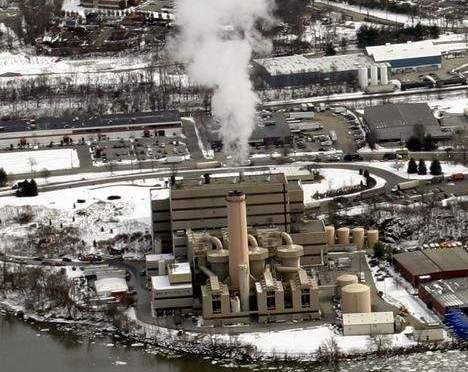
Westchester burns 2500 tons of garbage every single day at its Wheelabrator Facility located in Peekskill NY. At a price tag of close to $80 a ton to just drop the stuff onto the tipping floor, Westchester is looking at a whopping $200,000 per day cost just to burn our garbage into our air. (long pause to let this sink in)
DSCN2086

In a school, 95-98 % of the waste can be recycled, if it is just sorted out. The same applies to Westchester’s garbage of 48% organic, 33 % paper and 16% Commingled recycling.

We have fabulous technology like an I-phone, but we cannot sort our garbage so that 95% can get recycled instead of getting burnt into our air?

Well, New Rochelle Barnard Students have just joined the growing group of schools that say “Yes, we can make a difference, a huge difference” And that is exactly what they did.

From 84 lbs of waste, only one single pound was trash, all the rest was sorted in the right bin and fed into compost, recycling or down the drain as liquid waste.

I call that making a huge difference!


WFC Documentary “Columbus Makes a Huge Difference”

This short documentary features the journey of a school from 22 bags weighing 400 lbs , to fully sorting its waste, reducing overall garbage by a whopping 98% while diverting valuable resources into recycling and composting, and sending 55 lbs of untouched food to the soup kitchen, that would have gone into the garbage otherwise.

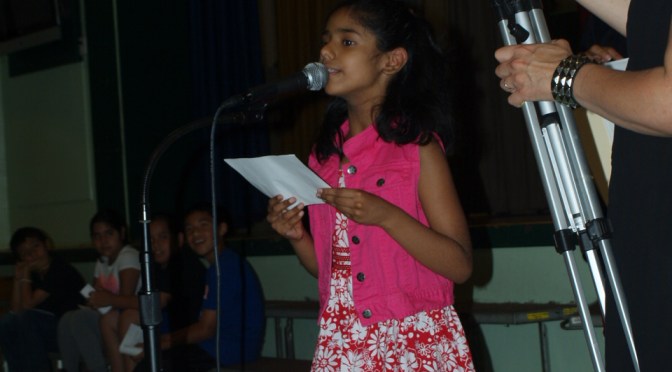
Oscar-worthy performances by all grades at New Rochelle Columbus Elementary Students.

Mamaroneck’s Middle School On TV With Its Rocket Composter

Mamaroneck’s Hommocks Middle School is the first public school in Westchester County to proudly operate a Rocket composter.  Seventy-seven pounds of food waste are gobbled up daily and through the We Future Cycle sorting program, and Hommocks is now diverting 86% of its waste into composting or recycling streams.

Click on the image to view the fabulous news coverage by LMCTV:

Hommocks lmctv


New Rochelle’s Jefferson Elementary School down to 1.2% Garbage

3 lbs of trash, all the rest goes into compost or recyclingThis is what 254 lbs of lunchroom waste look like, and — believe it or not—- only 3 lbs of it, was actually trash. Everything else is being fed into food waste composting and recycling.  72 lbs went as left over liquid down the drain, and the students sorted 15.5 lbs of untouched food out to donate to the local soup kitchen.

That is a whopping 98.8% reduction.  Seriously …. way to go.

Jefferson Elementary School under the leadership of Kim Nieves and LeAnn Bruno has always been on New Rochelle’s forefront to bring sustainability to their students.

Already in 2011, when the We Future Cycle Recycling program was in its infancy and New Rochelle was still serving its students on Styrofoam trays, Ms Nieves and Ms Bruno knew that making the students partners and teaching them to care and sort is a life long skill.

Fortunately, after a 5 year battle, Styrofoam is permanently off the menu in New Rochelle and We Future Cycle gives full credit for this to Jeff White, Assistant Superintendent of Business. Mr White, being new to the district, saw immediately the incredible social, educational and environmental value that the program offers to the children and understood that serving our young ones on a material that contains Styrene, a chemical that has recently been classified as “reasonably anticipated human carcinogen” was inappropriate, no matter how much less expensive it might be.

Jefferson adjusted its program to follow We Future Cycle’s guidelines, so all New Rochelle schools are set up exactly the same.  We Future Cycle is enjoying working with Jefferson’s enthusiastic recyclers. There is nothing as rewarding as having a kindergarten student hug your leg and say thank you for teaching her to recycle.


Planting A Trash Garden, Hands on Teaching about Decomposition

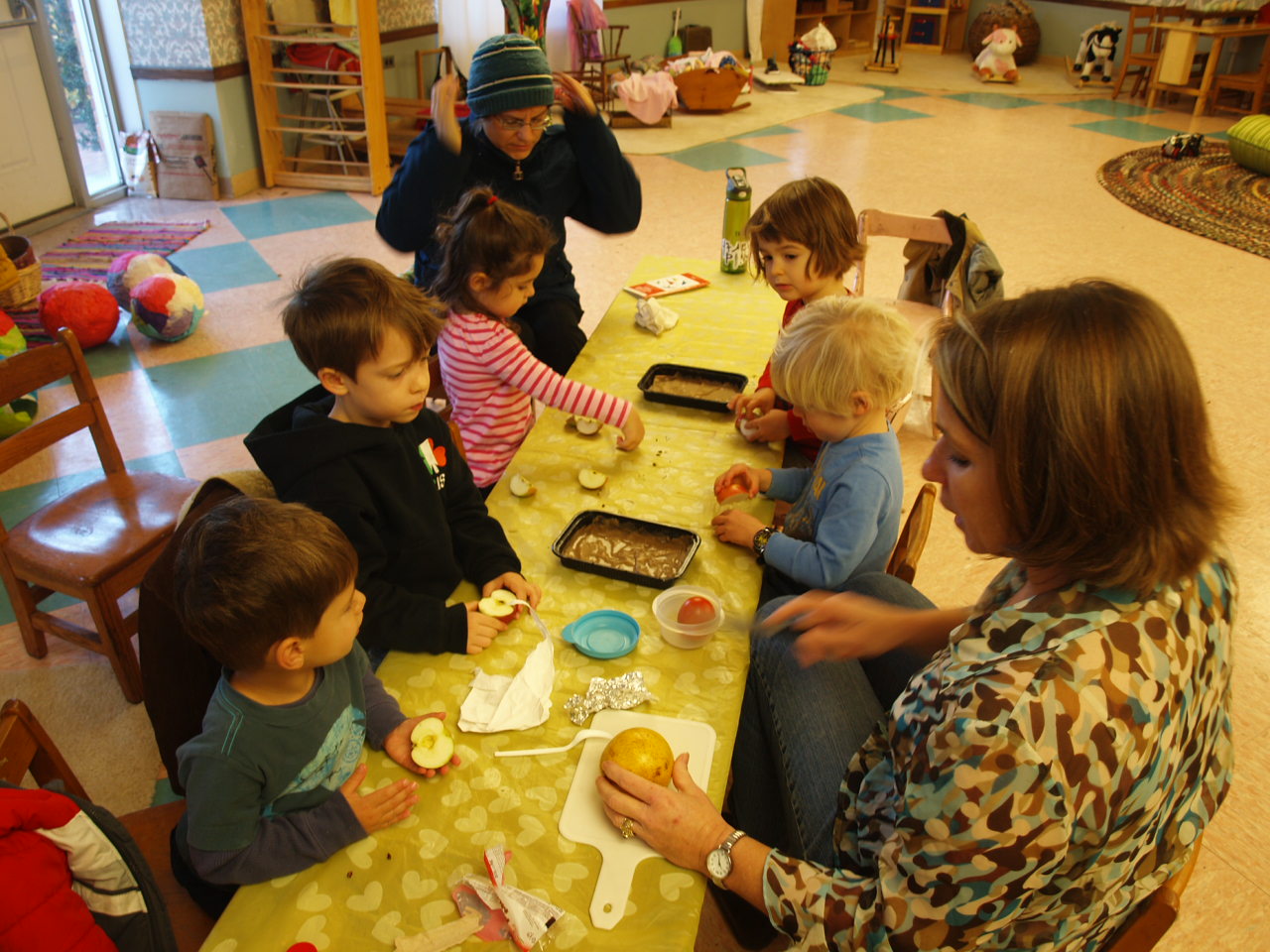
OLYMPUS DIGITAL CAMERA
Cutting up fruits and vegetables, hunting for seeds

Even  a 3 year old knows that a wrapper flying through the air on the street is not suppose to be there. When asked if that wrapper ever goes away, the little boy stopped to think a bit and then came  a timid “no” ,  with a question mark at the end. Talking about “away” is a common topic at the Little Leaf Nursery School in Hastings these days and the students are learning.

Just recently We Future Cycle introduced  recycling and composting  and the students are now seasoned recyclers, knowing where materials go and where the food waste goes. They all reported that they feed the tumbler and they help tumbling.

OLYMPUS DIGITAL CAMERA
Learning about seeds, what can grow  and decomposition while making a trash garden

To bring decomposition even closer, we created a trash garden with the students today. We cut up some fruits and vegetables, looked at the seeds and planted them together with strips of aluminum foil, corners of paper, a hard plastic bottle cap, some soft plastic wrappers and some cut up fruit and veggie peel.

The students learned about prediction and we tried to predict what would grow from the things we just planted.  We will now keep our “trash garden” nicely watered and observe the changes.


New Rochelle Columbus Kindergarten students Hard At Work For the Environment

Every day at lunch, Columbus Elementary school has about 15 enthusiastic students helping at the recycling station. My favorite group are the kindergarteners.

They cannot even look over the rim of the bin, but they are excited recyclers. When they come into the lunchroom, they first run over to me to ask if they can help. Of course they can help, but they are all sent to go and eat first. After a while, they start showing up, first carefully sorting their own tray and then proudly taking their position behind the station.

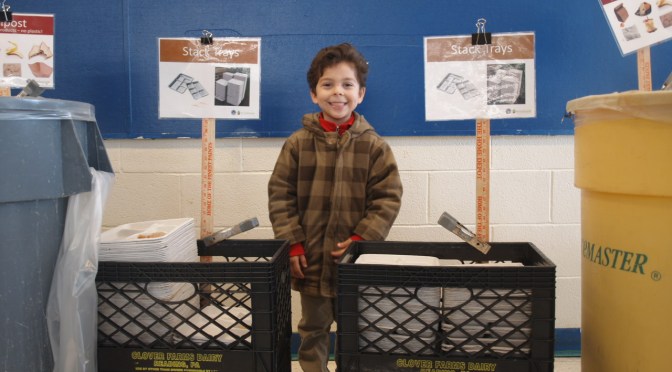
The most critical position is watching over the food waste bin to make sure no plastic or other contaminants end up in it, and the second most important job is the correct stacking of the trays.  Meet  Jose, the Master of the trays.  I just love this little boy!