Tag Archives: cafeteria recycling

White Plains Church St Students are learning about “away”

When you say ” I am throwing something away” , where is “away”?

That is a question  students at Church St Elementary school learned the answer to. And they didn’t like it, not one bit.

Looking at pictures of land fills and incinerators brought even the littlest students to a open mouthed gasp.  November 6th 2015 was launch date of the We Future Cycle Recycling program at Church St and it started with assemblies to all students in the auditorium. In a lively presentation, students learned to look differently at packaging material. What they first considered trash, they saw later as raw material for new things, the premise of recycling.  What they first saw as a yummy snack, they later saw as food that created trash because of its unrecyclable packaging.  They also learned just how much garbage is generated at a school, something they had never thought of before. And they learned, that most of what they generate can be recycled if it was just sorted out. Now they are chomping at the bit to start sorting.
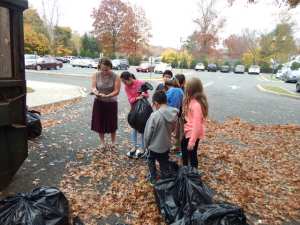
DSCN19056 Safety Squat students were chosen to assist with the “before recycling” waste audit. They stood open mouthed in front of the 15 bags of bulging trash. They weighed each bag, we calculated totals, looked at median bag weights, offered suggestions why some bags were much heavier then others, while not being necessarily more bulky.  Suggestions included that the bags may have come from younger students as there was more heavy food and more left over liquid in these bags.

Church St generated that day 15 bags of trash, weighing a total of 204 lbs. Anna Giordano, from We Future Cycle, asked the students to imagine what a ton of garbage looked like. Step by step, the students worked to identify that 200  of their own lunchroom bags would equal 2000 lbs. Upon learning that Westchester Ct generates more then 2300 tons of garbage per day, one boy sadly commented “and that is just Westchester”. A very mature deduction from a 5th grader.

From Monday Nov 9th, Church St students will be separating their lunchroom waste into waste liquid, milk cartons, commingled and food waste and the students are looking forward to diverting an estimated 90% away from trash and into recycling.

Church St is all geared up to make a difference. Way to go!


Waste Management in Germany, 87% recycling rate

3,w=650,c=0.bildIn Germany, Source Separation is old news, everybody does it . And I mean

E V E R Y  B O D Y!

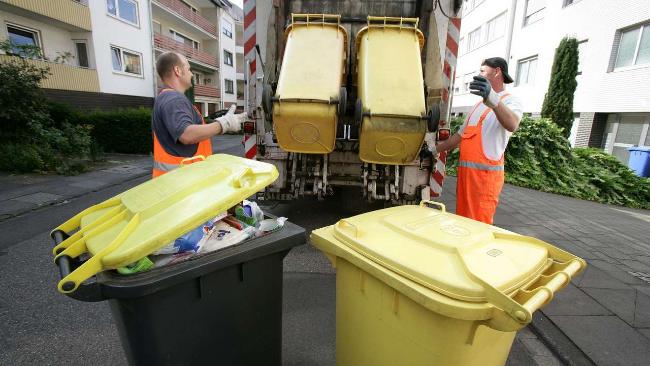
It is working because Germany applied country wide the same strategy.  German households, and buildings are all set up the same way. Everybody is sorting food waste into the  brown “BioTonne”, Paper into the “Blue Bin” , all packaging into the “Yellow Bin” and then there is the black bin for left over garbage.

The pick up schedule is set up to reward recycling and to penalize garbage. Country wide food waste pick up takes place once per week, Paper and Packaging Materials are alternating once per week and the left over garbage is only picked up once per month. Each bin has a bar code and is read at point of pick up. The cost per consumer is calculated by weight whereas food waste and recycling has a very low per pound fee, and remaining garbage a very high per pound fee.

The keys to success were

1.  consistent signage, consistent colors of bins

2. supervision at point of collection (oops stickers, and ultimately fines for non compliance)

3. pay per throw via bar code,  per pound cost differentiated by material.

4. Bio Digesters for food waste management .

The results are just amazing.

KSzectF (1)In Numbers:  Germany generates some 50 million tons of waste per year from its 82.5 million people.  87% of that waste is recycled through household and industrial source separation.

Construction debris is only accepted source separated to particular standards.

Grocery stores are required to offer disposal of hard to recycle materials and with that came a revolution in packaging, as suddenly the point of sale was responsible for what it put on its shelves.

There are no active landfills in Germany, a few incinerators are dealing with the remaining 13% of left over garbage.  Italy is sending its trash to Germany for incineration, and Germany is actually harvesting that trash from its recyclables before sending it to the incinerator.

And the absolute best is, that it is now cost efficient to harvest old landfills, which is starting to happen in several areas all over Germany.

A true example of what can be possible if everybody is seeing the greater good, rather then the quick buck for some selected few.

How Much is Actually “a Ton of Garbage”?

Garbage costs money.  However only very few people actually know how much it costs and what a ton looks like. Very few of us think further then to the curb.

Let’s look at school garbage a little closer. A school with 830 students generated 23 large black bags of garbage every lunch, the total weight of those bags is 398.5 lbs.

This is what 23 bags look like. IMG_0258 Now that we know what about 400 lbs of garbage looks like, lets think about it.

A ton of garbage costs the tax payer around $80.00 to just dump it onto the tipping floor of the Incinerator, the big trash burning facility up in Peekskill. 400 lbs is a fifth of a ton.  So, imagine 5 times the amount you see, or 115 bags of trash. Clearly the $80 per ton does not represent the only cost of garbage. This material has to be put in bags, then brought outside into the dumpster, then loaded by workers into diesel fuel guzzling trucks (about 2.5 miles per gallon of diesel), driven to a transfer station, dumped there, then loaded onto large trucks and driven 50 miles up north to be dumped onto the tipping floor of the incinerator. And then it is burnt into our air. I get dizzy just looking at how often this material needs to be touched and handled for it “to go away”. It takes that much time and effort to “just throw something away”.

We just started the School lunch recycling program in this school and the kids sorted their lunchwaste into liquids, commingled, milk cartons, compost and trash. The results were astounding. unnamed

Out of the previous 398.5 lbs, only 8 lbs were actually non recyclable. That means that 98% of the material is recyclable.  So, “just throwing it away” is not just costing us a lot of money, but in fact, we use tax payer money to burn materials that we could easily sell for a profit. unnamed (2)

This is what 10 lbs of commingled looks like. Some math on the value of commingled. 1 ton of plastic PETE 1 sells from the Yonkers MRF for around $800. (the cost is market driven, oil dependent and is fluctuating). 10 lbs of plastic (to simplify this calculation, it is all the same resin) 2000 lbs of plastics sell for $800.00 10 lbs = $4.00 Milk cartons sell for $450 per ton. 30 lbs = $6.75 IMG_0278And this is what 15 lbs of milk cartons look like, we had two of these bags. And two full 5 gallon buckets with waste liquid weighing 74 lbs. That means we use fossil fuels to truck liquids 50 miles north just to burn them, rather then sending them down the drain? By far the heaviest was the food waste. 180 lbs of wasted food from 800 kids, plus about 50 lbs of untouched never opened food that was placed into the share basket. Clearly, a ton of garbage is a lot, but as you can see, only 2% of it is actually non recyclable.

So, our convenience to “just throw it away” costs us all dearly. Not just as hard cash but also at great environmental expense.

First Graders Write Heartwarming Thank You Notes for Bringing Recycling to Their School

We Future Cycle just finished implementing the recycling program at Blind Brook’s BMP Ridge Street Elementary School.

We just received these  heartwarming Thank You Notes from the 1st graders for bringing recycling to their school.

We are honored and very touched.

THANK YOU 1st Graders for such wonderful thoughts.

We Future Cycle’s Bash The Trash Documentary showing in Pelham Picture House on April 22, 6:30 pm

On April 22nd 2015 at 6:30, the curtain will rise to show the documentary filmed about the Bash The Trash Legacy Project created and supervised by We Future Cycle in the Colonial Elementary School in Pelham. We are so excited and hope you can all join us for this event.

maxresdefault-e1429033807574Also shown will be “Devide in Concord”, the tale of the battle to ban the plastic bottle.

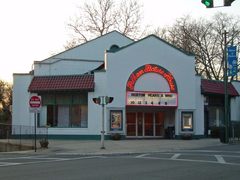
The Pelham Picture house is located at 175 Wolfs Ln, Pelham, NY 10803.

We Future Cycle to present at Bedford 2020 “Beyond Waste” Fair

b20-BeyondWaste-flyer-v7On May 13th at 6:30 to 8:30 pm, We Future Cycle is invited to be part of the Bedford 2020 Beyond Waste Fair. We will have an informational table as well as be part of a round table discussion.

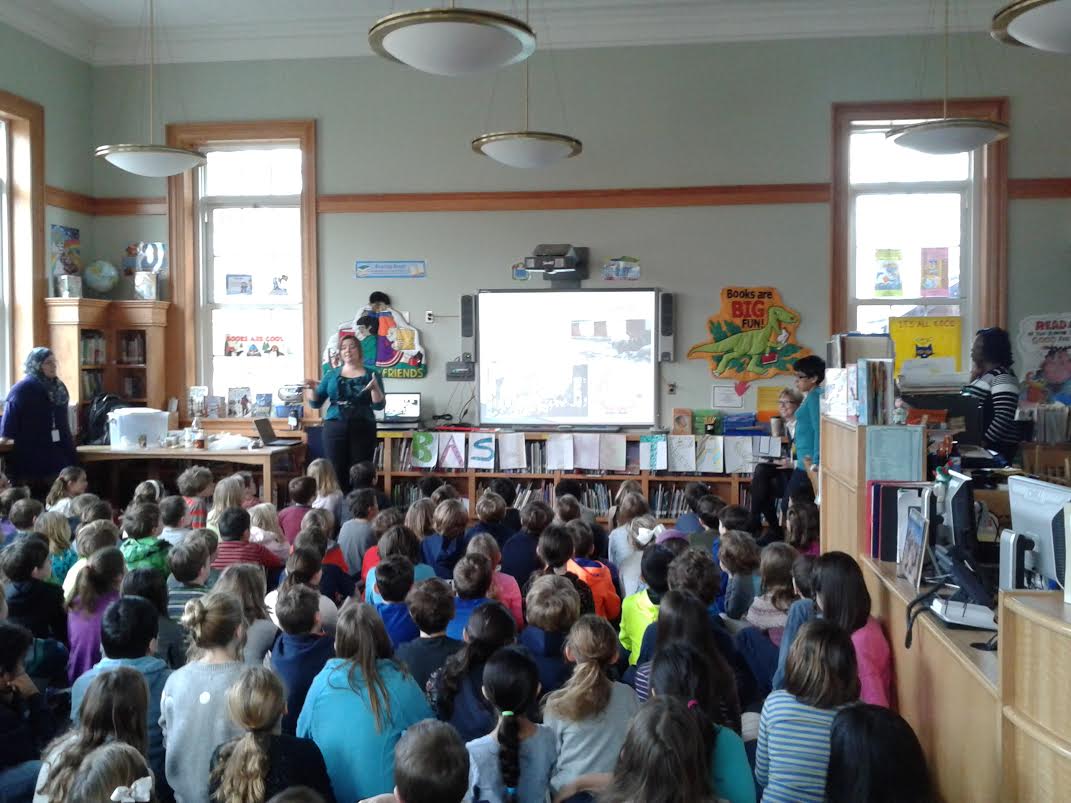
We are looking forward to spreading our message to bring sustainability education into schools through hands-on source separation in the lunchrooms and buildings.

Pelham’s Colonial School In The Pelham Weekly Newspaper For Making A Difference

Colonial Fifth Graders Challenge School To “Bash The Trash”

Colonial’s fifth graders recently challenged the school to “Bash the Trash” and go litterless at lunch, reducing the trash collected every day. Parents were urged to use recyclable containers for food and drink (containers that could be returned home, washed  and reused). At the end of the challenge, the fifth graders plan to tell the school how much the trash was reduced, based on data they collected. Their hope is to leave a “littlerless legacy” at Colonial when they graduate.

Please see full published “The Pelham Weekly” article here:

http://www.pelhamplus.com/news/schools/collection_b8f059da-ac9e-11e4-a787-2f29c82bf329.html

The Science Barge, a Floating Urban Farm in Yonkers

Jennifer Sloan, Director of Education, The Science Barge, teaching students about garbage and recycling

We Future Cycle and The Science Barge are working together to bring Environmental Education to Westchester Schools.

Creating Change is all about showing alternatives. That is exactly the mission of the Science Barge in Yonkers.

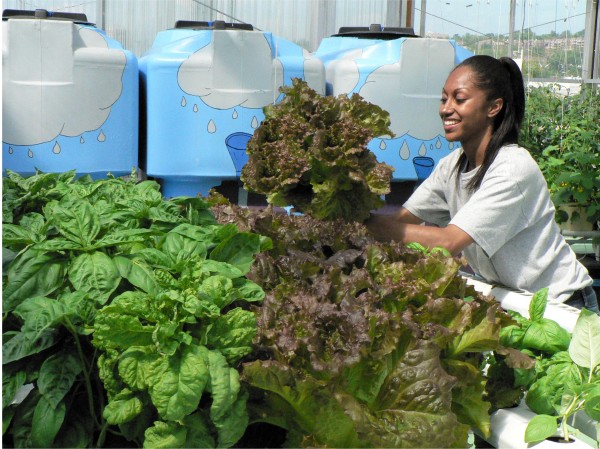
girl-with-Lettuce-600x449The Science Barge is a prototype sustainable urban farm developed by NY Sun Works and acquired by Groundwork Hudson Valley in October, 2008 to be operated as an environmental education center.

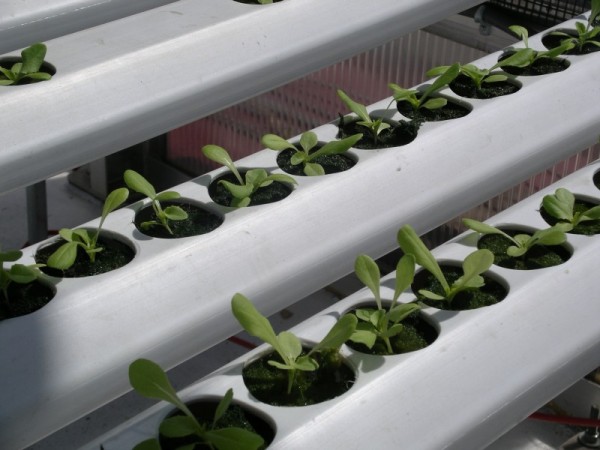
IMGP4719-600x450The Science Barge greenhouse, floating on the Hudson River, grows an abundance of fresh produce including tomatoes, melons, greens, and lettuce with zero net carbon emissions, zero pesticides, and zero runoff. All of the energy needed to power the Barge is generated by solar panels, wind turbines, and biofuels while the hydroponic greenhouse is irrigated solely by collected  rainwater and purified river water, thus operating completely “off the grid.”

It is the only fully functioning demonstration of renewable energy supporting sustainable food production in New York. It is now docked in downtown Yonkers just north of the Yonkers Pier.

Check them out, they are fabulous!

http://www.groundworkhv.org/programs/science-barge/


Environmental Goals for Westchester in 2015, let’s do this!

With 2014 being such an incredible year we are looking forward to 2015 and the positive change it can bring to Westchester schools.

My personal wish list for 2015 is

1. Implementing We Future Cycle’s School Lunch and Building-Wide Recycling and Composting Program to 10 More School Districts in 2015, even if it is just in one pilot school per district. Implementing these programs is very do-able, but working with experts is critical to ensure a successful implementation. Results will speak for themselves and that will hopefully lead to district-wide implementation in many Westchester School districts.

Just imagine, if one school reduces its garbage from 22 bags per day down to less then 1/4 bag per day, what kind of impact this will have if 10 more districts will join the program. And just imagine all those students going back home to their parents and sharing their enthusiasm to save the world.

2. Creating the First Leaf and Food-Waste Composting Site in Westchester. So far, only very few communities are composting their leaves, most are trucking them to Rockland County at great expense in fossil fuel consumption, labor and heavy equipment on our streets. So far, no community is doing larger scale, organized food waste composting instead nature’s valuable resource is treated as trash, plastic bagged and burnt. The good news is that several communities are now studying how to solve this problem. We are proud to be on the forefront with them.

3. Integrating Sustainability Education into Curriculum. We have done numerous environmental projects with individual schools such as green writing contests, waste free snack education, TerraCycle Ambassador programs, kindergarten recycling sorting games and it shows again and again, that when students are made aware early of their personal ability to create environmental change, that the ripple effect through the community is amazing.