Tag Archives: waste

We Future Cycle engages kids (and their grown ups) with environmental facts

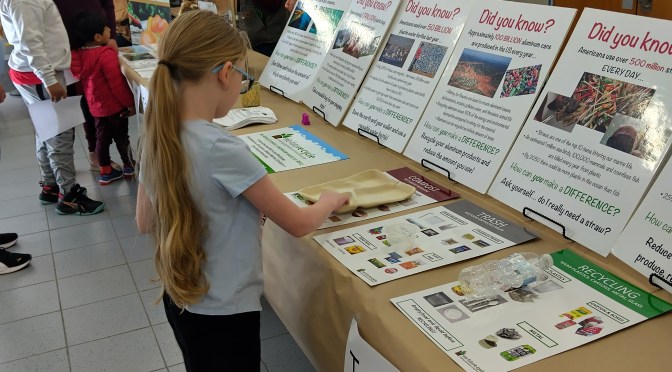
When we participate at a climate or community fair, we have a bunch of posters with environmental facts to engage the kids with. These are posters that illustrate shocking things under the headline “Did you know…” . Students as young as first grade will receive a detective sheet to collect clues and with the help of their grown ups are learning things like that the US is using over 500 million straws per day, or that the only place we can mine for the ore that gives us Aluminum is the rainforest. Each poster offers one or two quick things to change which will make a huge difference.

Engaging parents through their kids is the way to really change the communities for the better. We see this change in the lunchrooms we work in. More and more reusable water bottles, fewer unrecyclable juice pouches, more lunchboxes with less single serve packaged foods.

Creating a generation of kids that care also comes with the grown-ups attached to those kids to start to care.
Air Pollution, teaching kids how an invisible gas can be a big problem

When you ask kids about what we breathe , the words “Air” and ” Oxygen” are most often fully interchangeable. And they will know that trees give us “air” and from 2nd grade on, they have heard the word air pollution, but without actually filling it with any meaning. For them, air is all around us, it’s a constant. Air means oxygen to them, so the concept that the CONTENT of air, the ratio of the gases that are part of air are important is beyond their (and -lets face it- most adults) imagination.

For the intrepid reader: our air consists of 78% Nitrogen, 21% and 1% of other gases including CO2 and Argon.

Every time we breathe or burn something we are converting Oxygen into Carbon Dioxide. Thanks to plant respiration, any green leafed plant will convert Carbon Dioxide back into Oxygen. So the question is how much CO2 do we produce, while cutting down trees until that balance is off?

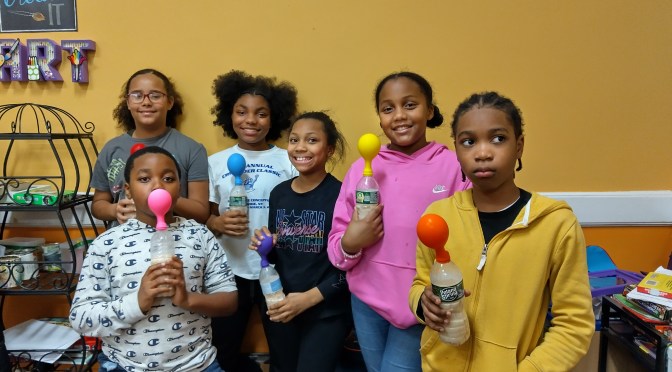
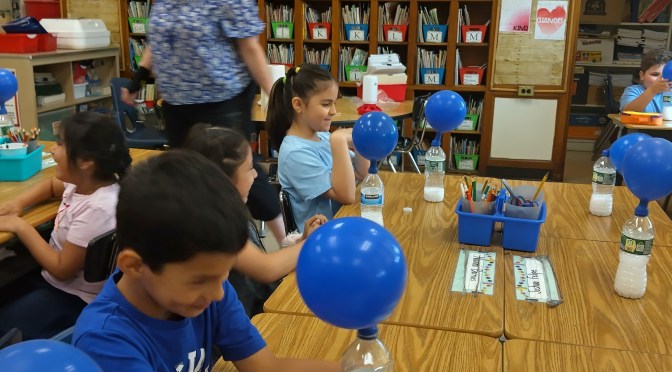
This is all very hard to grasp for kids but teaching them about it and then showing them how a small chemical reaction of mixing vinegar and baking soda together creates an entire balloon full of Carbon Dioxide and for them to watch that it takes only a tiny puff of CO2 from that balloon to snuff out a candle, was very eye opening to them.

Air pollution is something we ALL are contributing to …….. everyday (!), but we all can do plenty of little things to mitigate the results. These kids are going to be part of the generation of kids who care.

Leading by example in White Plains Schools

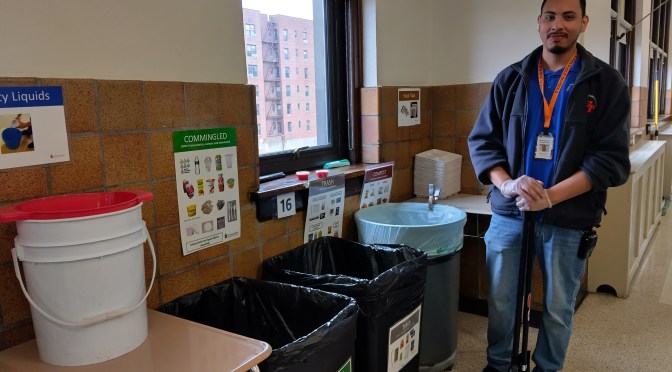
We Future Cycle is proud to be the Sustainability Coordinator for the White Plains school district. Teaching students to sort their waste into composting, recycling and trash reduces trash by a whopping 90+% but in order for students to learn and live what they learned, adults around them have to lead by example. White Plains custodial staff is truly stellar about supporting the recycling program and thus modeling every day for the kids what behavior is expected in the lunchroom.

This is a shout out for all of your fabulous custodians that make this program look easy!

Every Day Should be Earth Day

We are all busy, rushing from place to place, getting stuff done and keeping ahead of life, however, it feels good to take a step back and look at this most gorgeous place that we are allowed to live on. Earth! The planet of water, 3rd from the sun, with an atmosphere that allows to keep our oxygen and water in, and filters the worst of the sun rays to allow for life.

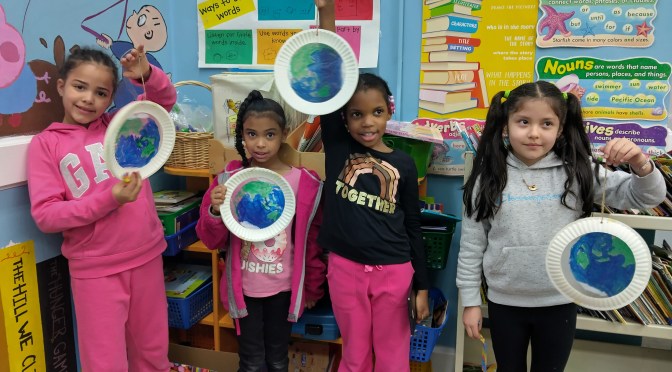
WeFutureCycle is proud to be part of the many different EarthDay celebrations that take place throughout Westchester County. We teach students how their small every day actions such as sorting their waste into the correct bin, can make a big difference.

Earth Day can be every day, simply by being mindful about how every small action can make a big impact. These kids surely got it.

Recycling… a hands-on experience

Students at most ages have heard the word recycling, but when asked what it actually means we get a short narrative of “making new stuff”. In the schools that WeFutureCycle is active in, the kids have learned that packaging items made of cartons, hard plastic, aluminum, glass and milk cartons are fully recyclable and thus they go into the recycling bin. They are good at sorting, do it easily and while chatting with their friends. The result is a reduction of 95!!! % in waste by sorting all compostables and all recyclables out of the system.

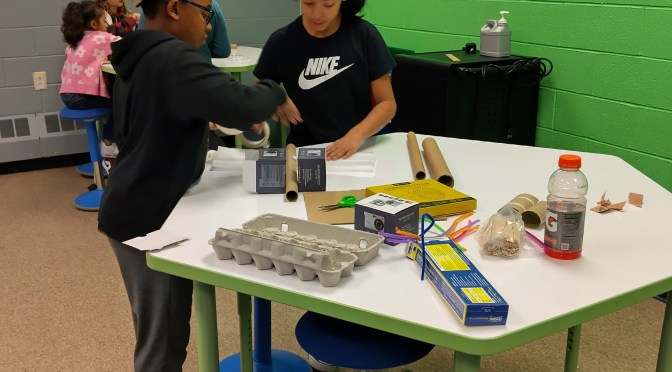
But what does “making new stuff” actually mean? We put it to the test by giving them a bunch of materials and let them build a space station with it . While they were busy cutting “solar panels” from cereal boxes, I explained that most materials can do just that. Be made into something as fantastic as a space station.

Turning waste into energy

Wefuturecycle offers a vast variety of environmental education classes to connect students to their environment. One of these lessons starts with the simple question: “Is there any value in animal and human manure?” This question usually invokes grimaces and grossed out “eeeeekkkkss” from the students.

When I asked them what they thought about cooking with their human waste, we had a few minutes of groans and disbelief. But they listened carefully when I explained how people can cook with the help of manure and it opened their thoughts to think way past their own experiences

We explore together what it takes for civilization to function. For most students it is the first thought to what happens after they flush in the bathroom. And most students in the metro area have no understanding of what life might look like without the convenience of city water and engineered sewer systems.

Walking them through the process of anaerobic digestion and the benefit of producing Methane from waste products , contrasting it with fossil fuel Methane opened their eyes to the environment around them and how we have many solutions to our pressing problems but are lacking will to implement them.

Teaching a generation of kids to be the new fearless leaders of tomorrow is very heartwarming.

Water…. teaching students its value so they care

For most kids in the US, it is normal to go, turn on the faucet and out comes beautiful clear, great tasting water. We drink it, we cook with it, we shower in it and -aggghhhh- we flush our toilets with it. Potable water is the greatest resource.

Teaching students the value of water, when they, themselves, have grown up with it being normal means to teach them beyond their own surroundings.

We Future Cycle offers a variety of environmental presentations to students, connecting them to their surroundings, making them aware of the connections and consequences of their own every day behaviors. Such as using the toilet as trash receptacle, big no no.

(note to the intrepid reader: only bio solids (aka: no1 and no2) and TP goes into the toilet, nothing else: no flushable wipes, no chemicals, no q-tips, no feminine products, no male products, no medication)

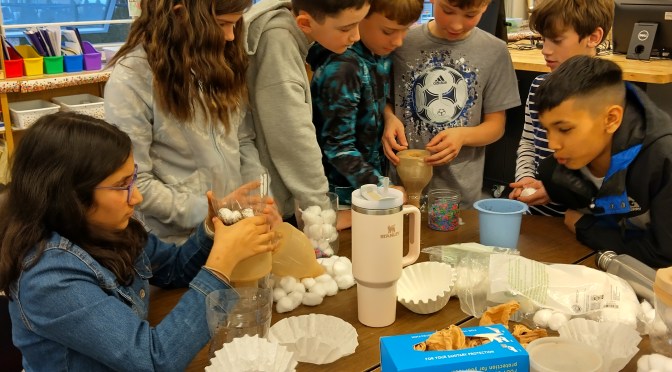
We teach them just how little fresh water there is on Earth and what it takes to make it potable and arrive, ever so conveniently, at your faucet. Showing them where their water comes from and what happens when we flush makes them appreciate the value this incredible resource has.

And it creates a sense of responsibility.

Sorting into compost and recycling….the norm for these kids

Watching 5 and 6 year olds casually walking up to the recycling station and sorting their materials correctly into recycling, composting or trash is just so heart warming.

And how quick and normal these movements are now. While chatting with their friends, they empty their left over milk into the bucket to then place the carton into recycling. A quick glance onto their tray and they pick up their plastic cup to also put it into recycling. The snack bag goes into trash, they expertly empty their food scraps into compost and stack their trays.

This behavior is normal to White Plains students, and it diverts 95% of the lunchroom waste into reusable resources. Solving a problem by 95% by teaching a few changes in behavior. That is what it means to create a generation of kids that care.

Nobody is too little to help create change

Check out these involved K-students. Their job is to make sure that the trays at the recycling station are stacked properly, and ….-boy-….. do they take their job seriously. One is never too small to help create change.

In White Plains schools it is now normal behavior to clean up after lunch by carefully sorting your waste into recycling, non recycling and composting, thus diverting 95% away from garbage. Even the littlest ones know that and do it with care and consideration.

Supporting this behavior by elevating it into a “job”, thus creating a sense of responsibility and reiterating that we are all in the same boat is behind teaching even the littlest ones that their help matters.

Fighting Untouched Food waste

Most schools in the US are part of the Federal School Lunch Program which regulates how tax payer dollars are spent on student lunches.

Thanks to Michelle Obama, real nutritional guidelines were put in place to assure that commercial food provider do not just use the cheapest of all ingredients to feed our littlest ones to pad their bottom line.

Extensive guidelines regulate the servings of fresh fruit, whole grain carbs, and fresh meat, but -as we all know- we are dealing with kids and some of the best intentions are not going to fly with them. So often enough, there are things they won’t eat despite all the best efforts. 

Before WeFutureCycle got into the White Plains Schools, all those untouched food items would go straight into the garbage. The kids were served, didn’t open them, and off it went into the trash.

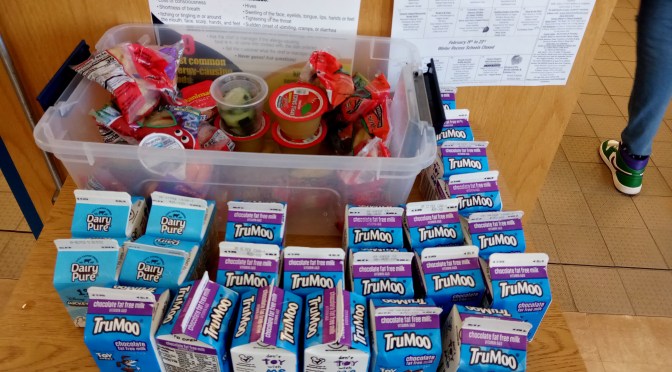
Now that we have taught students to separate their left overs into recyclable, compostable and non recyclable, we are also sorting out the untouched food items to repurpose them. Either as seconds for the older grades, or for the afternoon programs as snack or to the nurse for a snack. Anything is better than discarding perfectly untouched food, just because that particular student didn’t want to eat it.