

Very few things are more fun that mixing a bunch of elementary school student with worms. We Future Cycle was invited to present the fascinating details around worms to all classes as the Daniel Warren Elementary School in Rye Neck as part of their environmental resiliency program.
As they learned that worms had no noses but rather breathed through their skin, they all rubbed their arms to grasp that concept.
How do worms eat and metabolize their food ? For the unsuspecting reader: worms do not p.o.o.p, instead they do something much more elegant called ” casting”. It was with great hoots that the students observe the worm casting in their translucent body. There was one poor, and very shy worm that had a gaggle of kids observing him while the actual casting took place.
K, 1st and 2nd graders watched in awe when they learned how much worms can eat. After explaining the concept of time lapse videos, they got to watch how two handful of Eisenia Fetida worms devoured an entire bin of leaves, paper and food scraps in just a few days.
Ask any student now how worms reproduce and they will give you “Cocoons” without hesitation. Because worms do not lay eggs nor have live babies but they have the most wonderous way of producing cocoons with 2-3 baby worms in them. It was a bit hard to grasp that worms are hermaphrodites though.
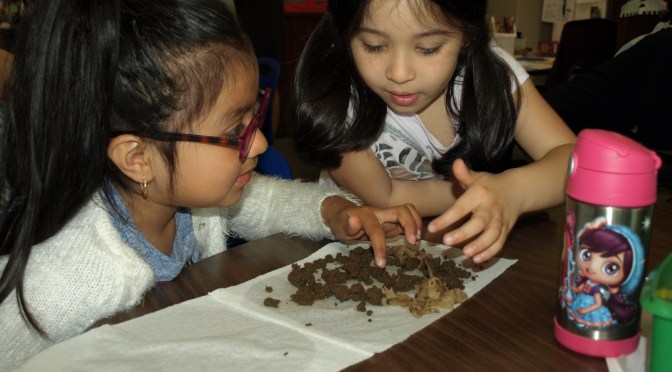
The real fun was getting up close and personal with the worms. Each group had a wet paper towel with worms on it in front of them to observe all the interesting facts they had just learned.
This opened their eyes to how we are all interdependent and it is on each of us to care. We all had great fun.

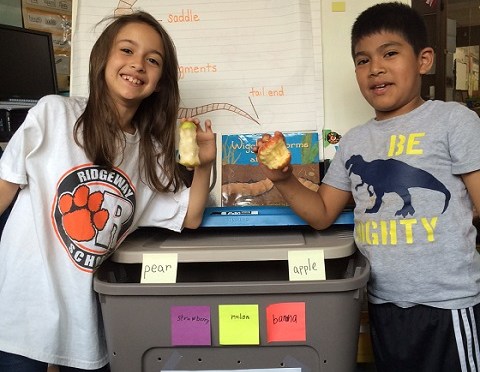

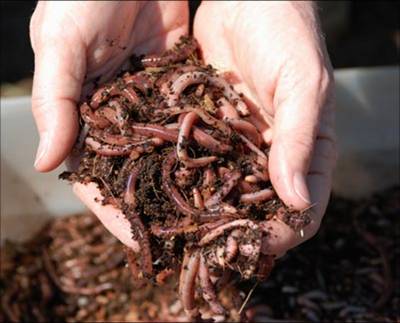 Meet the new “friends” of Ridgeway’s Ms. Vendola’s second grade. Eager students learned all about the wonders of worm composting, or technically called Vermiculture.
 We Future Cycle