Tag Archives: trash

Rye Neck students are getting up close and personal with worms

Very few things are more fun that mixing a bunch of elementary school student with worms. We Future Cycle was invited to present the fascinating details around worms to all classes as the Daniel Warren Elementary School in Rye Neck as part of their environmental resiliency program.

As they learned that worms had no noses but rather breathed through their skin, they all rubbed their arms to grasp that concept.

How do worms eat and metabolize their food ? For the unsuspecting reader: worms do not p.o.o.p, instead they do something much more elegant called ” casting”. It was with great hoots that the students observe the worm casting in their translucent body. There was one poor, and very shy worm that had a gaggle of kids observing him while the actual casting took place.

K, 1st and 2nd graders watched in awe when they learned how much worms can eat. After explaining the concept of time lapse videos, they got to watch how two handful of Eisenia Fetida worms devoured an entire bin of leaves, paper and food scraps in just a few days.

Ask any student now how worms reproduce and they will give you “Cocoons” without hesitation. Because worms do not lay eggs nor have live babies but they have the most wonderous way of producing cocoons with 2-3 baby worms in them. It was a bit hard to grasp that worms are hermaphrodites though.

The real fun was getting up close and personal with the worms. Each group had a wet paper towel with worms on it in front of them to observe all the interesting facts they had just learned.

This opened their eyes to how we are all interdependent and it is on each of us to care. We all had great fun.
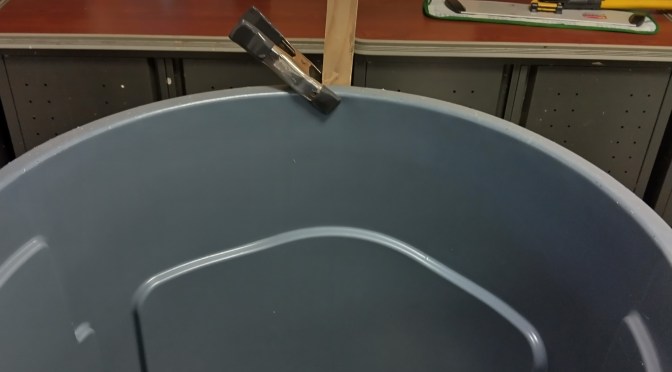
Going the extra mile to not use unnecessary bags

Commingled recyclables like milk cartons, aluminum foil, yogurt cups, bottles coming from a school cafeteria usually represent about 10 % in weight but 50 % in volume. That means two to three large 55 gallon contractor bags are being filled from one school alone.

The Westchester MRF (Material Recovery Facility) in Yonkers accepts the materials only unbagged to make the sorting process more efficient. So most school custodians line their receptacle with a black garbage bag, and then empty said bag into the container outside, and subsequently discarding the now dirty back into the garbage. 3 garbage bags used for no other reason than to not need to wash the bin.

Shout out to Pedro Molina, head custodian at Ridgeway Elementary School in White Plains. Pedro realized very early on, that it was a waste and that it is only a minute to rinse the bin, thus saving 3 garbage bags every day. This is what it means to go the extra mile. Seriously, way to go? Thank you!

Water, the most valuable resource

Learning what happens when they flush is usually accompanied by extended noises of disgust, but after just a little while, students realize -and agree- that it is very important.

We usually begin by teaching them what it takes in terms of engineering and technology to bring potable water to their kitchen. It opens their mind. Not just to the process but more so to the concept of luxury that it is to have clean drinking water readily available. Learning about flocculation, filtering and disinfection as well as the fact that only 0.3% of all of the world’s water is fresh water available for drinking is quite eye-opening.

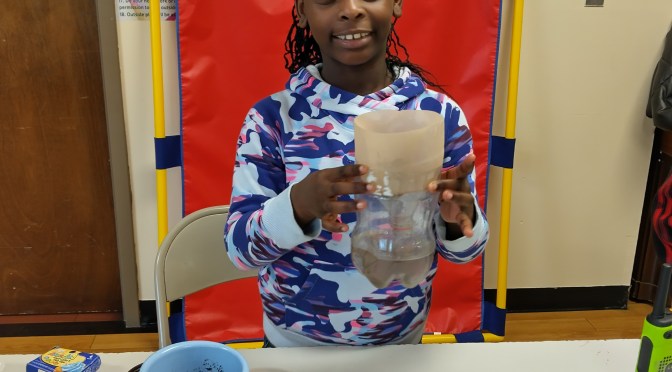
During a filtering activity it all comes into focus and students suddenly understand that clean water is our most valuable resource.

Untouched Foods: White Plains School District has a great solution

One of the most heart breaking problems we see in the schools is the amount of untouched food that gets discarded. A school with about 600 students will see about 180 lbs of food and paper waste. As WeFutureCycle is teaching students to separate their waste into Recycling, Composting and Trash, these 180 lbs are going into compost, making soil, but it also means that these 180 lbs have been cooked, and served but not eaten. 180lbs!

If moms knew just HOW MUCH of their lovingly prepared cut of fruit or veggies, the sandwich or the pasta they sent to school for their child to enjoy as lunch goes straight into compost.

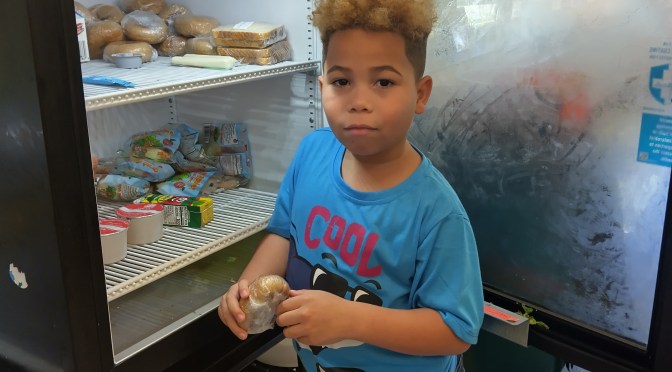
WeFutureCycle is constantly working to recover untouched foods that are coming out of the lunchroom because food is not trash, just because a student did not feel like eaten an item. So, unopened milk or juice cartons, untouched yogurt or applesauce containers, commercially wrapped cheese sticks or baggies with carrots and apples are recovered, and made available for other students as seconds or snack.

George Washington Elementary school in White Plains has invested in a refrigerator and it is a pleasure to watch how students are now aware of the problem and are participating in the “Share Basket”.

This is a wonderful solution to a heartbreaking problem.

White Plains schools is reducing trash one pouch at a time

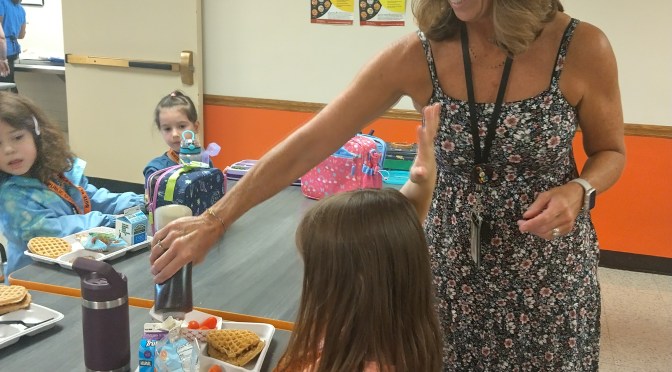
WeFutureCycle has been working with the White Plains schools district for many years now and it is such a pleasure to see the positive changes that food service has implemented. All schools have now syrup bottles instead of the dreaded single serve pouches. This comes with the added benefit of practicing table manners for our littlest ones. ” May I have some syrup, please” is now a common phrase which is then accompanied with a life skill lesson to judge how much or little they actually want.

Recently we were also able to introduce salad dressing from bottles rather than pouches.

Reducing trash one pouch at a time, while teaching social and life skill is a win win situation for the environment and the students.

Air Pollution, teaching kids how an invisible gas can be a big problem

When you ask kids about what we breathe , the words “Air” and ” Oxygen” are most often fully interchangeable. And they will know that trees give us “air” and from 2nd grade on, they have heard the word air pollution, but without actually filling it with any meaning. For them, air is all around us, it’s a constant. Air means oxygen to them, so the concept that the CONTENT of air, the ratio of the gases that are part of air are important is beyond their (and -lets face it- most adults) imagination.

For the intrepid reader: our air consists of 78% Nitrogen, 21% and 1% of other gases including CO2 and Argon.

Every time we breathe or burn something we are converting Oxygen into Carbon Dioxide. Thanks to plant respiration, any green leafed plant will convert Carbon Dioxide back into Oxygen. So the question is how much CO2 do we produce, while cutting down trees until that balance is off?

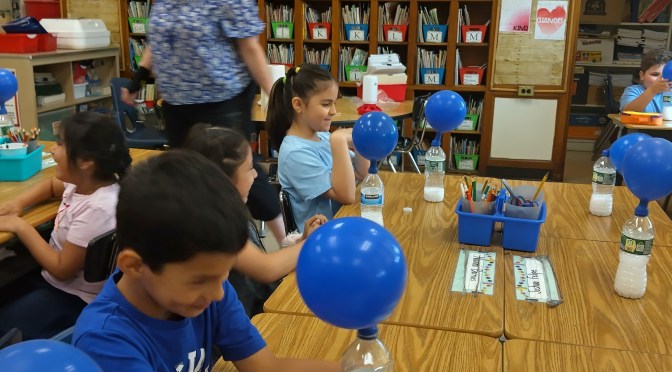
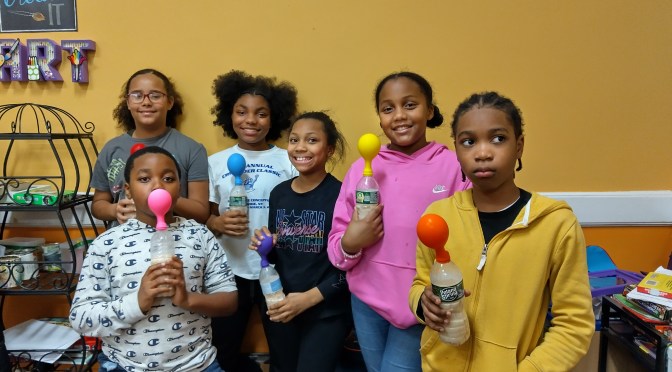
This is all very hard to grasp for kids but teaching them about it and then showing them how a small chemical reaction of mixing vinegar and baking soda together creates an entire balloon full of Carbon Dioxide and for them to watch that it takes only a tiny puff of CO2 from that balloon to snuff out a candle, was very eye opening to them.

Air pollution is something we ALL are contributing to …….. everyday (!), but we all can do plenty of little things to mitigate the results. These kids are going to be part of the generation of kids who care.

Waste free starts with ….everyone of us

We at Wefuturecycle are proud to work in schools and teach students that their small everyday actions matter and we are particularly happy when we hear them share with us that because of us, they asked mom to change how they bring their lunch to school.

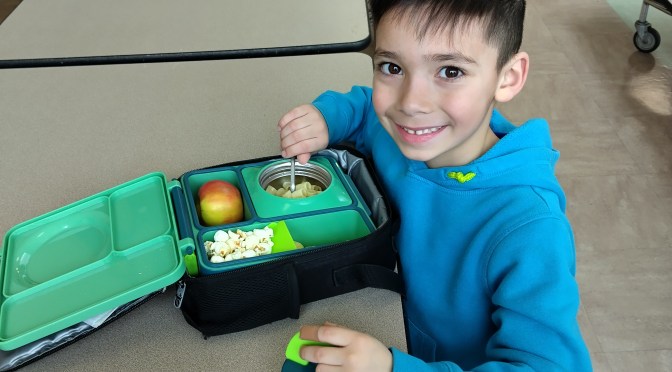
This student is bringing lunch in a lunchbox and is completely waste free every single day.

And kids around him are taking notes too. A trickle of sustainability can create ripples through schools and communities.

Leading by example in White Plains Schools

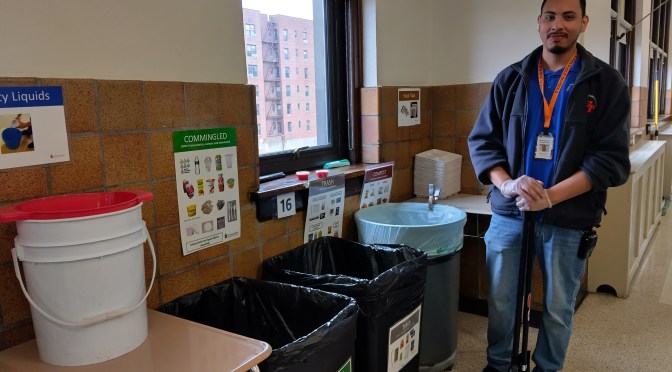
We Future Cycle is proud to be the Sustainability Coordinator for the White Plains school district. Teaching students to sort their waste into composting, recycling and trash reduces trash by a whopping 90+% but in order for students to learn and live what they learned, adults around them have to lead by example. White Plains custodial staff is truly stellar about supporting the recycling program and thus modeling every day for the kids what behavior is expected in the lunchroom.

This is a shout out for all of your fabulous custodians that make this program look easy!

Every Day Should be Earth Day

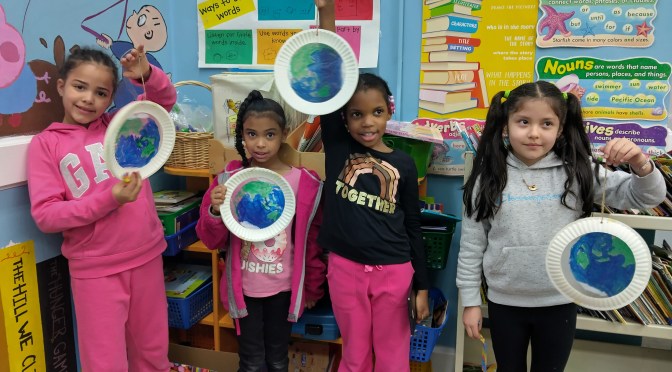
We are all busy, rushing from place to place, getting stuff done and keeping ahead of life, however, it feels good to take a step back and look at this most gorgeous place that we are allowed to live on. Earth! The planet of water, 3rd from the sun, with an atmosphere that allows to keep our oxygen and water in, and filters the worst of the sun rays to allow for life.

WeFutureCycle is proud to be part of the many different EarthDay celebrations that take place throughout Westchester County. We teach students how their small every day actions such as sorting their waste into the correct bin, can make a big difference.

Earth Day can be every day, simply by being mindful about how every small action can make a big impact. These kids surely got it.

Turning waste into energy

Wefuturecycle offers a vast variety of environmental education classes to connect students to their environment. One of these lessons starts with the simple question: “Is there any value in animal and human manure?” This question usually invokes grimaces and grossed out “eeeeekkkkss” from the students.

When I asked them what they thought about cooking with their human waste, we had a few minutes of groans and disbelief. But they listened carefully when I explained how people can cook with the help of manure and it opened their thoughts to think way past their own experiences

We explore together what it takes for civilization to function. For most students it is the first thought to what happens after they flush in the bathroom. And most students in the metro area have no understanding of what life might look like without the convenience of city water and engineered sewer systems.

Walking them through the process of anaerobic digestion and the benefit of producing Methane from waste products , contrasting it with fossil fuel Methane opened their eyes to the environment around them and how we have many solutions to our pressing problems but are lacking will to implement them.

Teaching a generation of kids to be the new fearless leaders of tomorrow is very heartwarming.