Tag Archives: recycling

Hastings Lunch Recycling Program On The Air…… Nationwide and Beyond!

wcbs880-flat

UPDATE: The program will be aired on January 12th on AM 880.

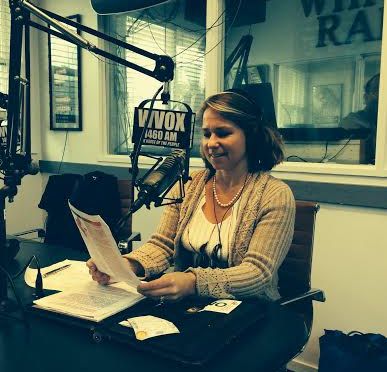
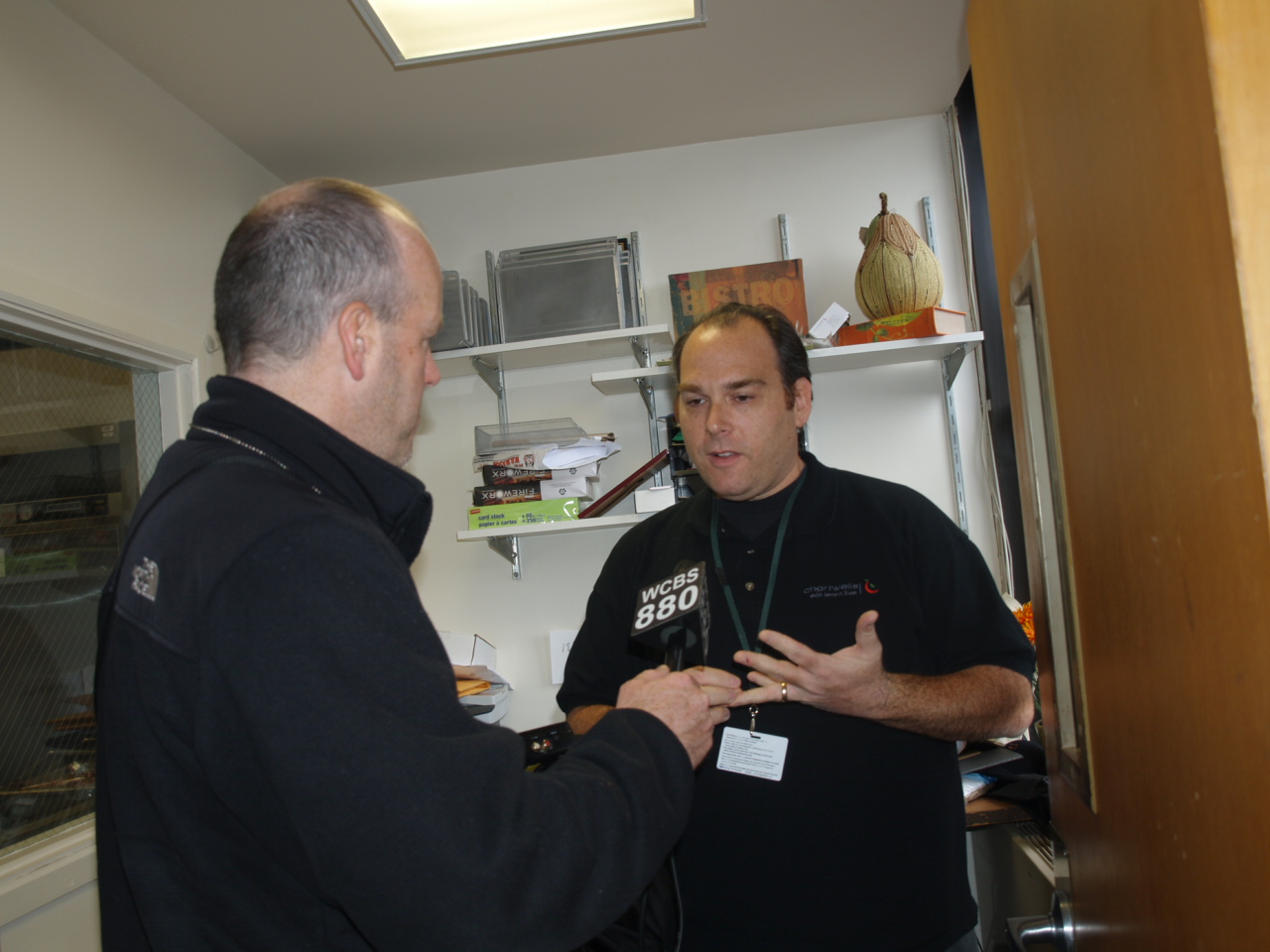
Today, Sean Adams, a reporter for WCBS, came to learn about the We Future Cycle Recycling Program in the Hastings-on-Hudson schools.

WCBS Newsradio 880 is one of America’s most listened to radio stations providing news and information on the AM dial in New York for 45 years.  Traffic and Weather Together on the “8’s” has been a mainstay with New York commuters for decades. With one of the largest, most veteran local news staffs in the country, WCBS provides coverage of breaking news, local news, business, sports and entertainment. WCBS 880 provides a 24 hour news stream via CBS New York.com.

Sean Adams with Hillside's Assistant Principal Mr Johnson
Sean Adams with Hillside’s Assistant Principal Mr Johnson

Adams took time to learn about the program, walked around the schools and interviewed Mr. Johnson, Assistant Principal of Hillside Elementary school,  Mr Johnson explained how the children have taken full ownership of the program and how they are correcting and teaching each other, how they check their classroom bins for all content to be correct and that they are even checking in the offices if all is in order. “I am very conscious about where I put my things because I know that I have my kids in and out of here and they are checking”, Johnson said with a big smile.

George Prine, Director of Facilities, shared that garbage has gone down drastically . Prior to this program, he used to fill two 6 yard containers to the brim every day. Now he is looking at maybe 4 yards every other day. He is in the process of making changes to his pick up needs and is expecting to be saving on next years garbage bid. “I am just amazed how well it is working, we have tried several times to increase our recycling, but only this time it is working and it is here to stay” he shared contently.
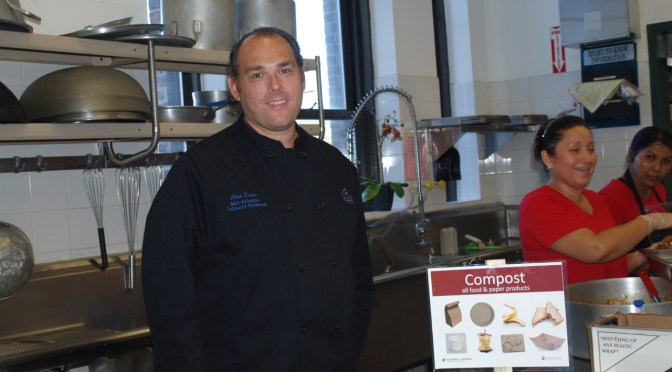
Alan Levin, Food Service Direct with Chartwell

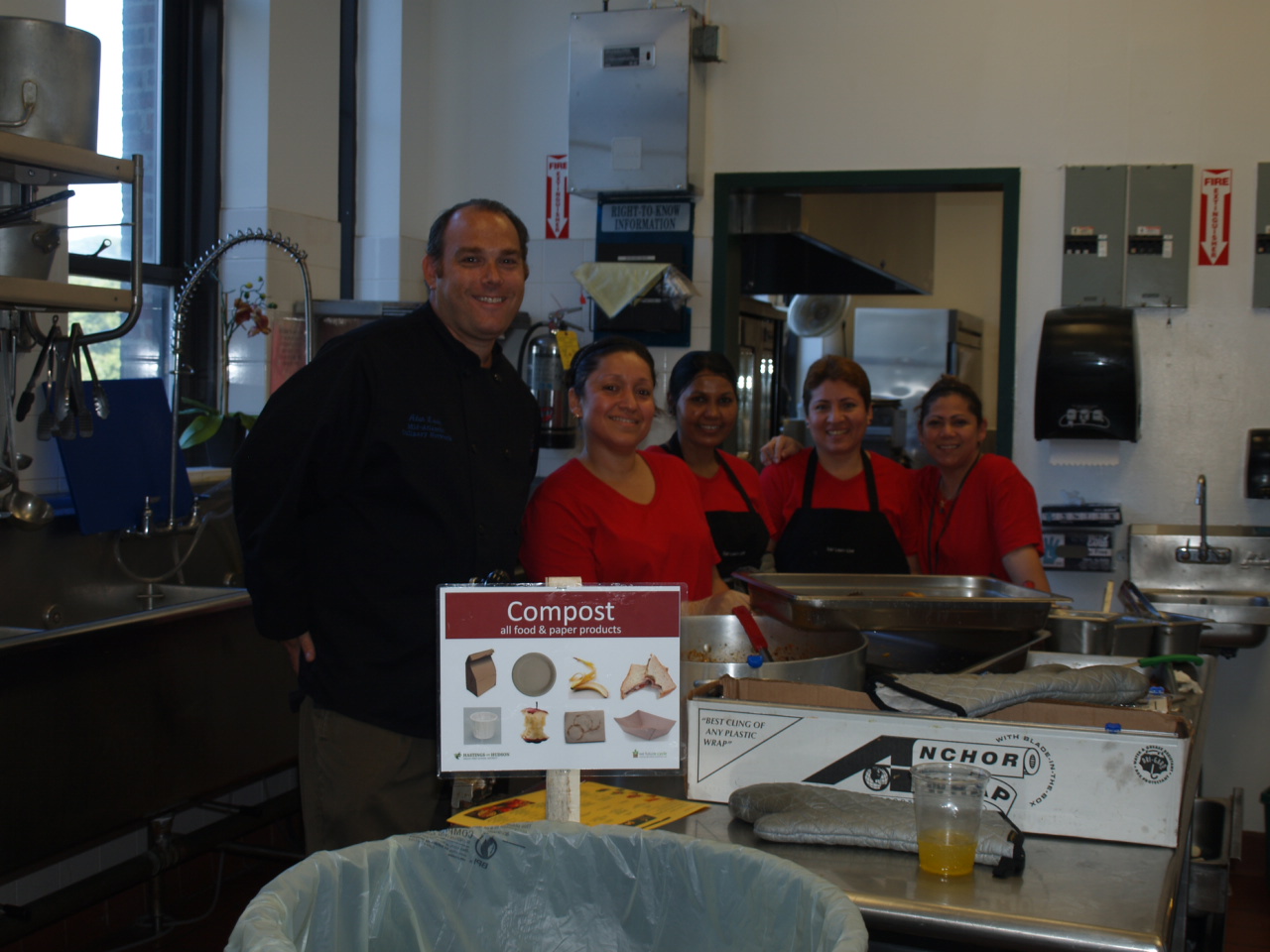
Sean Adams also interviewed Alan Levin, Director of Food Service with Chartwell. Mr Levin has been an exceptional team player in this program because he worked diligently to bring his kitchen to follow the same rules. The kitchen is also fully source separated, sorting out compost, commingled as well as soft plastic. “Prior to this, we had about 5 barrels of garbage every day, and now we are down to this tiny little bin”, showing off an office sized bin, “everything else is either commingled or compostable. I call this a really successful program and my staff has really been very good about following the new rules.”

All three agreed that this is the way of the future and they are happy to be part of it.

The show will be aired on January 5th, 2015 on AM 880.

Student Lunch Contributes to Global Warming

About 18% of elementary school sandwiches are wrapped in Aluminum foil. This data came from a survey in a New Rochelle Elementary School lunchroom. Every child was surveyed on how its lunch was packaged. aluminum-can-life-cycle

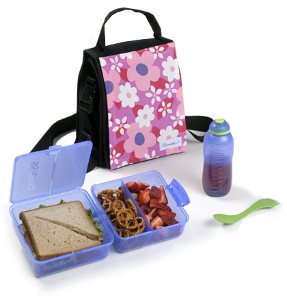
We found of the 850 children surveyed, about 55 % brought lunch from home, the others bought lunch in school.  That is about 470 children. Only 6% of these children were completely waste free, meaning they brought all food and drink in reusable containers. Another 16% had some sort of reusable container, either a bottle or a sandwich box , 18% had their lunch wrapped in aluminum foil, of which half had that aluminum wrapped sandwich again in a small plastic bag.  So close to 80 sheets of aluminum were used every day in just one school.

Let’s look at what Aluminum is and how it is mined.

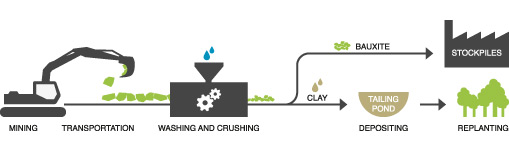
map_enAbout 7 percent of the earth’s crust is aluminium, making it the third-most abundant element after oxygen and silicon. Aluminium production starts with the raw material bauxite.

Bauxite is a mineral found mostly in a belt around the equator. Bauxite, containing 15-25 percent aluminium, is the only ore that is used for commercial extraction of aluminium today.

mineThe bauxite occurs mostly in the tropics, in horizontal layers normally beneath a few meters of overburden . The layers are usually mixed with various clay minerals, iron oxides and titanium dioxide. It is the iron that gives bauxite a deep red color.

This is the process of mining.

bauxite_mining_6

Industry claims that it is mitigating the devastating effects of strip mining huge surfaces, but evidence is ample that mitigation as well as environmental control during mining is lax or non existent.

abandoned mine color

Tailing ponds is another source for environmental problems.

image002


75% of all Aluminum foil used in the US is for single use food  wrapping, and ends up in landfills.

So your child’s sandwich can contribute to global warming.  Maybe there is a better solution?

1248885457491-573011374


Fabulous Way to Deal with Surplus Good Used Things

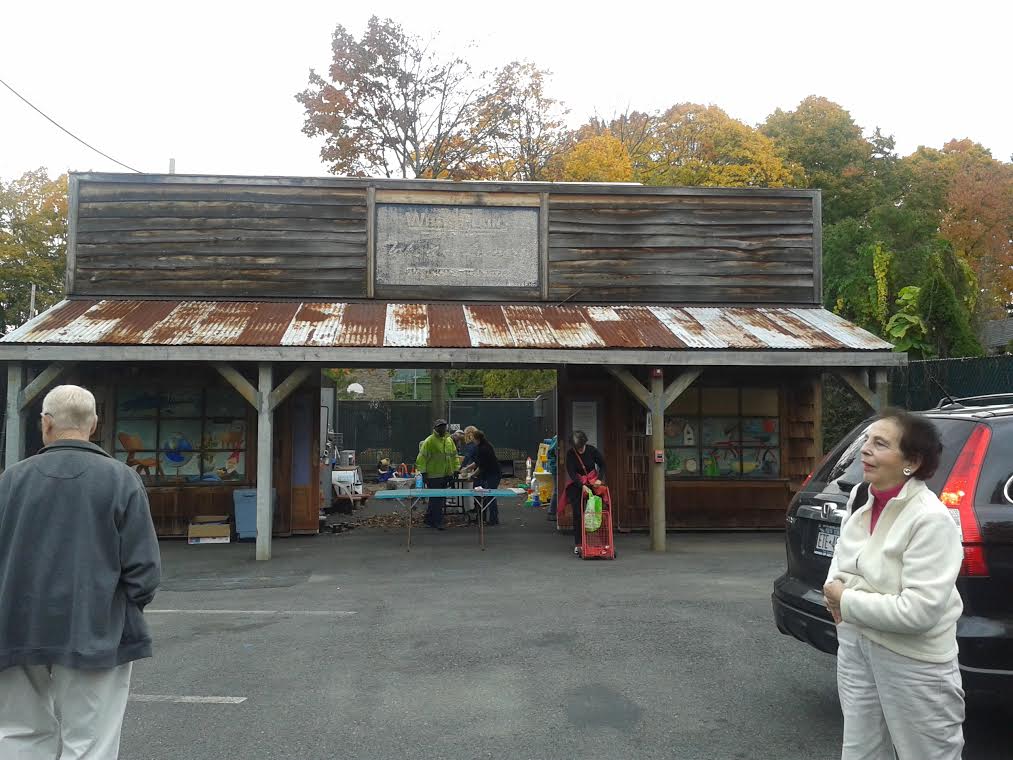
unnamed (1)Meet Joseph Nicoletti, the Commissioner of DPW in White Plains in front of his most fabulous TILI.

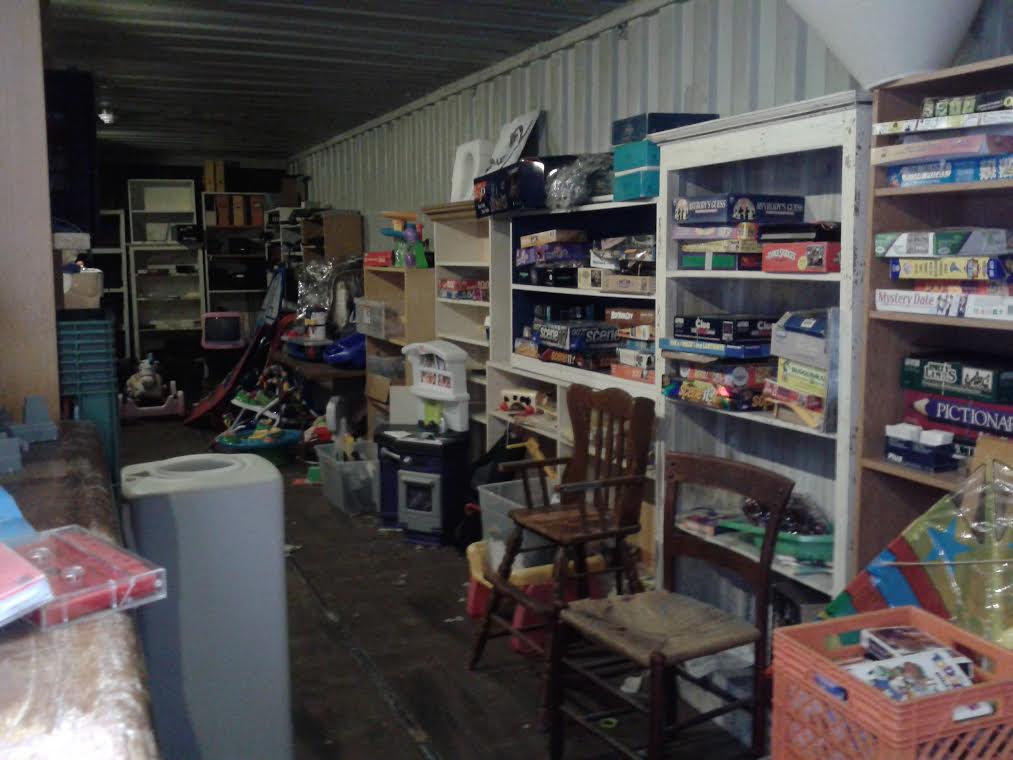
TILI stands for Take it or Leave it. A place to donate good used surplus household items, garden toys, household tools, play items, building supplies, exercise equipment, old but working condition TVs and all those things that really should be re-used, rather then chucked into the garbage. unnamed (3)

And at the same time, a place to pick up that extra vase, the drying rack, the home bike and those large outdoor plastic kids toys.

The front is built from recycled materials and is made to look like an old western style store, but behind the sliding doors are two shipping containers that keep things nice and dry. The TILI is staffed by volunteers and does vivid business during opening hours. unnamed (2)

What a great idea, something that should be replicated in each community.

Setting Up A Recycling Program…..ha, how difficult can that possibly be?

unnamed (1)As Sustainability Consultants we often run into the attitude that setting up a recycling program is nothing but putting out some bins and ….voila….. all is well.

The reality is a far stretch from it. Changing behavior is a complex problem that takes much outside pushing and delicate prodding as well as proper set up of logistics and safe guards to avoid falling back into old behavioral patterns.

Its human nature.

Just look at systems such as wanting to loose weight. Every person that wants to loose weight KNOWS that it has to do with what they eat and how much/little they exercise.   Some people then make valiant efforts to change and the weight loss industry is making billions in the process, but only very few sustain to the desired effect, unless they have prolonged support from an outside person.

The same problem exists in regards to changing to sustainable habits in institutions. Implementing a recycling program such as We Future Cycle offers looks so easy, so logical, surely the institutional director of facilities can do it all by himself?

How difficult can it possibly be?

Same as with weight loss, how difficult can it possibly be to eat less and to exercise more on a regular basis?

The truth is, unless there is a person or organization in place that constantly supports the program and keeps all players engaged over an extended period of time, no behavioral change takes place.

And the losers in the system are the children.

The children had just learned the value of recycling, they were excited and actively engaged in saving the world, but then they see the adults loosing interest…..

Why are we teaching our children that inconsistency is acceptable?

Setting up a successful recycling program with sustainability education is very difficult and it can only be accomplished with the understanding that it is a long term capital improvement project that takes active management and professional support.

It cannot be accomplished by just putting out some bins…..

Hastings-on-Hudsons Schools Food Service Manager Supports Recycling

OLYMPUS DIGITAL CAMERAHastings-on-Hudson school district has changed Food service providers and the new manager Alan Levin is very supportive of the school’s recycling initiative. He worked extensively with We Future Cycle and his staff to find the perfect set up in the kitchen to allow for proper source separation.

Initially the kitchen had garbage cans set up at all locations with only boxes being broken down and placed into recycling. Now the kitchen staff carefully sorts out

all organic waste into composting,

all soft plastics such as the wrapping of drink containers or bread bags,

and all commingled like cans, bottles, salad dressing containers.

This reduces the kitchen waste from 5 bags per day to really just two handful, because only sanitary gloves and soiled soft plastic does not fit into the above mentioned categories.

Mr Levin has shown great support and within days has been able to organize the kitchen to follow the new guidelines properly.

Thank you for supporting Hastings-on-Hudson’s recycling initiative

Hastings-on-Hudson Schools Launched Extensive Recycling Program

OLYMPUS DIGITAL CAMERAHastings-on-Hudson has launched its extensive recycling program and is looking proudly at a 90% reduction of waste from its lunchrooms as well as a significant reduction in the building.

We Future Cycle helped set up the building to allow for source separation into paper, commingled and food waste recycling. Left as trash is really only plastic baggies and some other soiled things that do not fit into the above recycling groups.

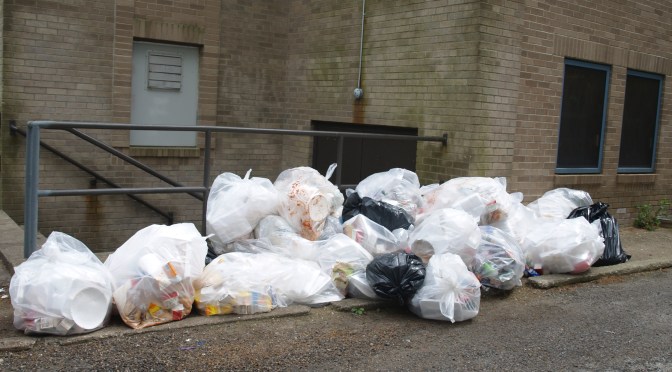
George Prine, the Director of Facilities said that he is amazed as to how little garbage there is left. The Farragut Avenue building, which hosts the High and Middleschool of around 800 students usually generated 17 bags of loosely filled garbage bags just from the lunchroom. With the recycling station in place, it is now generating 4 bags going into food composting, 1 bag going into commingled recycling, and 1 small bag as trash. That is it.

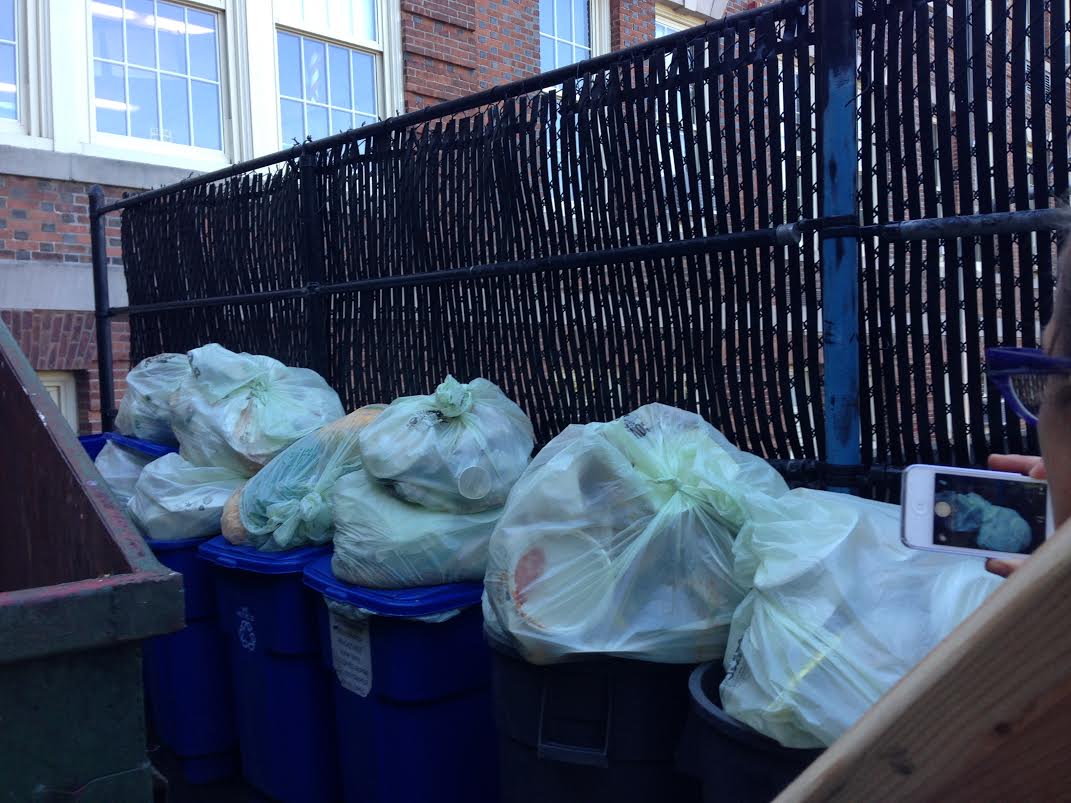
1 week of food waste to be diverted into compost

This will eventually translate into significant savings for the district in waste management, as about 70 bags of garbage per day are not generated. Instead these materials are source separated and fed into the existing recycling streams. This saves money, and is also much better for the environment.

1 week of commingled diverted into recycling

And we are creating a generation of Hastings students that know what source separation can do and how easy it is. Soon it will be the new normal.

SIMS Recycling Education Center opens in Brooklyn

Recycling Education Center Opens in Brooklyn

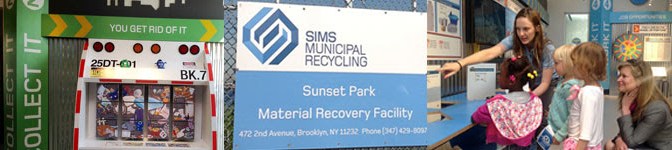
In 2013, Sims Municipal Recycling opened a state-of-the-art Material Recovery Facility in Sunset Park, Brooklyn. The facility can process 100% of the metal, glass, and plastic collected in New York City, with the capacity to process 1,000 tons of material a day. Utilizing its waterfront location, the facility transports the majority of these recyclables by barge. See how NYC recyclables are sorted at the facility in this video.

This month, Sims opened the Recycling Education Center (REC) for schoolchildren and other organizations. While developed with third to eighth graders in mind, people of all ages can enjoy the REC with its colorful, interactive, hands-on exhibits and activities that show how materials are processed for recycling, and turned into new products.

Visitors can watch videos and take an interactive recycling quiz in the media center; play with magnets, scales, air compressors, and conveyors in the activity center; and step onto an operations overlook to see the machines and people in action as they sort NYC’s recyclables. Eadaoin Quinn, Education Coordinator at Sims, explains, “Hearing the machines, smelling the recyclables, and seeing the faces of the workers will really change how people view recycling.”

Sanitation Commissioner Kathryn Garcia recently joined children of DSNY employees for a sneak peek of the center and saw firsthand how the center creatively engages kids, while they learn all about recycling.

DSNY gets many requests from the public to see the recycling process up close. Now, the REC is open for free tours. Get a group together, and schedule a visit today!

TIPS
Recycle Plastics!

NYC’s residential recycling program includes all rigid plastics; the number on the bottom doesn’t matter. These include items that are made predominantly or entirely of plastic, and have relatively inflexible shapes or forms, such as takeout containers, plastic cups and utensils, and bulky items, like toys.

HIGHLIGHTS
Eadaoin Quinn of Sims

Eadaoin (pronounced “Ay-Deen”) Quinn helped develop the REC, and loves teaching children about the important role they play in recycling and conserving resources. After visiting the center, she hopes children will be inspired to tell others how recycling works. Contact her toschedule a visit!

Recycling by the Numbers*

579M 11M 986K 139K 240K
lbs of recyclables
collected
this year
lbs of organics
collected
this year
lbs of clothing collected by
re-fashioNYC
this year
lbs of electronics collected by
e-cycleNYC
this year
lbs of reusables
diverted by
ReuseNYC members
last year

*numbers are approximate