

Any school with a ball field attached can attest to the problems of littering. With hundreds of players and parents coming and going to the fields the accumulated material is staggering.
New Rochelle’s Isaac Young Middle School is working hard to being green everywhere. The school is successfully running the We Future Cycle lunchroom and building recycling program and it has just had a flawless locker clean out day with literally tons of paper being diverted into recycling for the first time.
Dan Gonzales, Assistant Principal and Billy Coleman, head custodian, are the driving forces behind bringing sustainability to every corner of the school.
Isaac Young Middle School was chosen as the pilot school for the new We Future Cycle ball field recycling program. This pilot run is designed to answer the question if students can transfer the learned sorting behavior also to other areas of their life if signage and logistics are clear.
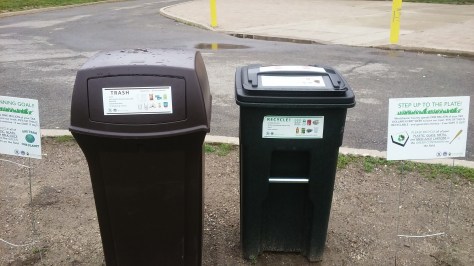 Will newly installed recycling bins with clear signage, next to trash cans, also sporting signage and both are flanked with signage motivate participation?
Well, YES!
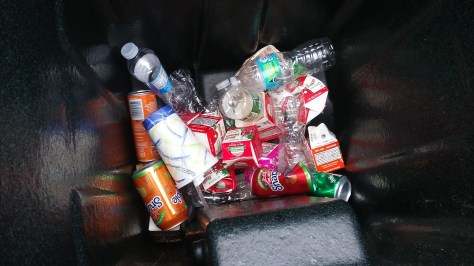 Monitoring the recycling bin showed that students put the appropriate items into the recycling bin, without a single contaminant. Room for improvement is that there were materials in the trashcan that should have gone into recycling.
Tackling litter mitigation has so far been …… one guy, one grabber and one large black plastic bag. But no more. We Future Cycle introduced litter separation through a simple ring to keep bags open. It takes no effort to put the bottle into recycling and the chip bag into trash, if the bags are held open.
90% of the litter on the field is recyclable and Isaac Young Middle School is showing that it can be done. Just. Like. That.
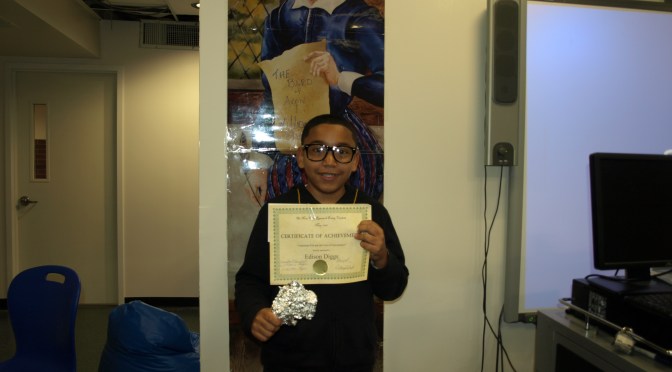
 It pays to play! That is something that proud winner Edison Diggs learned in a very rewarding way. He was the winner of the We Future Cycle sponsored Research Essay Contest with the topic “Aluminum Foil: The cost of convenience”

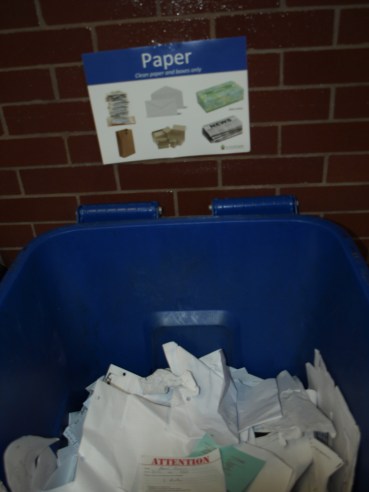 The annual process of locker clean out entailed until today a line of garbage cans in each hallway, and students just taking armful over armful of stuff out of their lockers to dump. A school of 1500 kids would easily generate 7500 lbs of material, all in over 100 plastic bags. A tremendous cost to the school in terms of man power, bags and carting cost.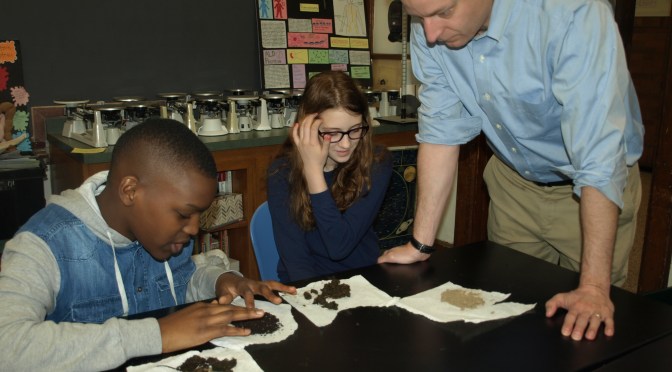
 ealthy soil made from food waste and wood chips/leaves. Nature’s magic

 We Future Cycle has been hired by the New Rochelle School District to bring sustainability education to the students. Our favorite activity is to do a Worm composting workshop with elementary students. Recently all Webster 1st graders got to meet their new friends, the Eisenia Fetida worms.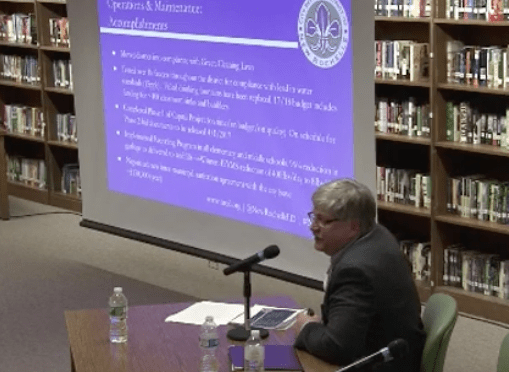

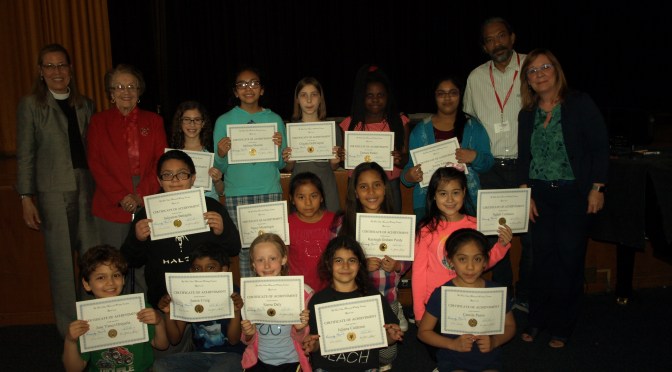
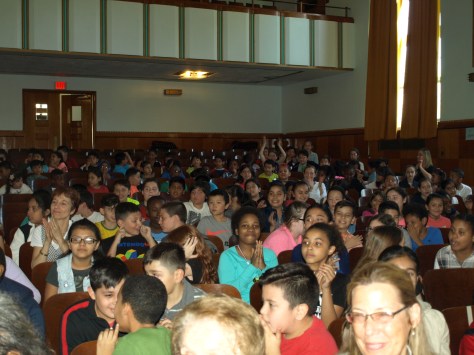


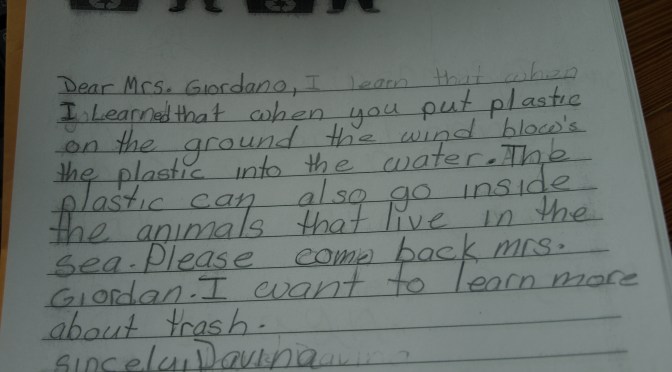
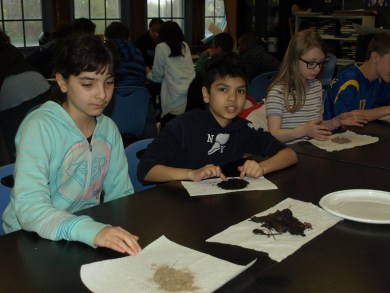
 We Future Cycle just finished up teaching a program to all of Jefferson’s Kindergarten, first and second grade students on what happens to organic and inorganic materials in our world. The kids did a hands on (and rather messy…..and they LOVED that part) experiment to find out how water interacts with different materials. Afterwards they were invited to write about what they learned and if they were interested in more information.
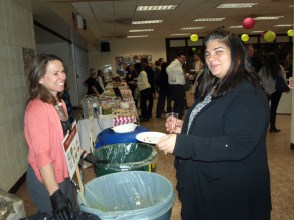
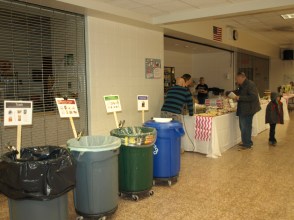 Parents had the opportunity to sort their waste into “Food & Paper” and “Commingled Recycling” and they all did it with gusto and flawlessly. Anna Giordano, Executive Director of We Future Cycle, the not-for-profit organisation that was hired to bring extensive sustainability programs to the district was there to help at the station and to share the fabulous results achieved in all the schools since the inception of the program. ALMS has reduced its lunchroom waste by a whopping 95%, its building waste by a good 50% and its kitchen waste by 65%. All in all, that is about 450 lbs of garbage NOT generated every day, and that just from one of the 9 participating New Rochelle schools.
 Thanks to the program, New Rochelle School District was able to revamp its waste management system and save considerable funds. Carl Thurnau, the Director of Facilities for the district has just quantified it at the ongoing budget meetings with an annual savings of $130,000.
 We Future Cycle