Tag Archives: environmentaleducation

White Plains MAS students learn about what happens to their recyclables

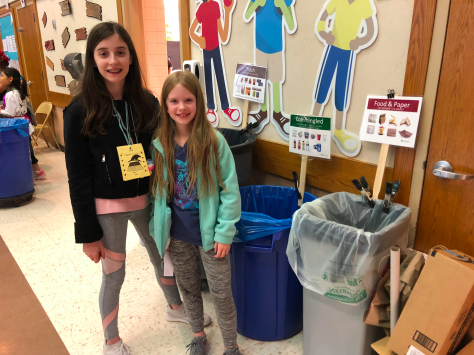
White Plains elementary students know all about recycling. No wonder, all schools are participating for years in the We Future Cycle recycling program, sorting their waste in the lunchroom and thus diverting 97% into recycling and composting streams. Mamaroneck Avenue School is a particularly well oiled machine thanks to the super supportive administration and a head custodian fully on board.

However, even though these youngsters are masters of the sorting, when asked what happens to the material, their answer comes a bit hesitantly….”it is getting recycled…?”, the statement more like a question than an answer.

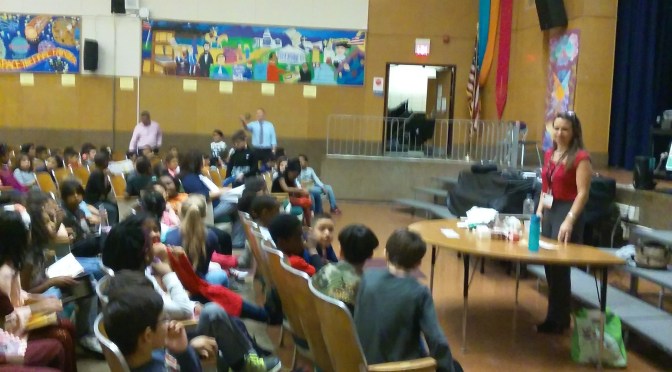
We Future Cycle had recently the opportunity to share the inner workings of a Material Recovery Facility with grade 3, 4 and 5. Students learned in auditorium presentations how the world of science dominates the sorting process by using friction, gravity, magnetism, anti-current. sensors and motion. They learned that materials can only be recycled if they are sorted so cleanly into just THE ONE type of material. They learned about optical scanners, contamination and wishful recycling and they were stunned into silence while learning what it takes to make some of those everyday materials. Can you imagine an auditorium filled with third graders in unison gasping of disbelieve and then stunned silence?

Learning about the environmental foot print of materials is the key to waste reduction. We Future Cycle empowers students to share that message with their caregivers. Nothing is more frustrating to a child that just learned to embrace sustainability, only to find non-recyclable stuff in their lunchbox every day. MAS students pledged to be agents of change in their community. Way to go!

New Rochelle Columbus lunch monitor adds artistic detail to recycling station

Meet Gloria, a wonderful lunch monitor at New Rochelle Columbus Elementary school. For nearly 3 hours, every day, she smiles at her students, opens endless milk cartons for them, helps with anything and all around eating lunch and then is the driving force to make sure that Columbus students sort their lunch waste according to the We Future Cycle system. She is passionate about saving the environment and found her calling to make sure things run smoothly in that very busy lunchroom.

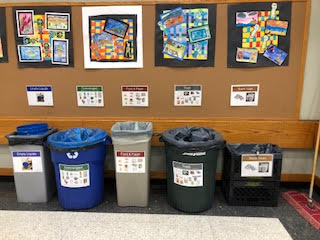
The lunchroom features two recycling stations, neatly signed with large colorful posters, but Gloria added a wonderful personal and artistic touch to it, by taking the actual materials and creating a cute mobile to be hung right over the opening as yet another visual reminder for correct sorting.

Thank you Gloria for making Columbus’ station special.

Rye Middle School Diverts 96% waste on first day of We Future Cycle Program

Rye Middle School joined all of the Rye Elementary Schools in implementing the We Future Cycle recycling-composting program.  The launch was a huge success as all of the incoming 6th graders and most of their 7th grade school mates have done the program in their elementary school, they easily fell back into the routine of quickly sorting their waste. And 8th grade matched their stride with great enthusiasm.

Rye MS usually generated 140 lbs of waste from about 1000 students, in an impressive pile of 12 bags, all carried out one by one by the custodial staff, leaving behind a trail of dripping milk.

But no more, the We Future Cycle program separates liquids from packaging, and food from packaging. Easy quick movements to empty and sort.  And the results are always the same. A stunning 96% diversion rate into recycling and composting. Only 6 lbs or 4% of the 140 lbs was non-recyclable and will have to be transported for incineration by Westchester County.  That of course also means that 96% of the material is not adding to our air pollution, and we will retain the resources by recycling and composting them. Truly a win win on all sides.

And the numbers are adding up. A daily 136 lbs  reduction in waste over the course of a school week is a 680 lbs reduction, and over the course of a school year, a  whopping 12.25 TON reduction. That translated into volume and garbage bags would fill a school auditorium. 2200 bags of materials, diverted away from the garbage. Truly something to be proud of. And that is just one of the Rye schools!

The RMS community, led by principal Dr. Ann Edwards, were instrumental in achieving this result.

Rye Osborn Scare Fair diverts 90% of its waste

Rye School district is successfully implementing the We Future Cycle Recycling program in all aspects of school life. Each elementary school is diverting 95% of its waste into composting and recycling streams with students being enthusiastic partners in this program.

Osborn’s PTO just organized a fabulous “Scare Fair” and of course implemented the sorting program into that event. Despite the weather, there were wall to wall people enjoying the fun entertainment  and the wonderful choices for food.

Food was contained to the lunchroom and 3 recycling stations were set up and monitored to allow for waste diversion, the same way the students are doing it every day. Consistency is an important factor for long term learning.

We Future Cycle representatives were on hand to supervise the sorting stations and use that opportunity to share information with parents and other fair participants. Most parents had heard from their youngsters about the program  and were eager have their kids model what needed to be done. We shared data and background information with parents and other fair participants and most were quite astonished to learn just HOW much was diverted and the cost of garbage in general.

The Osborn Scare Fair diverted about 200 lbs of food waste into compost, about 8 large bags of commingled into recycling and only 2 bags were non recyclable items that made it into the trash.

Custodial staff estimates a 90-95% reduction of garbage through diversion. What most people do not realize. When we divert materials from the garbage, not ONLY do we ELIMINATE the emissions associated with the burning of that trash, we are also RETAINING the resources.

Can you image what it could mean if the entire country was to divert 90-95% of its waste into composting and recycling? Definitely something to strive for, and so easy to do. Just separate your waste! Done.

Ask these kids, they do it every day, without even thinking twice about it now.unnamed.png

New Rochelle Columbus gets new recycling station

New Rochelle Columbus Elementary School has been a front runner in environmental consciousness. This school joined the We Future Cycle recycling program during the early stages and Assistant Principal Shelly Owens has been a steadfast supporter.

Columbus’s lunchroom is teeming with kids during lunch, a well orchestrated bee hive of age matched students. 5th grade with K, 4th with 1st ……all to ensure an oiled machine of a student buddy system for peer help.

Until recently, Columbus was rather low tech when it came to the recycling station. But no more. Since September 2018, all New Rochelle schools are sporting a gleaming stainless steel recycling table with large signage. And students and staff are loving the new look.

20181019_131138 (1)Columbus school treasures its Green Team students that are up and ready to help their fellow classmates at the stations. Donned with reusable gloves they are hard at work to make sure that each material is going into the right bin. And the work is paying off.
Waste Audits consistently show a diversion rate into recycling or composting of 95%.

Can you imagine what our world could look like if EVERY SCHOOL diverted 95% of its waste. Not only would we reduce 95% of our trash, we would also retain 95% of our resources. Food waste makes nutrient rich soil that could replace chemical fertilizer. And recycling our papers, metals and plastics reduces the energy and water consumption during production by over 90%. These numbers are staggering.

And Columbus students totally get it!


White Plains Elementary Students Celebrate Green Writing Contest

White Plains Church St students participated in large numbers in a Green Writing Contest. This contest is sponsored by the late Nina Chin’s Family.

Nina Chin was a life long educator who believed that students become better learners and readers through writing and every year she sponsored from her own money a writing contest for her students. Her family is keeping up this lovely tradition in her name and this year White Plains Church St Elementary School was the first White Plains school to be chosen for this prestigious grant.

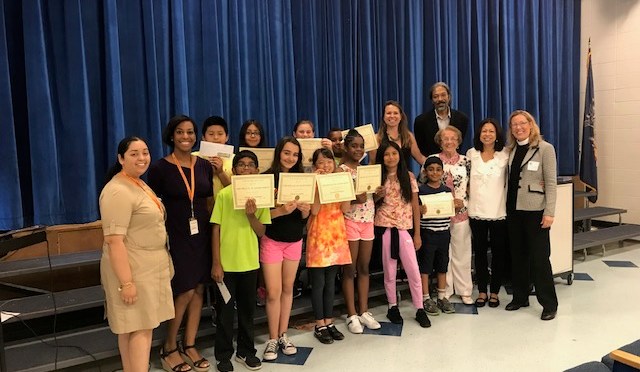
Over 60 students rose to the challenge and wrote heart warming essays to the topic “How can I make a difference”. The judges had a hard time choosing the top 10 entries.

When the day of the celebration came, the auditorium was filled with excited 3rd, 4th and 5th graders, all anxiously awaiting if their essay made it. Each time Principal Myra Castillo called out a name, loud applause ripped through the room. It was very energizing.

Each winner came up to receive a certificate and an envelope (and of course a hug!) and were all smiles for the picture.

It was a wonderful experience and students learned that it pays to be a writer.

White Plains MAS students learn about inorganic materials in our environment

White Plains MAS students are old hands at sorting their lunchroom and classroom waste. White Plains School district joined the We Future Cycle recycling program 4 years ago and now most of their elementary school population has never experienced anything else but stepping up to the recycling station and carefully separating their food waste from the recyclable and non-recyclable packaging material. White Plains schools are diverting 1850 lbs every day into recycling and composting streams. A 97% reduction of garbage through diversion.

Even the littlest ones are now really good at it. They cannot peer over the top of the bin yet, but -boy- do they know which bin is the right one for which material.

Every September and October, We Future Cycle hands-on trains K students, as well as refreshes the older grades on why we are sorting our waste. Keeping the environmental energy up is key for a vibrant and functioning lunchroom recycling system. Your hands can function much better when your heart is guiding them.

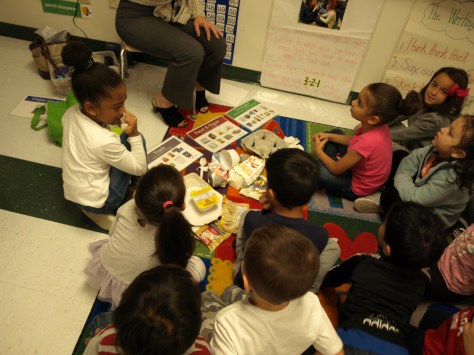
Recently, 2nd graders learned about what is bio degradable and what is not. Learning about how organic and inorganic materials interact with environmental factors such as rain and light is crucial to understanding the problems of the longevity of inorganic packaging material in our environment.

OLYMPUS DIGITAL CAMERA
Examining how water interacts with organic materials

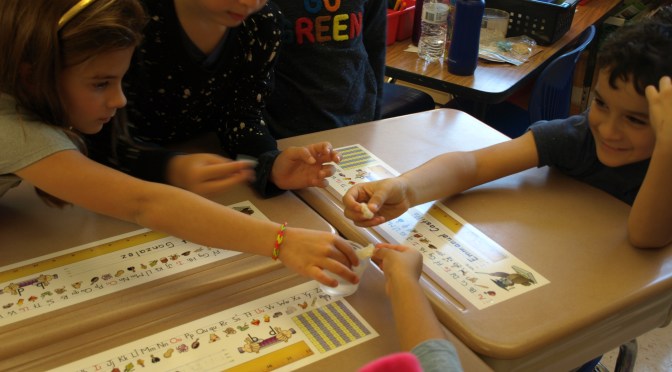
Through a scientific experiment students could learn first hand how organic and inorganic materials differ in their reaction to water. It was a messy affair, having 23 students dipping materials into water and rubbing it between their fingers to simulate environmentally induced friction, but they got it! Inorganic material as litter in our environment is a huge problem.

When asked what students could do to address the litter problem, great ideas came bubbling up. Picking up litter, doing trash treasure hunts, showing friends how to be better, bringing snacks in reusable containers to the park…..  These students were fired up to save this world. Seriously way to go!

“It smells just like wet forest” Trinity K students learn how to sort their waste and what compost is.

New Rochelle Trinity Elementary School is entering its 5th year running the We Future Cycle recycling program and students are getting trained on how to sort their lunch waste into compost, recyclables and trash.

Like every year, We Future Cycle presenters swoop upon the school and go from classroom to classroom to playfully introduce the students to the concept of recycling and to the problems attached to garbage. All students start out considering anything empty as garbage. Upon asking if they thought I brought them recycling, they clearly were reconsidering their position and some raised their hands. And they were quite astonished to learn that I just brought them packaging material, and they decided if that became garbage or recycling. It was fascinating to watch how something shifted inside them. THEY decided on something as important as putting something in recycling.

The We Future Cycle Recycling program teaches children to separate recyclable material from food and non recyclable material, and this reduces garbage by a whopping 97%. Trinity is consistently at below 6 lbs of trash from the entire lunch of nearly 1000 students.

Students learned that packaging is similar to Lego. If is put into the correct bin, it can be taken apart again and the same material blocks can be used to build something new. Students totally get that concept!

Learning that left over food can be recycled too was a bit of a stretch for them, but when I showed them what compost looked like and let them smell it, they all agreed that it is much better to make good soil than burn our banana peel.OLYMPUS DIGITAL CAMERA

White Plains Church St Principal proudly holds stacks of “green essays”

White Plains Church St elementary school was chosen this year as the proud recipient of the coveted Nina Chin Green Writing Grant. Students of grade 3 through grade 5 were invited to voluntarily write an essay on how they personally can make a difference in this world.

Nina Chin was a lifelong educator and she believed that writing is the key to being a better reader and a better person. Every year she sponsored from her own money a writing contest among her students. Upon her passing, her children decided to carry on this lovely tradition and have sponsored one school in Westchester every year.

Over 50 students rose to the challenge and Myra Castillo, Principal, is holding proudly the stacks of essays from her students.

These essays are right now on the desk of two retired teachers that are “judging” them. Ten students will be proud winners of a nice envelope for their work. We cannot wait until the celebration, that is soon to come. Watch this space!

Outdoor Recycling Cans in Action at New Rochelle High School

20180517_162104Implementing a Recycling Program in a building with 3500 students is a daunting experience. It is a mini city. How does one get these many people to change their wicked ways?

We Future Cycle has done just that this school year and now 3500 students and hundreds of teachers and other adult staff are fully trained to separate their packaging from food waste so each can go into recycling or composting. Garbage was reduced from 100 bags every day, to about 2. All the rest of the material is sorted into recyclable packaging and compostable organics.

All 4 lunchrooms are successfully participating and all classrooms are sporting paper, commingled and trash receptacles, reducing garbage even further.

The last frontier were the outside areas and We Future Cycle and the high school grounds staff are tackling this problem now. Green recycling bins displaying colorful informational stickers as well as an educational board explaining the stunning economics of recycling are popping up next to the outdoor garbage cans.

And today, we took a peek to get the answer to the question. Do high school students transfer learned behavior to other life situations when offered the easy logistics. And the answer was a very satisfying. YES!

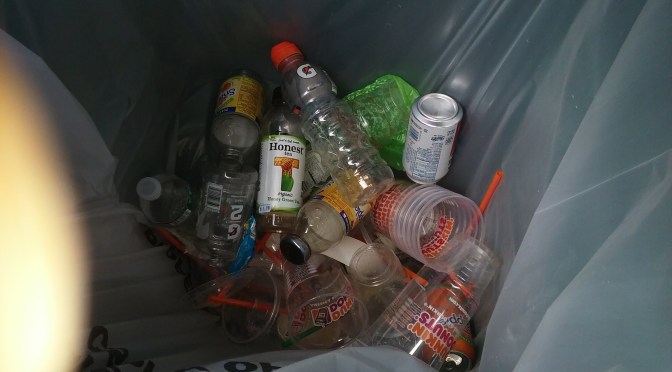
Check out this wonderfully sorted content of recycling bin. I promise, I did not mitigate before taking the picture!