Tag Archives: environmentaleducation

NYC Sophomores Write Anti Pollution Legislative Bill

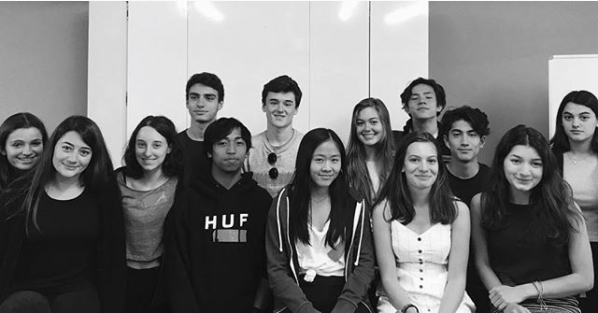
This spring, a class of sophomores at Avenues: The World School in Manhattan, New
York City, studied and researched the detrimental effects of carbon emission and plastic waste.

The excessive plastic waste that humans generate can have many devastating consequences, from contaminating various bodies of water and harming wildlife, to polluting beaches and negatively affecting human health. Avenues’ Class of 2020 sought to make an effort to spread awareness about this issue and, ultimately reduce the waste that humans generate in their daily lives. In order to accomplish this goal and actually create a change, students decided to focus on a specific aspect that could be changed — one that is realistic, familiar and tangible.

This involves the excessive plastic consumption by New York public schools when serving lunches to students. Specifically, the target was attempting to eliminate the usage of Styrofoam trays in school cafeterias, incentivizing schools to use compostable materials instead. Styrene, the main component of polystyrene, is classified as a potential carcinogen by the United States Environmental Protection Agency and the International Agency for Research on Cancer. The material can take up to one million years to decompose in a landfill — making it a primary pollutant, especially since the material often leaks into water, where animals ingest the dangerous chemicals that polystyrene effuses. New York City public school systems consume approximately 850,000 single-use polystyrene trays per day and every one of those trays negatively affects the environment.

Thus, Avenues students believed that a necessary measure to take was to promote the
usage of compostable trays, which decompose into a natural environment without leaving any traces of toxicity in the soil and have no adverse effects on the planet, rather than Styrofoam.

Many efforts to reduce polystyrene usage have already been made in school districts across the United States, having beneficial effects. Polystyrene was initially outlawed in New York City in July 2015, but this ban was then overturned, backed by one of the largest manufacturers of polystyrene containers: the Restaurant Action Alliance and the Dart Container Corporation.

However, it was reinstated in November 2017, as part of an effort to reach Mayor Bill de
Blasio’s One NYC zero-waste goal by 2030. Avenues sophomores hope to spread this initiative to the rest of New York, beyond the confines of the five boroughs of New York City.

After deciding to reform the process by which school lunches are packaged and served to
students in public schools in order to help make New York more sustainable, the class composed a legislation that incentivized schools to stop using non-biodegradable trays to serve lunches and replace them with those that are compostable. This was achieved by imposing a 5% tax deduction for school lunch that is served using compostable materials. The legislation created by the students states that the deduction will decrease by 1% every year for the first five years that this law is in place, thereby creating an incentive for schools to use compostable materials sooner rather than later.

This legislation, which was subsequently referred to Paul D. Tonko, U.S. Representative of New York’s 20th congressional district, presents a realistic way to become more environmentally conscientious and reduce excessive generation of non-compostable waste.
The protocol described by the legislation, which aims to take effect on the first day of
August 2018 (prior to the start of the 2018-2019 academic year) aims to further efforts that have already been taken to promote sustainability and permanently force all schools to use biodegradable materials at all times — thereby decreasing their carbon footprints altogether, rather than using harmful, non-compostable materials. Prior to writing the actual bill, the team at Avenues researched ways to make a difference, contacting New York public school districts and inquiring about their lunch policies and, specifically, whether they served lunches on Styrofoam trays. Depending on their district, the policies to which schools adhered seemed to vary slightly and many schools seemed to be moving away from Styrofoam trays in their cafeterias, although some still used them.

For instance, students spoke with representatives from every public school
district in White Plains, Rye and New Rochelle, New York and each had implemented a program to only use biodegradable materials in their lunches, rather than plastic which is used in public schools throughout much of the United States.

Each of the districts credited their program to We Future Cycle, a 501c3 charitable organization that guides public school districts in New York towards sustainability and encourages them to generate as little excessive waste as possible, in a conscious effort to, “create a generation of children that are actively involved in recycling and take responsibility for their daily actions,” as their mission states. Instead of working with local congressmen and the government, We Future Cycle contacts each individual district and works with schools to determine feasible ways to reduce waste generation in daily life, such as the processes of vermiculture and teaching children and parents how to pack waste-free lunches. The organization establishes partnerships with others who have developed programs to “bring otherwise non-recyclable items into reusable channels.” Furthermore, We Future Cycle strives to teach students to be responsible and informed consumers, by offering several educational programs directed towards a variety of ages. The founder of this non-profit, Anna Giordano, stated that she started this organization after she witnessed the excessive amount of waste created by her children’s school and suddenly became aware that she needed to take action.

Today, forty  schools in Westchester, New York participate in We Future Cycle and
several organizations in the area endorse the charity, or are affiliated in some way. This number is steadily growing as its outreach expands.

We Future Cycle hopes to empower students, the future of the United States, to become leaders in their community and have their voices heard.
The organization implements these beliefs in children from young ages, so that by the time they are older, they are environmentally-conscious and able to truly make the world a better place in the long-term. Organizations like We Future Cycle and the Avenues sophomores are collaborating to continue their missions of spreading awareness about climate change and the threats of pollution.

As these issues becomes more prevalent in society every day, it is becoming increasingly
important to be informed. In doing this, more opportunities are being created, creating grounds for case studies on these issues in the future. These organizations illuminate that major changes are not what is necessary and, small-scale lifestyle changes such as recycling scrap paper, bottles and cans, or composting leftovers, can actually make a world of difference.

If people are to recognize the extent of the damage that excessive waste generation causes to the environment and themselves, they are more likely to revise their daily routines to become more environmentally-conscious and begin to think, rather than carelessly discarding materials into a landfill where they will remain for millenia. For further information on ways to become more environmentally-conscious, explore We Future Cycle’s website and to learn more about Avenues’ Class of 2020 and their work in forming their own legislation to help the planet, click here.

~ Isabel Mudannayake and Angelo Orciuoli, representatives of the Avenues’ Class of
2020

New Rochelle Barnard PTA Makes Field Day Waste Free

Field Day is a really exciting event. Hoards of kids, running, jumping, cheering for each other, screaming in agony over a loss or celebrating loudly for a win. Now imagine this chaos with only the littlest of our students, the Pre-K through 2nd graders at Barnard.

20180524_120355Today was field day at Barnard, and the PTA made this event completely waste free. Usually, the place is littered with ice pop sleeves, plastic cups, wrappers and empty bottles, but not here, not at Barnard. Thanks to the PTA president, who fully embraces what We Future Cycle has started in the school.
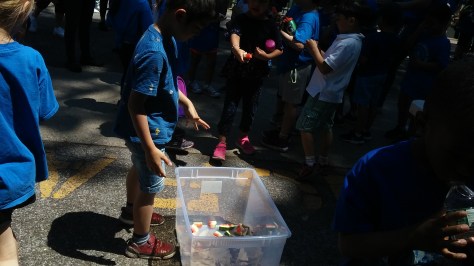
Barnard has implemented the We Future Cycle Recycling program 3 years ago and thanks to a fantastic lunchroom custodian, is consistently at less than one pound (!!!) of waste out of a lunchroom with nearly 300 kids. These 3 and 4 year olds may not be able to look over the edge of the recycling bin, but they sure know what material belongs in what bin. And when asked will proudly pipe up that they are recycling and saving the world every day.

The PTA President recently learned about We Future Cycle’s efforts to bring source separating and sustainable purchasing to all school based events so that learned sorting  behavior can be applied in other life situations as well and he immediately ran with it by making field day completely waste free. Way to go!

Kids were treated to water melon in napkins, that they carefully dropped into the compost bin when done. Voila! 20180524_120351


New Rochelle 7th Grader …Waking Up A Future Green Giant

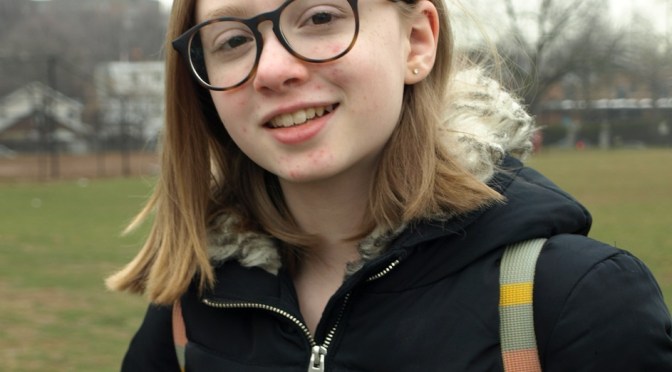
Meet New Rochelle Isaac Young MS 7th grader Sophia. She won last years Green Writing Contest hosted at Isaac E Young Middle school.

unnamedOne day, while I was walking toward Isaac Young to teach 7th graders about what happens when they flush….. (yikes), she came up to me to share with me that ever since learning in 5th grade (from me) about where the garbage goes and what effects garbage has on this world, she has completely changed her ways.
She is no longer using single serve plastic bags, she only uses reusable containers for her lunch. She has a large reusable water bottle (that got promptly pulled out of the backpack side pocket as proof) and she re-organized her families waste management system, including starting to compost. Seriously way to go.

But she did not stop there, she learned about the detrimental effects of straws to our environment. 500 Million straws are used every single day in the US alone, little bits of plastic with an average use time of 2 min that end up in our environment. She researched the issue and is now a very vocal opponent of straws, sharing and educating her class mates about this topic.

I was so amazed by all her examples of how she made the switch away from plastic and how she ensures that her parents are also making smart purchasing decisions.

This is a future green giant, woken up. The power of a a middle school student that can truly change the community around her.

Seriously WAY TO GO.


New Rochelle High School Students Pitch In……in a big way!

This is Ms Reilly’s class. A bit of inconvenient weather did not distract them from their task of pitching in, doing their part and finding a way to solve a problem.

New Rochelle HS hosted We Future Cycle environmental education workshops across all grades and all subjects and students learned the power of one person. They learned how every solution starts with one person, that sees the problem and decides to do something about it.

And these students decided to be THE ONE, that will tackle a problem. The following Saturday morning, despite a bit of drizzle, 14 high school students fell out of bed early to go and clean up Lincoln Park and Memorial Circle. An hour worth of work that resulted in 6 bulging bags of trash. And these 14 students feel their life has changed. The power of facing a problem, and standing up to it, is truly life changing. It underlines the power of one!

Each of these students has begun to educate their peers, their parents and just people around them through their deeds. It does not go unnoticed when a group of students in green shirts (donated by Macy’s to the cause, thank you very much) are picking up trash in a public park.

Maybelin S.: It was beautiful because we all helped for a good cause, our world!

Lucero B.P.: It was nice because we were together participating in one project that serves us more in the future of our life.
Alberto V.: It was a beautiful experience to gather together to care for our planet.
Gabriela G.C.: It made me feel good because I helped. I helped to clean our public places. Now when I see garbage on the floor, I’m going to feel bad.
Faustino M.C: It seemed like something really great because we were helping our planet. We have to fight contamination.

Students learned about the detrimental effects of garbage in our environment. 23,000 tons of plastic is entering our oceans every single day, all because of human littering. Considering just how light a bottle or a foam cup is, that amount is a volume that is unfathomable.

Watching sobering videos about how marine life is dying because of ingestion of plastics brought home the deadly consequences of our “convenience”.

There was a heart warming moment, when a student raised his hand to share that he used to do contests with his buddies how far they could throw trash into the lake, but he will never do that again because he now knows. A solemn yes came to my question if he’ll stop his friends from continuing this contest.

Can we even solve this problem?

Yes!     Let me say that again.  YES, we can solve our garbage problem, but only together. Every person holds the key to success, everybody makes a difference, every day.

By cleaning up, by not littering, by reducing your own usage of single use materials, by modeling green practices to others and thus winning hearts and heads for the cause.

We can solve our garbage problem, because we MUST, there is no other planet. And these New Rochelle High School students got it, very clearly and it did not take long for them to put into action by organizing a clean up at Lincoln Park and Memorial Circle.

Way to go Ms Reilly’s class!!

“The Worms are Back!” New Rochelle Webster 1st Graders Learn About Worms

I can tell you, life is not boring when you mix 6 y old kids with a bin of worms.

We Future Cycle presenters came for the 3rd year in a row to Webster’s first graders to teach them about how every living being on earth has an important job to do. With big eyes students followed explanations that worms have no eyes and ears, and that they eat what ever organics are falling in their path and that their castings are good soil.  Slight shuddering went through the kids at this thought.

Students are learning that worms -as all living beings- also need to eat, breathe, reproduce and die. Audible gasps came as response to the fact that worms have no nose and are breathing through their skin. All students rubbed their skin, clearly not quite processing how that could possibly work. While talking about how they move and how fabulous their muscles are, students got a chance to flex their biceps, as activity about muscle function and they mimicked the stretching and pulling motion of the worm. Can you imagine 23 wiggling children on a carpet?

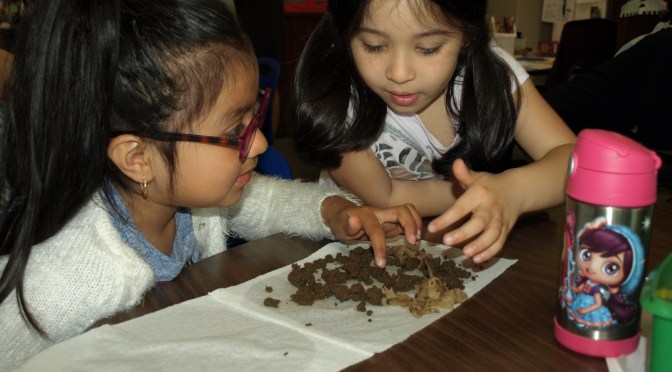
When it came time to get down and dirty, the worms did not disappoint and samples on moist paper towels were oozing with worms of all sizes. Even cocoons were plentiful and easy to spot, to the utter delight of all children.

However, what took the prize and made this class indelible in student and teachers mind was that we got to follow the path of a “casting” from within the worm to outside. Worms are somewhat translucent and one can make out the dark spots in the tail section where the castings (technical term for worm poop) are making their way through the length of the worm. In laymen’s terms….we got to see a worm poop, and that was the highlight of the day, all kids clustered around that one poor shy worm to carefully inspect that freshly produced “casting”.

It was great fun and very heartwarming as students came to hug and thank us for teaching them.

Water, Water, Water! New Rochelle Students Learn About Water

Meet the two New Rochelle 7th graders from Ms McCue class that wrote beautiful essays about water. In We Future Cycle presentation students learned where their faucet water comes from, what it takes to clean and get it to that very convenient kitchen faucet.

Current events such as the lead water crisis in Flint MI was discussed and very slowly it dawned on students just what it  all takes to keep civilization going. Just visualizing the mere construction concept of getting the water from the Catskill/Delaware Watershed down to us, to the water treatment plant, onward in huge pipes to underneath our houses to be then transported all within the walls to the individual faucet.

Some students actually turned around to the classroom faucet, with clearly a brand new appreciation for what they had long considered completely normal.

Students learned about average water usages in the US versus other countries and we talked in detail about the marketing scam of bottled water.

Rafael, winner of period 2 wrote a very detailed report. It was clear that he paid attention every second of the presentation. And in addition, there was extensive research that he added. He understood that water is not free and is a resource that we soon will be fighting about.

Leila was the winner of period 5 and she concentrated her report on the bottled water scam and on the resulting garbage problem. She clearly laid out steps of what every one can do to help this problem.

Both students won a certificate, extra credit and an envelope for their work and it was well deserved!


New Rochelle Trinity 2nd Grader Study Biodegradable and Photodegradable Materials In Our Environment

Celebrating Earthday is no small matter in New Rochelle Trinity Elementary School. Assistant Principal Michael Hildebrand scheduled presenters from We Future Cycle for all Kindergarten through 3rd grades and the school was positively vibrating with good energy.

In class by class presentations, second graders learned concepts of what materials can bio-degrade and what that means in terms of this material entering our environment. They learned about decomposition, seed germination and a touch of the chemical processes behind that.

OLYMPUS DIGITAL CAMERA
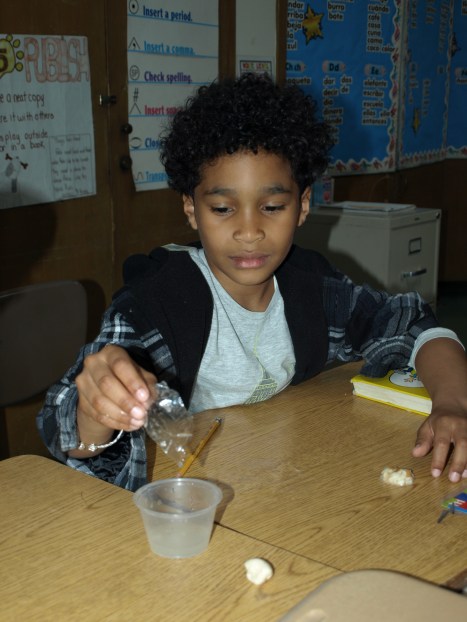
Exploring if water changes the structure of plastic

Students had the opportunity to be hands-on scientists and explored how different materials interacted with water. quite messy in fact, but also eye opening  to learn and  experience that plastics are not changed by water, other than broken into smaller plastic pieces over time, until they are small enough to enter the food chain.

Watching a heart wrenching short movie about how wild life is affected by plastic in our environment started a spirited discussion on what each and every one of them can do to solve this problem.  Students decided to become vocal to educate other about the problem. Check out these fabulous posters as the result. These are mini-environmentalists on their way to become agents of change. Way to go!

20180424_12244720180424_122604

Lunchroom Environmental Scavenger Hunt at New Rochelle Trinity

Being in an elementary level lunchroom is not for the faint hearted. The noise level is deafening. But fearlessly, We Future Cycle set up the Lunchroom Environmental Scavenger Hunt in New Rochelle Trinity’s lunchroom.

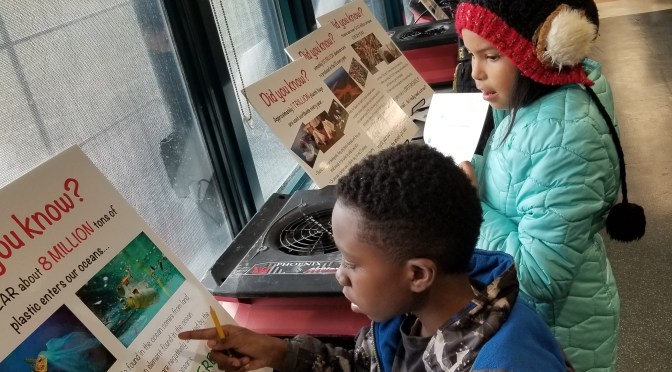
As 3rd graders came in, they bee-lined to the colorful posters, all depicting shocking data about environmental problems surrounding them. They open mouthed stared at pictures of turtles eating a floating plastic bag while trying to figure out what a trillion plastic bags per year in the world actually means. And they are not alone, it is a staggering number that nobody can really wrap their head around. Students that wanted to participate in the game were sent to eat first and then come and get a detective sheet. In order to answer the questions, students had to study the poster boards carefully and they were all game to play.

And as they worked (quietly, there was a marked noise level difference), they learned and shared with their friend the surprise about some of these staggering facts. The US alone uses 500 Million straws every single day!

Rye Town just joined “The Last Straw” Campaign. Everybody can make a difference by ditching straws, replacing single serve plastic bags and being good about recycling all appropriate materials.

They also learned about the dismal recycling rate of single serve plastic bottles. These kids are old hands in recycling and they asked me why not everybody was just recycling…. Good question, indeed.

New Rochelle Trinity Offers School-Wide Earth Day Presentations. K and 1 Love Their New Friends

Under the leadership of Assistant Principal Michael Hildebrand, New Rochelle Trinity students are able to participate in school wide Earth Day activities and are loving it.

A team of We Future Cycle presenters descended upon the school and had great fun introducing kindergarten students and first graders to worms and worm composting.

Students were somewhat hesitant when they saw the worms, some leaned far back into their chairs, some even voiced how nervous they were. But learning about how worms master this world, and how important their jobs are,  won them over and when the time came to get down and dirty with a handful of worms on a wet paper towel, they were all game. Armed with the new minted knowledge of how worms moved, they watched with the magnifying glass (it was not really needed, but they all LOVED having one in their hand) At the end of the lesson, each worm had a name, and all expressed their love, one student asked if she could kiss him…. 🙂

The key to environmental literacy is sustained education around different aspects. Trinity elementary students are old hands at sorting in the lunchroom, being the longest school on board of the We Future Cycle recycling program. Flawlessly they separate commingled from food waste and from remaining trash. And with the never wavering support of the Trinity administrations, students are treated regularly to environmental education and they are loving it!. Today’s classes were suppose to be 45 min, but often, I did not get out of there until 1:15 min because students had so many great questions. This is how future environmental leaders are made.


Earth Day 2018…Who is with me? Transforming a Science Teacher to Become Green.

We Future Cycle is very proud to have inspired Mrs McCue to not only become green but also to share with all of us her story.

“Mrs. McCue, are you going to stop buying bottled water?” asked one of my students gathered around me at the door, waiting for the bell to ring. Forty eyes were on me. We had just heard a We Future Cycle guest speaker teach us about water treatment and the perils of too much plastic in our world. I looked over at my desk and spied one small water bottle I had gotten that day at a school event, and two half-filled water bottles I had brought from home. “Yes – I should, shouldn’t I?”   I thought to myself, “I have no excuse. Our tap water is fine! I have several reusable beverage containers taking up space in my kitchen cabinet. Why don’t I fill those daily, like I bring my lunch to school every day? If I am going to teach these students to be responsible caretakers of the earth, I should begin by modeling responsible earth-friendly behavior!

Of course I should! Aside from hearing this message loud and clear from Anna Giordano, I had been prompted as well by a few recent news stories. The visual of the Great Garbage Patch in the Pacific Ocean haunted me, as did the horrific photo of the sea turtle with a plastic straw being extracted from its nose. The focus on this year’s Earth Day 2018 is: End Plastic Pollution. It’s time for me to practice what I preach.

unnamed (2)

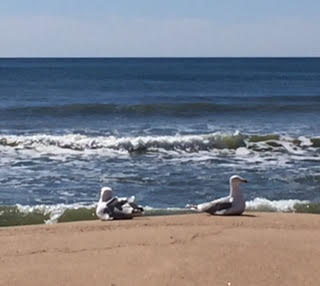
Several days after this “no-more-bottled-water-epiphany”, at the start of spring break, I found myself on a beach out in Long Island. It was a sunny, windy, 45 degree day, so there was not another person on this long stretch of beach. Two seagulls eyed me as I walked by, snapping their photo. I was noticing the beach erosion from several recent nor’easters and began to think about some other results of these storms. An entire tree lay on the sand. “What else may have washed in during these storms?” I thought.  As I walked along, I admired the rocks and shells, my reverie interrupted by an occasional plastic straw. I noticed a pink plastic wrist coil keychain. Then I saw remnants of a purple balloon. It looked like a piece of seaweed – this could easily be mistaken for seaweed by a hungry creature! I thought of the sea turtle as I placed the balloon remnant alongside some seaweed and snapped a photo. “I can’t just leave it there now”, I thought. If I am going to show my class this picture to illustrate the dangers of plastic in a sea creature’s diet, they will certainly ask if I removed that plastic from the beach!  So I grabbed a stick and picked up the purple balloon remnant and carried it off the beach to the nearest trash receptacle. The two gulls watched, fluffing their feathers in the wind. That got me thinking…….

Back at the house, I started to research – what can I do as Earth Day approaches to make a difference in the environment? I found an app on the Ocean Conservancy website called Clean Swell which allows you to keep track of trash collected during a clean-up. This is perfect! After spending a good ten minutes coming up with a group name (McQs for the Deep Blue), I downloaded the app onto my phone and recruited my daughter to return with me to the beach. We retrieved some of the items I had passed by earlier – the pink coil keychain, the deteriorated pocket knife, the orange disposable razor, five straws and ten bottlecaps.  All of these items were collected from a half-mile stretch of seemingly pristine beach in a period of 45 minutes. Imagine the  amount of plastic that might be lurking beneath the sand at a much more traveled beach? Imagine the impact a larger group of volunteers could have?

As Earth Day 2018 approaches, I WILL use less plastic by not purchasing water bottles.  I would also like to organize or join a beach clean-up. This clean-up may be “a drop in the ocean”, but if more of us take this idea and run, it will be a much cleaner ocean when we’re done. (no rhyme intended).  Who’s with me?