We at Wefuturecycle are proud to work in schools and teach students that their small everyday actions matter and we are particularly happy when we hear them share with us that because of us, they asked mom to change how they bring their lunch to school.
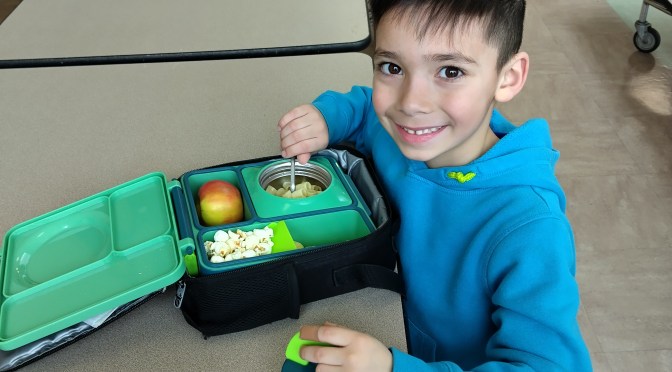
This student is bringing lunch in a lunchbox and is completely waste free every single day.
And kids around him are taking notes too. A trickle of sustainability can create ripples through schools and communities.
Students at most ages have heard the word recycling, but when asked what it actually means we get a short narrative of “making new stuff”. In the schools that WeFutureCycle is active in, the kids have learned that packaging items made of cartons, hard plastic, aluminum, glass and milk cartons are fully recyclable and thus they go into the recycling bin. They are good at sorting, do it easily and while chatting with their friends. The result is a reduction of 95!!! % in waste by sorting all compostables and all recyclables out of the system.
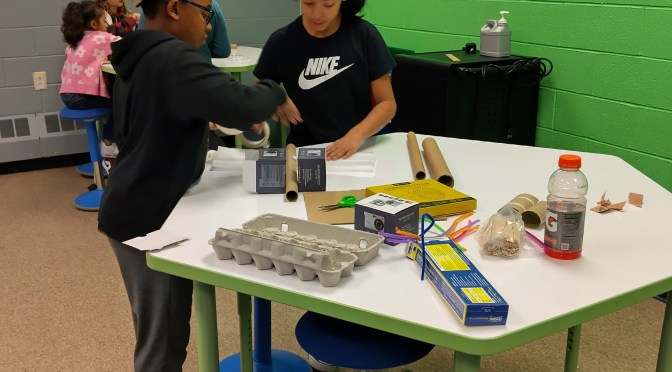
But what does “making new stuff” actually mean? We put it to the test by giving them a bunch of materials and let them build a space station with it . While they were busy cutting “solar panels” from cereal boxes, I explained that most materials can do just that. Be made into something as fantastic as a space station.
Wefuturecycle offers a vast variety of environmental education classes to connect students to their environment. One of these lessons starts with the simple question: “Is there any value in animal and human manure?” This question usually invokes grimaces and grossed out “eeeeekkkkss” from the students.
When I asked them what they thought about cooking with their human waste, we had a few minutes of groans and disbelief. But they listened carefully when I explained how people can cook with the help of manure and it opened their thoughts to think way past their own experiences
We explore together what it takes for civilization to function. For most students it is the first thought to what happens after they flush in the bathroom. And most students in the metro area have no understanding of what life might look like without the convenience of city water and engineered sewer systems.
Walking them through the process of anaerobic digestion and the benefit of producing Methane from waste products , contrasting it with fossil fuel Methane opened their eyes to the environment around them and how we have many solutions to our pressing problems but are lacking will to implement them.
Teaching a generation of kids to be the new fearless leaders of tomorrow is very heartwarming.
For most kids in the US, it is normal to go, turn on the faucet and out comes beautiful clear, great tasting water. We drink it, we cook with it, we shower in it and -aggghhhh- we flush our toilets with it. Potable water is the greatest resource.
Teaching students the value of water, when they, themselves, have grown up with it being normal means to teach them beyond their own surroundings.
We Future Cycle offers a variety of environmental presentations to students, connecting them to their surroundings, making them aware of the connections and consequences of their own every day behaviors. Such as using the toilet as trash receptacle, big no no.
(note to the intrepid reader: only bio solids (aka: no1 and no2) and TP goes into the toilet, nothing else: no flushable wipes, no chemicals, no q-tips, no feminine products, no male products, no medication)
We teach them just how little fresh water there is on Earth and what it takes to make it potable and arrive, ever so conveniently, at your faucet. Showing them where their water comes from and what happens when we flush makes them appreciate the value this incredible resource has.
Watching 5 and 6 year olds casually walking up to the recycling station and sorting their materials correctly into recycling, composting or trash is just so heart warming.
And how quick and normal these movements are now. While chatting with their friends, they empty their left over milk into the bucket to then place the carton into recycling. A quick glance onto their tray and they pick up their plastic cup to also put it into recycling. The snack bag goes into trash, they expertly empty their food scraps into compost and stack their trays.
This behavior is normal to White Plains students, and it diverts 95% of the lunchroom waste into reusable resources. Solving a problem by 95% by teaching a few changes in behavior. That is what it means to create a generation of kids that care.
Check out these involved K-students. Their job is to make sure that the trays at the recycling station are stacked properly, and ….-boy-….. do they take their job seriously. One is never too small to help create change.
In White Plains schools it is now normal behavior to clean up after lunch by carefully sorting your waste into recycling, non recycling and composting, thus diverting 95% away from garbage. Even the littlest ones know that and do it with care and consideration.
Supporting this behavior by elevating it into a “job”, thus creating a sense of responsibility and reiterating that we are all in the same boat is behind teaching even the littlest ones that their help matters.
It is well known that humans protect what they love. Bringing sustainability to a classroom means showing students, as young as Kindergarten that something as vast and big as the ocean needs protecting for all those wonderful creatures that call it home.
Cuddly ocean animals like dolphins are easy to love, but the real fun (and learning) starts with the crazy creatures like anglerfish, corals or jellyfish. Once students realize that life all around them has value and some truly fantastic features, they will begin to see themselves in that system. I just love the groans from them when they learn that starfish eat by inserting their stomach lining into the pried open shell to digest it externally and slurp it up.
When students learn to love the ocean with its creatures, it is easy to teach them not to litter because that stuff would end up in the ocean and hurt those very same animals
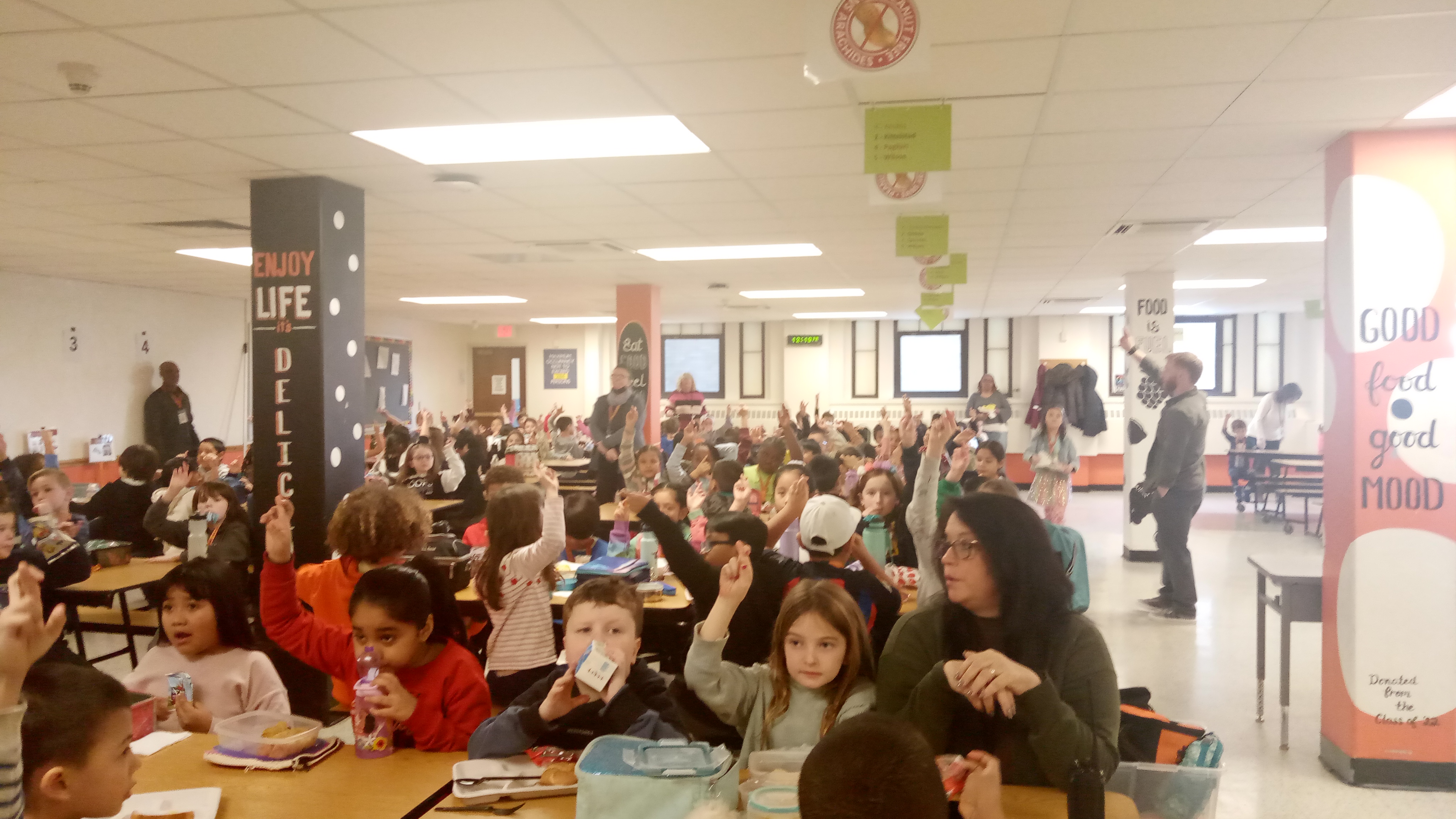
If you have ever been in a school lunchroom, unless you are faint hearted, it is a truly invigorating experience. 150 kids in a room, chatting, walking, playing, eating …. a never ending hum of activity. To control such masses, there are elaborate systems in place. Voice levels are measured and given a number code and students learn very quickly how a level 1 voice is being quiet. Students are asked to raise their hands if they need anything during lunch, and there are large posters with hand signals displayed for the kids to review.
Recycling is so normal for White Plains students that there is a hand signal established for it and it is working well. We Future Cycle is very proud to have been able to create a generation of White Plains students that care.
We recently launched the WeFutureCycle recycling program in the Ben Turner Elementary school in Mount Vernon. This school has so impressed me with its outstanding lunchroom monitors.
Part of the recycling program is also to teach the kids to only take what they need, which means to not grab a stack of napkins at a time, or a whole handful of ketchup pouches.
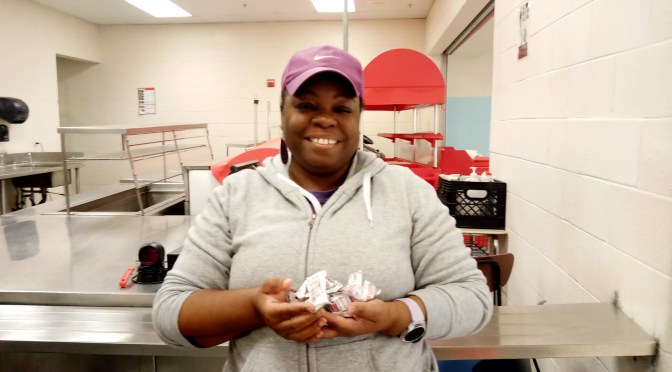
Making the right choices is a life lesson and lunch monitor Shantale Hughes is reinforcing that with her (very cute) charges. After her students have gotten their lunch, she helps them open their milk or other things and when she notices them having grabbed more pouches than needed, she collects them, so they do not become untouched garbage.
It takes a village to raise a child and Ms Hughes is clearly a very important part of the Ben Turner village. Thank you for going the extra mile.
Meet Crystal Beattie, a food service lead in a Westchester school district for the past 9 years. She makes cooking for 500 students look easy and she is one of the few schools that offers hot breakfast like those yummy sausage egg and cheese sandwiches in the cafeteria.
While offering breakfast in the lunchroom may have logistical challenges to fit all students into a relatively narrow time window, it comes with the great advantage of being able to offer a hot breakfast menu and also keeping all food and waste in the lunchroom, rather than in the individual classrooms.
Most school districts participate in the National School Lunch Program, established in 1946 under President Truman. This program helps public schools to provide low cost or free lunches to students. About 7.1 million children participated in the NSLP in its first year. Since then, the program has reached millions of children nationwide: 1970: 22.4 million children; 1980: 26.6 million children; 1990: 21.1 million children; 2000: 27.3 million children; 2010: 31.8 million children; and 2016: 30.4 million children.
During the pandemic all schools became eligible for free breakfast and free lunch and meals were then served in the individual classrooms to limit student contacts.
That meant for Food Service providers to heavily rely on commercially available, individually wrapped food items with long shelf life. And that means of course mountains of packaging garbage and food scraps in each of those classrooms. And milk spills in the classrooms, and food scraps on the floor, and an extra garbage run through every classroom by the custodial staff, replacing plastic bags in each classroom….
Can you just see the amount of labor, materials and garbage attached to this issue?
A typical breakfast in the classroom consists of a plastic bag that contains a plastic wrapped starch (bagel, muffin, granola bar or cereal) , fruit juice or milk carton and sometimes a jogurt. Food service staff will fill these items into bags, then knot them, then place them into individual tubs that will be brought up to each classroom. Students usually grab a bag, or open one on the spot to just remove the one item they want to eat and all the rest will go either in the garbage in the classroom, or will make its way down to the kitchen to be discarded there into the garbage.
The untouched food waste is just staggering, here is an example of returned breakfast items on one day from a school with 500 students.
Bringing breakfast back into the lunchroom has many advantages





 We Future Cycle