
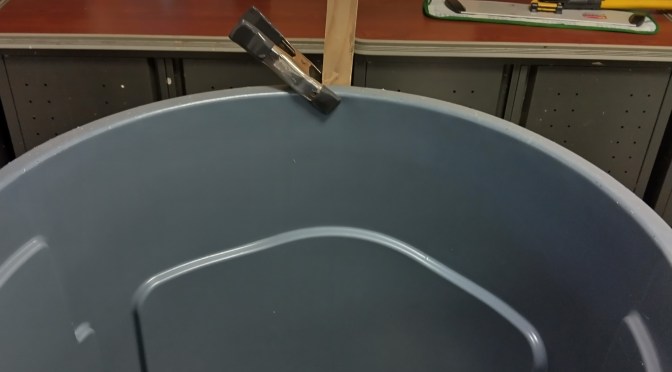
Commingled recyclables like milk cartons, aluminum foil, yogurt cups, bottles coming from a school cafeteria usually represent about 10 % in weight but 50 % in volume. That means two to three large 55 gallon contractor bags are being filled from one school alone.
The Westchester MRF (Material Recovery Facility) in Yonkers accepts the materials only unbagged to make the sorting process more efficient. So most school custodians line their receptacle with a black garbage bag, and then empty said bag into the container outside, and subsequently discarding the now dirty back into the garbage. 3 garbage bags used for no other reason than to not need to wash the bin.
Shout out to Pedro Molina, head custodian at Ridgeway Elementary School in White Plains. Pedro realized very early on, that it was a waste and that it is only a minute to rinse the bin, thus saving 3 garbage bags every day. This is what it means to go the extra mile. Seriously, way to go? Thank you!
 We Future Cycle